 Save to Pinterest
 My first baklava came from a tiny Istanbul bakery tucked between a carpet shop and a spice merchant, where the owner's grandmother had been making the same recipe for forty years. I watched her brush each phyllo sheet with such care, and I realized then that baklava wasn't just about layering pastry and nuts—it was about patience, precision, and the courage to take time for something sweet. Years later, standing in my own kitchen with a pastry brush in hand, I finally understood why she moved so deliberately.
I made baklava for my neighbor Elena once when her daughter was born, and she cried before even tasting it—not because it was perfect, but because someone had spent an afternoon thinking about her. She still texts me on random Tuesdays asking for a fresh batch, and I've learned that feeding people something made with your own hands creates a bond that transcends dessert.
Ingredients
- Walnuts (1½ cups, finely chopped): The backbone of authentic Turkish baklava, offering an earthy, slightly bitter depth that honey can't overshadow; always chop them fine so they toast evenly and distribute through every bite.
- Pistachios (1 cup, finely chopped): These add color, a delicate flavor, and a hint of sophistication; don't skip them even if they cost more, because the difference between walnut-only and this blend is honestly worth it.
- Almonds (½ cup, finely chopped): They bring a subtle sweetness and help balance the earthier walnuts; raw almonds work just fine, no need to toast separately.
- Granulated sugar (½ cup): Mixed into the nuts to caramelize slightly during baking and create those little pockets of sweetness.
- Ground cinnamon (1 tsp): Use fresh cinnamon if you can; stale cinnamon tastes like dust, and this spice deserves better.
- Phyllo dough (1 lb, thawed): The soul of the pastry—handle it gently, keep it covered, and never rush this part; premature drying is the enemy.
- Unsalted butter (1 cup, melted): Brush generously between every layer, because baklava's crispness depends on enough fat; cheap butter will taste cheap, so invest here.
- Honey (1 cup): Choose a good quality honey with flavor; it's half the final dish, so it matters tremendously.
- Water (1 cup): Dilutes the syrup slightly so it soaks in rather than sitting on top as a sticky glaze.
- Granulated sugar (1 cup, for syrup): Sweetens the syrup and helps it cling to the hot pastry.
- Lemon juice (1 tbsp): A tiny acid note that keeps the syrup from being cloying and adds sophistication.
- Lemon zest (1 strip): Infuses the syrup with brightness; remove it before pouring so you don't end up with bitter pieces stuck in your baklava.
- Cinnamon stick (1): Adds warmth and fragrance to the syrup without overpowering; fish it out before serving to avoid chewing on wood.
Tired of Takeout? 🥡
Get 10 meals you can make faster than delivery arrives. Seriously.
One email. No spam. Unsubscribe anytime.
Instructions
- Prep your workspace and heat your oven:
- Set the oven to 350°F and butter your baking dish generously—this prevents sticking and adds subtle flavor to the edges. Have everything measured and ready before you start with the phyllo, because once you begin layering, you won't have time to pause.
- Make the nut filling:
- Toss walnuts, pistachios, almonds, sugar, and cinnamon together in a bowl until evenly combined. The sugar will help the nuts toast beautifully and caramelize around the edges.
- Unroll and protect your phyllo:
- Carefully unroll the phyllo sheets and lay them flat, then cover them with a slightly damp kitchen towel. Phyllo dries out in minutes, turning brittle and unusable, so this simple step is truly non-negotiable.
- Build your first phyllo base:
- Place one phyllo sheet in the prepared dish and brush it thoroughly with melted butter—don't be shy. Repeat this eight times, layering each sheet and buttering generously, until you have a buttery, thin foundation.
- Add the first layer of nuts:
- Scatter one-third of the nut mixture evenly over the phyllo layers. Don't worry about perfect coverage; the remaining layers will shift things around anyway.
- Build the middle section:
- Layer five more phyllo sheets, brushing each with butter as before, then sprinkle another third of the nut mixture over top. You're creating distinct layers that will taste different as you bite through.
- Add the final nut layer:
- Layer five more buttered phyllo sheets, then scatter the remaining nut mixture across. This final walnut layer ensures every piece gets a full taste of filling.
- Seal with a phyllo crown:
- Top everything with eight to ten final phyllo sheets, brushing each one with butter until they're golden and glistening. These top layers will turn gorgeously crisp and shatter when you bite into them.
- Cut before baking:
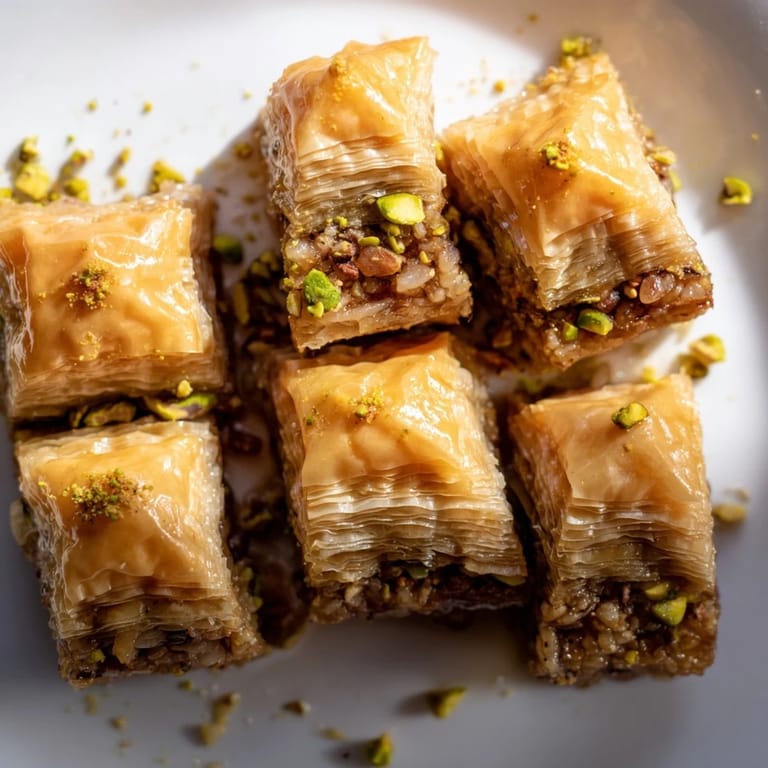
- With a sharp knife, cut the baklava into diamonds or squares—I prefer diamonds because they look elegant and the knife glides more naturally at an angle. Cut all the way through to the bottom so the syrup can seep into every piece.
- Bake until golden:
- Slide into the oven for 45 minutes, watching until the top turns deep golden and you can hear a faint crackling sound. The phyllo should shatter when you tap it, not bend.
- Make the syrup while baklava bakes:
- Combine honey, water, sugar, lemon juice, lemon zest, and cinnamon stick in a saucepan over medium heat. Bring to a gentle boil, then lower heat and let it simmer for about 10 minutes, filling your kitchen with the most incredible aroma.
- Cool the syrup slightly:
- Remove the zest and cinnamon stick, then let the syrup cool for just five minutes—it should still be warm but not scalding. Pouring warm syrup over hot pastry is the secret to even soaking.
- Pour syrup immediately onto hot baklava:
- The moment baklava emerges from the oven, slowly and evenly pour the warm syrup over every piece. The hot pastry absorbs the liquid like a sponge, creating that signature tender-yet-crisp texture.
- Let it rest and soak:
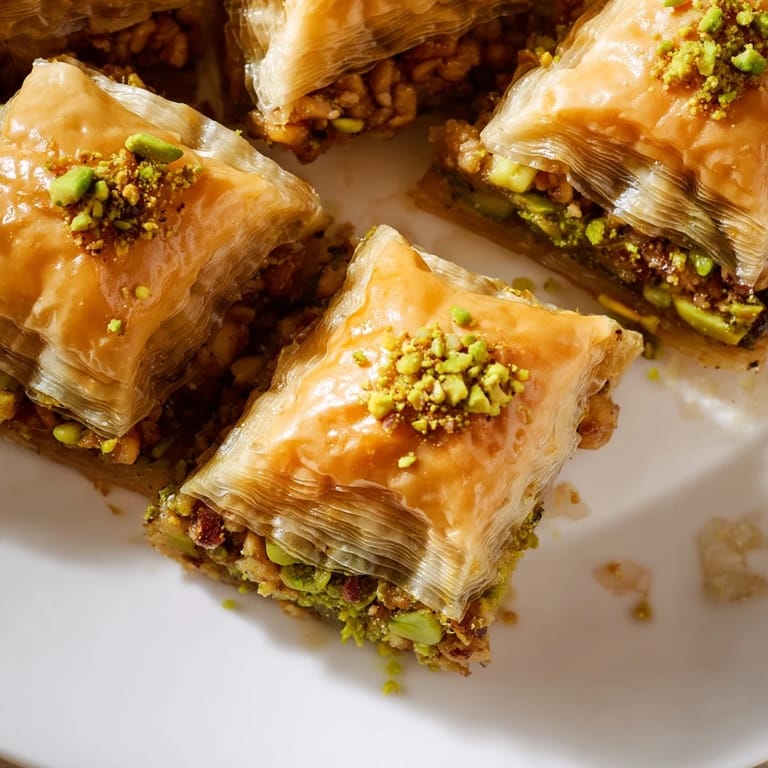
- Leave baklava untouched at room temperature for at least four hours, preferably overnight. This patience is when the magic happens—the phyllo softens slightly, the filling becomes moist, and all the flavors marry together.
 Save to Pinterest
 My mom once said that baklava teaches you about time—how patience turns separate ingredients into something unified and beautiful. I thought she was being poetic until I made a batch on a rainy Sunday and spent the afternoon remembering every time someone I cared about had made me feel welcomed with food.
Storing and Serving Your Baklava
Baklava actually improves after a day or two as the syrup continues to distribute throughout. Keep it covered loosely at room temperature, and it stays perfectly fresh for up to a week—though I've never had it last that long. The crispy-tender texture holds beautifully, and unlike many pastries, it doesn't need refrigeration or become stale quickly if you store it properly.
Flavor Variations Worth Exploring
Once you master the classic version, you can play with the nut blend by adding hazelnuts, pecans, or cashews, each bringing its own character to the filling. Some bakers drizzle a touch of orange blossom water or rose water into the syrup for a more delicate, floral baklava, or add a pinch of clove to the cinnamon for deeper warmth. The foundation stays the same, but these small shifts create entirely different moods and memories around the same beloved dessert.
Pairing and Serving Ideas
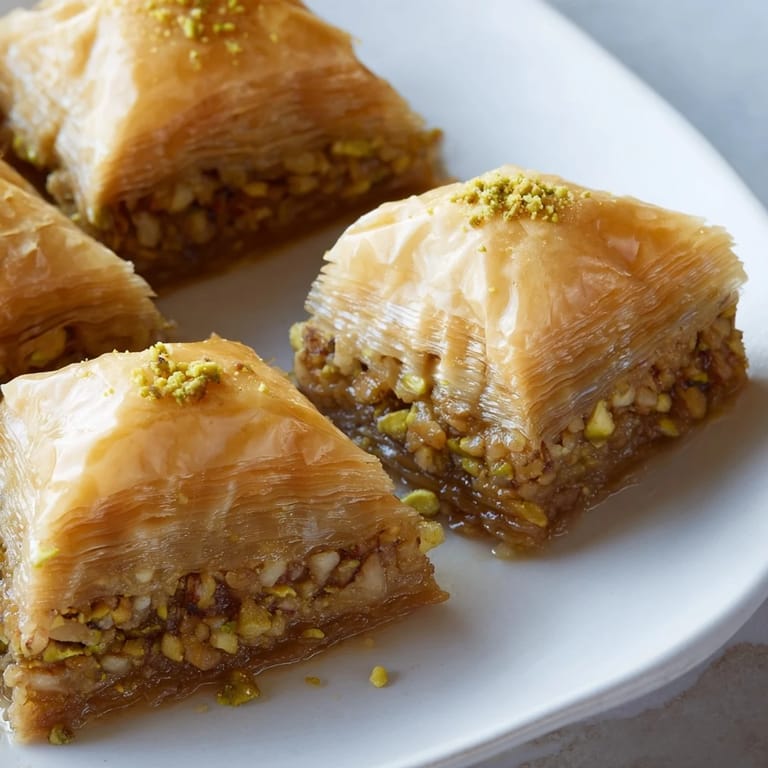
Baklava belongs with strong, dark Turkish coffee or a pot of black tea—something bold enough to stand up to the sweetness. I've also served it with Greek yogurt and a drizzle of honey for a brunch twist, which sounds modern but honestly tastes perfect. The richness of the pastry and syrup means a small piece goes a long way, so a 24-piece batch feeds more people than you'd expect, and they'll be thinking about it for weeks.
- Serve at room temperature on a simple plate, letting each piece speak for itself without fussy decoration.
- A tiny cup of very strong coffee alongside each piece is the traditional Turkish experience, and it's worth doing right.
- Make double batches because everyone will ask for the recipe, and then they'll ask for actual baklava instead of making it themselves.
 Save to Pinterest
 Baklava is one of those rare desserts that rewards you for slowing down and showing up for the process. Once you've made it once, you'll find yourself making it again and again, each time understanding a little more why people have been making this exact dish for centuries.
Recipe FAQ
- → How do I keep the phyllo dough from drying out?
Cover the phyllo dough with a damp towel while layering to prevent it from drying and cracking.
- → Can I substitute any nuts in the filling?
Yes, you can adjust the nut mix, but using walnuts, pistachios, and almonds gives the best traditional flavor and texture.
- → What's the best way to cut the layers before baking?
Use a sharp knife to cut the baklava into diamond or square shapes before baking to ensure the syrup penetrates all pieces.
- → How long should I let the syrup soak into the pastry?
Allow the baked pastry to rest for at least 4 hours, or preferably overnight, so the syrup fully absorbs and softens the layers.
- → Can I store the baklava after preparation?
Yes, keep it covered at room temperature for up to one week to maintain freshness and texture.