 Save to Pinterest
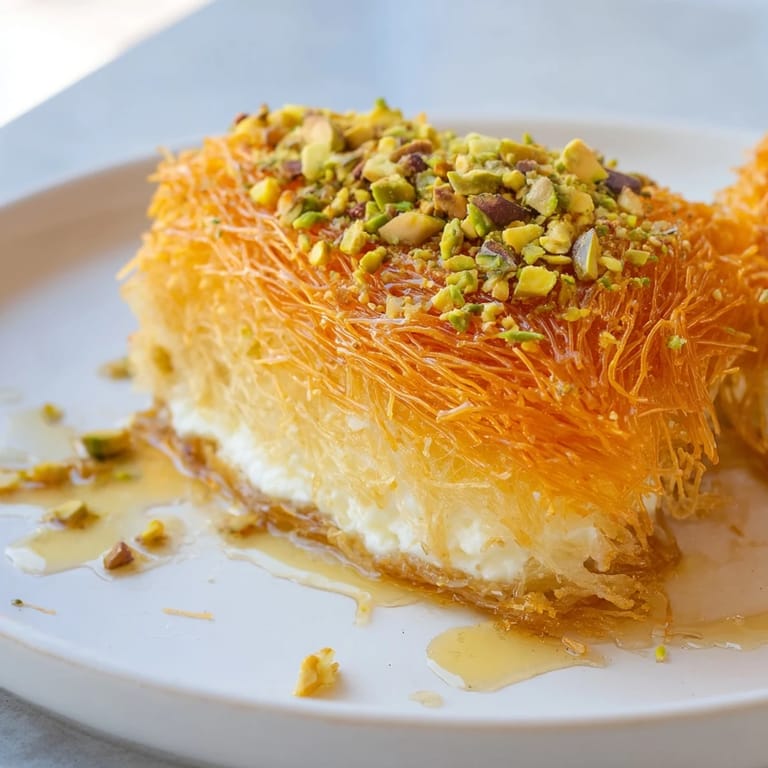
 The first time I bit into knafeh at a family gathering in Beirut, I understood why this dessert commands such reverence. The contrast was immediate and overwhelming—crispy golden strands giving way to warm, stretchy cheese that seemed to defy the laws of dessert physics, all swimming in floral honey syrup that tasted like spring itself. My aunt laughed at my surprised expression and said every Lebanese cook has their own version, each one convinced theirs is the only true one. When I finally recreated it at home, using every trick she whispered to me, I realized the magic wasn't in any single ingredient but in how they spoke to each other in the oven's heat.
I remember making this for my partner's birthday, and he walked into the kitchen while the knafeh was baking, drawn by the smell of butter and caramelizing cheese. He stood there mesmerized, watching me prepare the syrup, and when I inverted it onto the platter and poured that amber liquid over the hot pastry, the look on his face made every minute of cheese soaking worth it. That's when knafeh stopped being just a dessert and became the thing I make when I want someone to feel genuinely cared for.
Ingredients
- Akawi cheese (400 g) or unsalted mozzarella, soaked and drained: Akawi is the traditional choice with its perfect melting point and subtle saltiness, but quality low-moisture mozzarella works beautifully if you can't source it—just ensure you drain it thoroughly after soaking so you don't end up with a soggy filling.
- Ricotta cheese (200 g): This acts as a binder and adds a delicate creaminess that keeps the filling from becoming too heavy; fresh ricotta makes a noticeable difference.
- Kataifi (shredded phyllo dough) (250 g), thawed: These impossibly thin golden strands are what create that signature crackling texture; handle them gently and keep them separate rather than clumped together.
- Unsalted butter (100 g), melted: The butter is what turns those strands into crispy ribbons of gold, so don't skimp on coating every single strand evenly.
- Granulated sugar (250 g): This sweetens the syrup that bathes the hot knafeh, soaking in and creating those moments where you hit a pocket of pure honey-sweetness.
- Water (180 ml): The base for syrup that should feel light and fragrant, never cloying.
- Lemon juice (1 tbsp): A secret weapon that cuts through the richness and keeps the syrup from tasting one-dimensional.
- Orange blossom water (1 tbsp): This is where the magic lives—it's floral without being perfume-like, adding an almost haunting elegance to every bite.
- Rose water (1 tbsp): Paired with orange blossom, it creates a sophisticated sweetness that feels celebratory.
- Finely chopped pistachios (2 tbsp) and optional honey drizzle: The pistachios add a final flourish of color and a subtle nutty flavor, while extra honey is for those moments when you want to gild the lily.
Tired of Takeout? 🥡
Get 10 meals you can make faster than delivery arrives. Seriously.
One email. No spam. Unsubscribe anytime.
Instructions
- Prepare your mise en place and preheat:
- Set your oven to 180°C (350°F) and gather everything within arm's reach—this dessert moves quickly once assembly begins, and you won't want to scramble for ingredients. Organization here prevents stress later.
- Desalt the Akawi cheese:
- Soak your cheese in fresh water for several hours or overnight, changing the water every hour until it tastes like cheese rather than the Dead Sea. Pat it completely dry when finished, as any remaining moisture will make your filling weepy.
- Combine your cheese filling:
- Mix the drained Akawi and ricotta together in a bowl, folding gently so the mixture stays cohesive without becoming dense. Let it sit at room temperature while you prepare the pastry base.
- Coat the kataifi in butter:
- Separate the phyllo strands gently—they tangle easily but want to be individual—then pour melted butter over them, using your hands to mix until every single strand glistens with fat. This is where the crispy magic begins.
- Layer the pastry base:
- In a greased 23 cm round baking dish, spread half the buttered kataifi in an even layer, pressing down firmly to create a sturdy foundation that won't shift when you add the filling. Think of it as creating a golden nest.
- Add your cheese and top layer:
- Spread the cheese mixture evenly over the kataifi base, leaving a tiny border so it doesn't leak out during baking. Top with the remaining kataifi, pressing gently so it holds together without compressing the filling underneath.
- Bake until golden and crackling:
- Bake for 30 to 35 minutes until the top is a deep golden brown and you can hear it crackling slightly when you shake the pan. The kitchen will smell like caramelized butter and toasted nuts—this is how you know it's working.
- Make the syrup while baking:
- In a saucepan, combine sugar, water, and lemon juice, bringing everything to a boil before reducing to a simmer for 8 to 10 minutes until the syrup thickens slightly and coats the back of a spoon. Remove from heat, stir in orange blossom and rose water, then let it cool completely so it doesn't evaporate when poured over the hot knafeh.
- Invert and drench:
- The moment knafeh emerges from the oven, invert it onto your serving platter—it should release cleanly if the bottom is crisp enough, creating an impressive golden crown. Immediately pour half the cooled syrup over the hot pastry, watching it soak in and create those glossy pockets of sweetness.
- Garnish and serve:
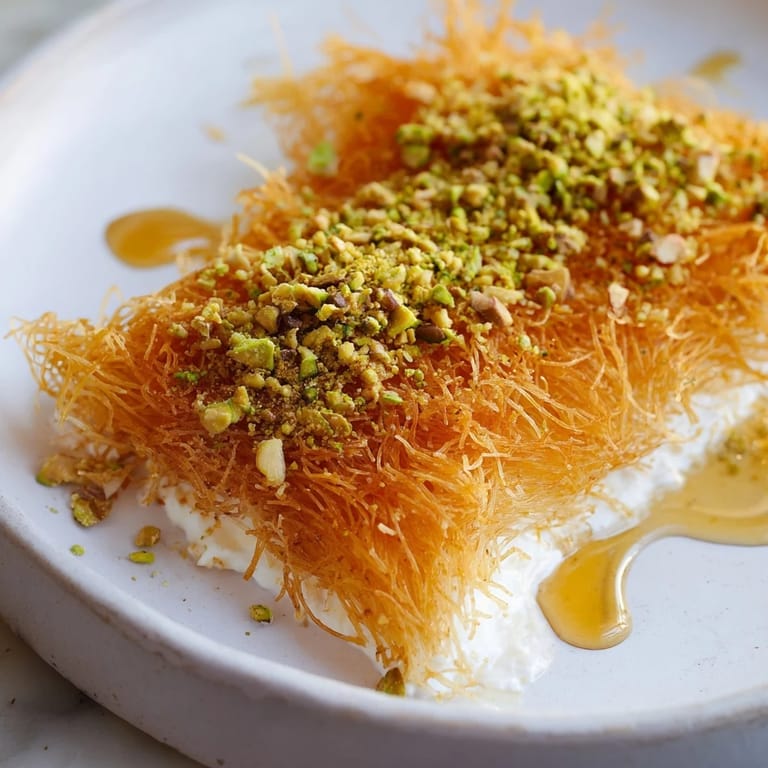
- Scatter chopped pistachios across the top and drizzle with honey if you like, then serve while still warm so the contrast between crackling pastry and warm, stretchy cheese is at its peak.
 Save to Pinterest
 There's a moment right after you pour that syrup over the golden, crackling knafeh when the dessert transforms from impressive to irreplaceable. It's when the kitchen fills with the smell of honey and flowers and someone walks in asking what's happening, drawn by something they can't quite name. That's the moment knafeh becomes more than food—it becomes a reason to gather.
Understanding the Cheese Selection
Akawi cheese is the gold standard because its melting point sits in that perfect range where it becomes stretchy without becoming greasy, and its subtle saltiness complements the floral syrup beautifully. If you can't find it at Middle Eastern markets, low-moisture mozzarella is your closest ally, though the texture will be slightly less delicate. The key is ensuring whatever cheese you choose is thoroughly soaked and drained before mixing with ricotta—the ricotta acts as a tempering agent, preventing the filling from becoming too heavy or oily as it bakes.
The Syrup Philosophy
The syrup isn't just sweetness; it's the voice that ties the whole dessert together, adding moisture that balances the crispy pastry and floral notes that elevate it beyond simple sugar. Lemon juice might seem counterintuitive in a dessert syrup, but it prevents cloying sweetness and allows the orange blossom and rose water to sing. Think of the syrup as the conversation happening on the plate—the pastry and cheese are only half the story without it.
Making It Your Own
While knafeh is traditional, it rewards personalization once you understand its bones. Some families swear by adding a touch of mahlab or ground pistachios to the filling, others adjust the syrup florals to their taste, and some even broil the top for an extra minute of crunch. This isn't reinvention; it's continuation of a tradition that's always been personal.
- For a crunchier top, broil for 1 to 2 minutes after baking, watching carefully so it doesn't burn.
- Serve with strong Turkish coffee or fresh mint tea to cut through the richness and refresh your palate between bites.
- Any leftover knafeh can be covered and reheated gently in a 150°C oven for about 10 minutes, though it's honestly best fresh and still warm.
 Save to Pinterest
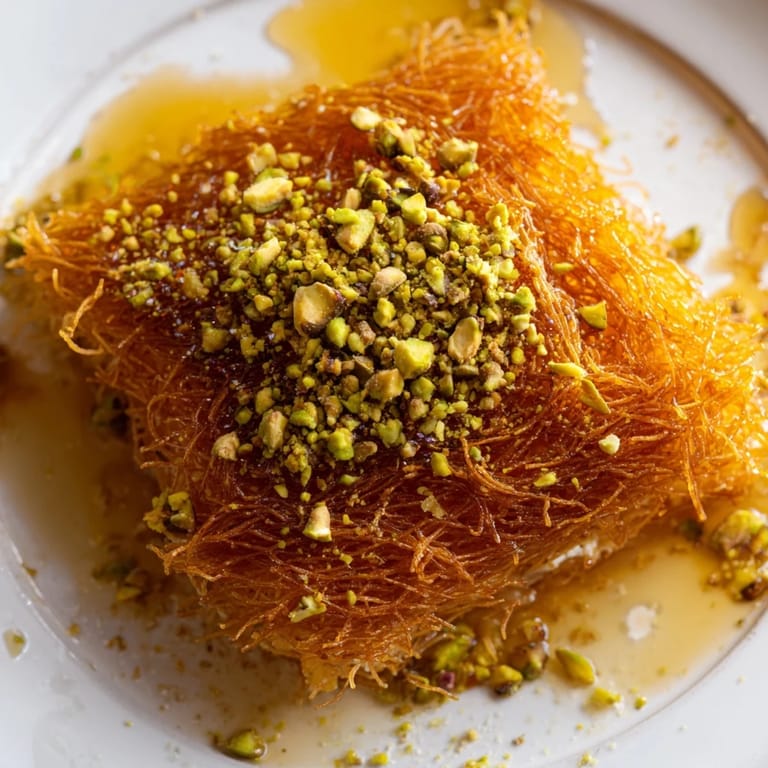
 Making knafeh is less about precision and more about intuition—the cheese should be creamy but not liquid, the syrup should smell floral and feel light, and the pastry should emerge golden and singing. When you pull it from the oven and invert it onto the platter, you'll know instantly if you've done it right.
Recipe FAQ
- → What cheeses are best for the filling?
Try soaked Akawi for authenticity or low-moisture mozzarella as a substitute, combined with creamy ricotta for texture.
- → How should the kataifi pastry be prepared?
Gently separate the shredded phyllo strands and coat thoroughly with melted butter to ensure crispiness after baking.
- → What flavors does the syrup add?
The syrup blends sweetness with citrus brightness and floral scents from orange blossom and rose water, enhancing the dessert's character.
- → How can I get a crispier top crust?
After baking, broil the dish for 1–2 minutes to add extra crunch without drying the interior.
- → What are ideal pairings for this dish?
Serve warm alongside Turkish coffee or refreshing mint tea to complement its rich, sweet flavors.