 Save to Pinterest
 My neighbor brought basbousa to a afternoon tea one spring, and I watched her slice into these golden squares with such ease that I had to ask for the recipe. She laughed and said it was her grandmother's, nothing fancy—just semolina, coconut, and the magic of a cold syrup hitting warm cake. That first bite was so perfectly moist and tender that I went home determined to figure it out myself, and now this is the dessert I make whenever I want people to feel truly welcomed.
I made this for my book club once, and someone asked if I'd bought it from a bakery—the way it glistened under the kitchen light made it look impossibly professional. But the real joy was seeing people close their eyes on that first bite, the sweetness hitting them all at once, and then the gentle chew of the semolina pulling them back for another piece. That's when I realized this wasn't just a recipe; it was a small gift you could hand someone on a plate.
Ingredients
- Fine semolina: This is the backbone of basbousa—it gives the cake its signature grainy texture and slight earthiness that keeps it from being too sweet.
- Granulated sugar: You'll use it in both the cake and syrup; don't skip either measure because they work together to create that perfect sweetness.
- Desiccated coconut, unsweetened: Unsweetened matters here because the syrup brings all the sweetness you need—this way the coconut flavor stays pure and doesn't turn cloying.
- Plain yogurt: This is what makes the cake stay moist for days; it's the secret ingredient that keeps basbousa tender and soft.
- Unsalted butter or ghee, melted: Ghee gives a deeper, nuttier flavor if you have it, but butter works beautifully too and connects the whole thing.
- Baking powder: Just enough to give the cake a subtle lift without making it airy—you want it dense and tender, not fluffy.
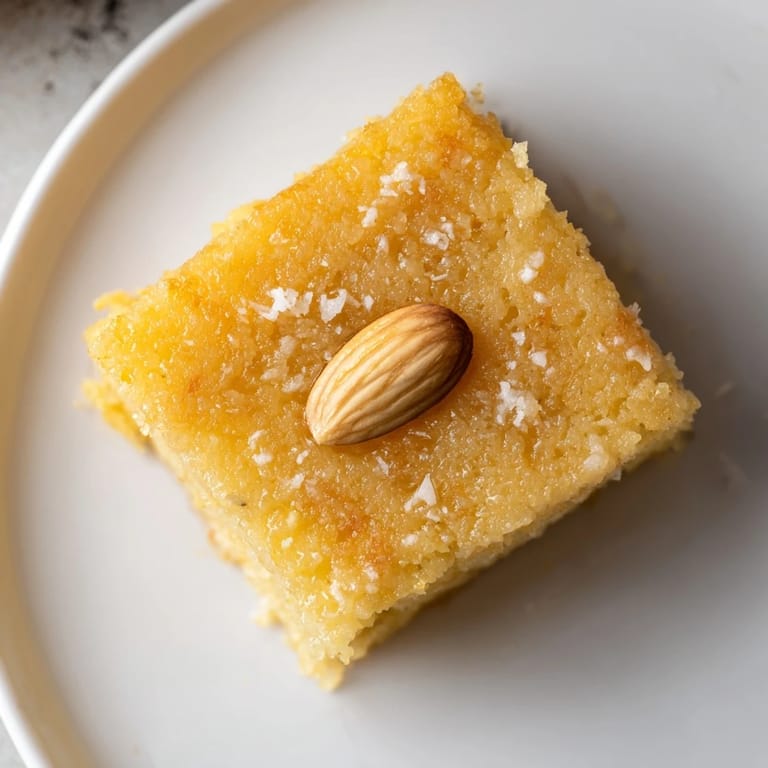
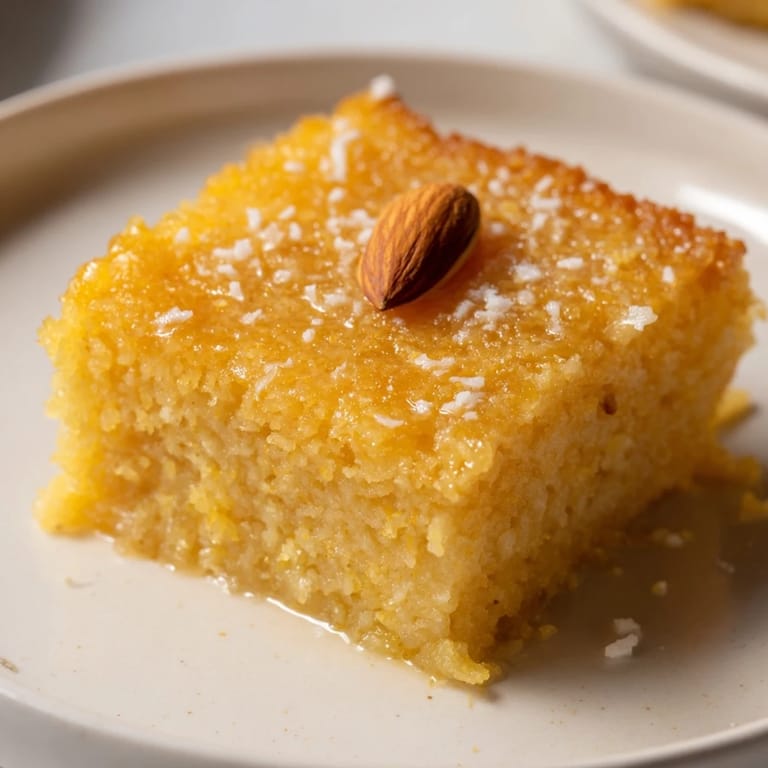
- Whole blanched almonds: Press one into each square before baking; they add a delicate crunch and signal that someone cared enough to decorate properly.
- Rose water or orange blossom water: Optional but absolutely worth seeking out—even a teaspoon transforms the syrup into something floral and memorable.
Tired of Takeout? 🥡
Get 10 meals you can make faster than delivery arrives. Seriously.
One email. No spam. Unsubscribe anytime.
Instructions
- Heat your oven and prepare the pan:
- Preheat to 350°F and grease your 9x9 inch pan with butter or tahini—tahini gives a subtle richness if you're feeling adventurous. Have everything ready because once you mix the batter, you'll want it in the oven soon.
- Combine the dry ingredients:
- In a large bowl, whisk together the semolina, sugar, coconut, baking powder, and salt until everything is evenly distributed. This takes just a minute but makes a real difference in the final texture.
- Bring it together:
- Add the yogurt, melted butter, and vanilla extract, then stir gently with a spatula until a thick, uniform batter forms. It should feel a bit like wet sand—not too loose, not too stiff.
- Spread and score:
- Pour the batter into your pan and smooth the top with a spatula or the back of a spoon. Using a sharp knife, score diagonal or straight lines to create 12 squares or diamonds, going about halfway through the batter so the cuts stay visible as it bakes.
- Crown each piece:
- Press a whole almond gently into the center of each square—this is the moment when basbousa starts looking like the treasure it is.
- Bake until golden:
- Slide the pan into your oven for 30 to 35 minutes, watching until the top turns a warm golden brown. A toothpick inserted in the center should come out clean and dry.
- Make the syrup while it bakes:
- In a saucepan, combine the sugar, water, and lemon juice, then bring to a boil. Simmer gently for 8 to 10 minutes until it coats the back of a spoon lightly, then remove from heat and stir in the rose water or orange blossom water if using. Let it cool completely—this step is crucial.
- The magic moment:
- As soon as the basbousa comes out of the oven, pour the cooled syrup slowly and evenly over the hot cake, listening as it sizzles and soaks in. This contrast between hot cake and cold syrup is exactly what makes basbousa special.
- Cool and serve:
- Let the basbousa cool completely, then re-cut along your scored lines with a sharp, clean knife. The cake will have set and the pieces will separate cleanly.
 Save to Pinterest
 The first time I served this to my mother-in-law, she took one bite and went quiet—then told me it reminded her of her childhood in Cairo. That single moment made all the effort worth it, and now whenever she visits, this is what she requests. Food has this strange power to unlock memories in people, and basbousa seems to do that more than most.
Why This Syrup Matters
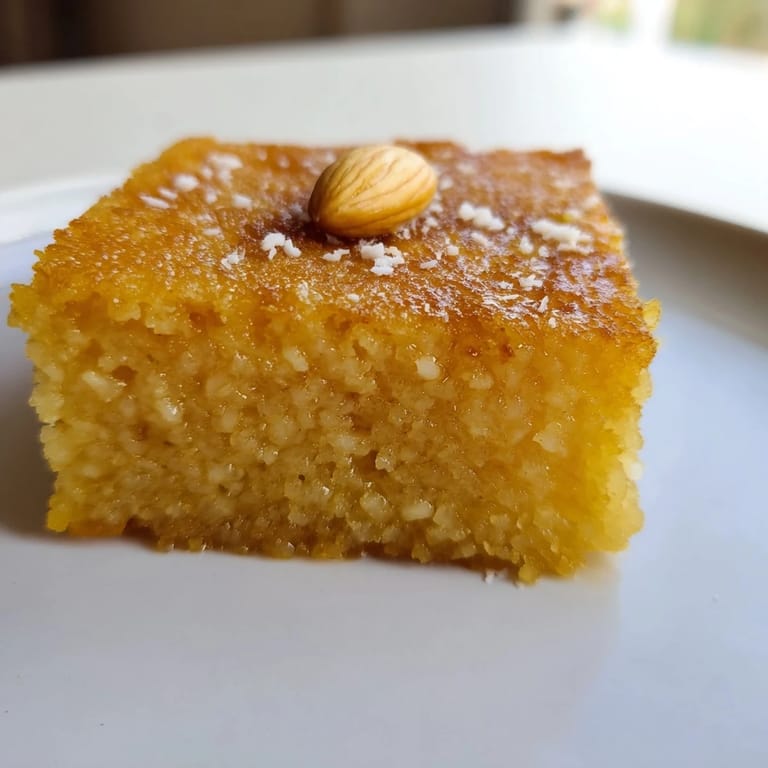
The syrup is where basbousa separates from ordinary semolina cake. A cold syrup poured over hot cake doesn't just add sweetness—it creates a texture that's impossible to achieve any other way. The cake absorbs the syrup slowly as it cools, becoming moist and tender all the way through, while the almonds stay crisp against the soft interior. This is why timing and temperature both matter so much here.
Storage and Keeping
Basbousa actually improves after a day or two as the flavors meld and the cake becomes even more tender. Store it in an airtight container at room temperature for up to five days, and it will stay soft and fresh. You can also freeze it for up to two months if you want to have some on hand for unexpected guests.
Variations and Swaps
This recipe is flexible enough that you can make it your own without losing what makes basbousa special. The beauty is in understanding the balance, not in following rules rigidly.
- Swap almonds for pistachios or pine nuts, or even leave them off entirely if you prefer—the cake stands on its own.
- Replace half the yogurt with sour cream or even a touch of labneh if you want deeper richness and tang.
- Add extra coconut on top before baking for more texture and a toasted coconut depth that feels luxurious.
 Save to Pinterest
 Basbousa is the kind of dessert that makes people feel welcomed and cared for, even when you've made it a hundred times. Serve it warm with strong tea or coffee, and watch how quickly the conversation slows down when people take that first bite.
Recipe FAQ
- → What gives the cake its moist texture?
The combination of yogurt and melted butter in the batter helps create a tender and moist crumb for the cake.
- → How is the syrup prepared for soaking?
The syrup is made by boiling sugar, water, and lemon juice until slightly thickened, then flavored optionally with rose or orange blossom water.
- → Can I substitute almonds with other nuts?
Yes, almonds can be replaced with pistachios or other preferred nuts for garnish to vary the texture and flavor.
- → How should the cake be scored before baking?
Score the batter surface into squares or diamond shapes before baking and place an almond in the center of each piece for an appealing finish.
- → What is the ideal serving suggestion?
Serve the cooled cake alongside mint tea or Turkish coffee to complement its sweet and fragrant profile.