 Save to Pinterest
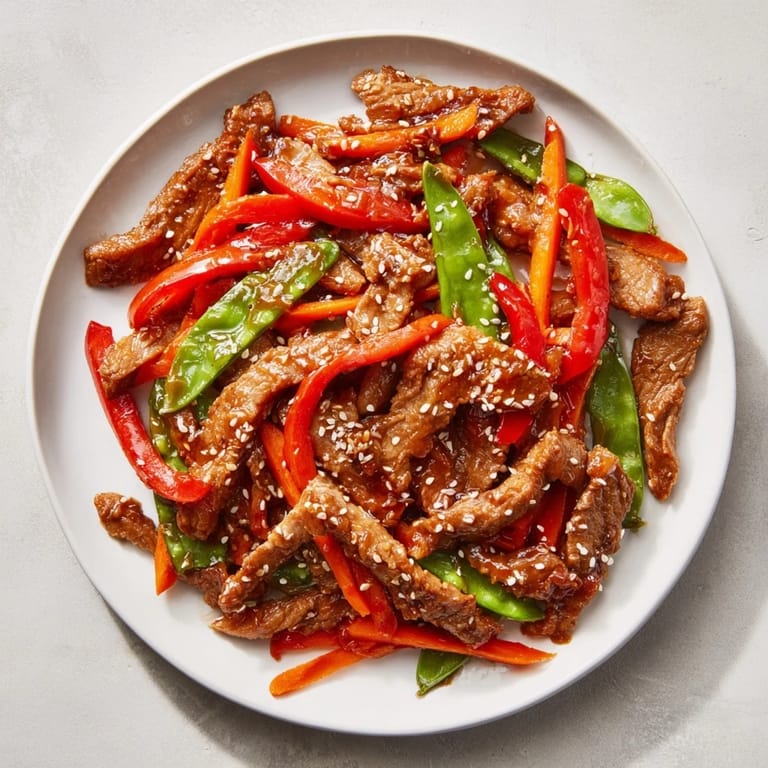
 There's something about the sizzle of pork hitting a hot wok that makes me feel like I'm cooking something special, even on the most ordinary Tuesday night. I discovered this teriyaki stir-fry years ago when I was rushing through the kitchen with twenty minutes to spare and a hungry family waiting at the table. What started as improvisation—whatever vegetables were in my crisper drawer and a sauce I threw together from pantry staples—became the dish I reach for whenever I need something that tastes like I actually spent time on it. The glossy coat of sauce that clings to every piece of pork and vegetable is what keeps people asking for seconds, and the whole thing comes together faster than ordering takeout.
I made this for my neighbor last spring when she mentioned she was tired of the same rotation of weeknight dinners, and watching her face light up when she tasted it reminded me that simple food shared with people you like doesn't need to be complicated. She came back the next week asking for the recipe, and now I see her through the kitchen window sometimes, wok in hand, making her own version. That's when I knew this one was a keeper.
Ingredients
- Pork tenderloin, thinly sliced (450 g): Tenderloin stays tender when sliced thin and cooked fast; frozen pork is easier to slice cleanly than warm meat.
- Red bell pepper, sliced into strips: Red peppers add natural sweetness that balances the savory sauce and stay crisp if you don't cook them too long.
- Snap peas (1 cup): These keep their snap and texture even with heat, which is the whole point of stir-frying.
- Carrot, julienned: The thin cut means they cook through without turning mushy; if you slice them too thick they'll stay raw in the center.
- Green onions, sliced: I split these in half—some go in during cooking for flavor, the rest scatter on top for freshness.
- Garlic and ginger (2 cloves and 1 tsp): These hit the pan last so they stay bright and aromatic instead of cooking down to bitterness.
- Low-sodium soy sauce (60 ml): Low-sodium gives you room to taste and adjust; regular soy sauce can make the whole dish taste like salt.
- Mirin or sweet rice wine (60 ml): This is where the gloss and gentle sweetness come from—it's not the same as regular sugar.
- Brown sugar or honey (2 tbsp): Either works, though honey dissolves faster and creates a smoother sauce.
- Rice vinegar (1 tbsp): The acid cuts through the sweetness so nothing tastes cloying.
- Cornstarch (1 tbsp): This thickens the sauce into a glaze that actually coats everything instead of sliding off.
- Cold water (60 ml): Cold water keeps the cornstarch from lumping; warm water creates clumps.
- Sesame oil (1 tsp): A little goes a long way here—it adds depth without overwhelming the dish.
- Vegetable oil for cooking (2 tbsp): Use oil that can handle high heat; I learned the hard way that olive oil smokes and tastes wrong.
- Sesame seeds and extra green onions for garnish: The seeds add texture and a toasted flavor that makes people think you spent more effort than you did.
Tired of Takeout? 🥡
Get 10 meals you can make faster than delivery arrives. Seriously.
One email. No spam. Unsubscribe anytime.
Instructions
- Make the sauce first:
- Whisk soy sauce, mirin, brown sugar, rice vinegar, cornstarch, cold water, and sesame oil in a small bowl. Setting this aside means you're not scrambling once everything hits the heat.
- Cook the pork until golden:
- Heat one tablespoon of oil in your wok or largest skillet over medium-high heat until you can feel the warmth radiating from it, then add pork slices in a single layer. They should sizzle immediately—if they don't, wait another 20 seconds for the pan to heat properly. Stir after 2 minutes so they brown evenly, cooking another 1–2 minutes until no pink shows inside.
- Sear the vegetables to crisp-tender:
- Add the remaining oil to the empty pan, then scatter in bell pepper, snap peas, and carrot. Stir constantly for 2–3 minutes; you want to hear the sizzle but still bite into something with texture.
- Bloom the aromatics:
- Add garlic, ginger, and half the green onions, stirring fast for about 30 seconds until the smell fills your kitchen. This is the moment when everything smells like you actually know what you're doing.
- Bring it all together:
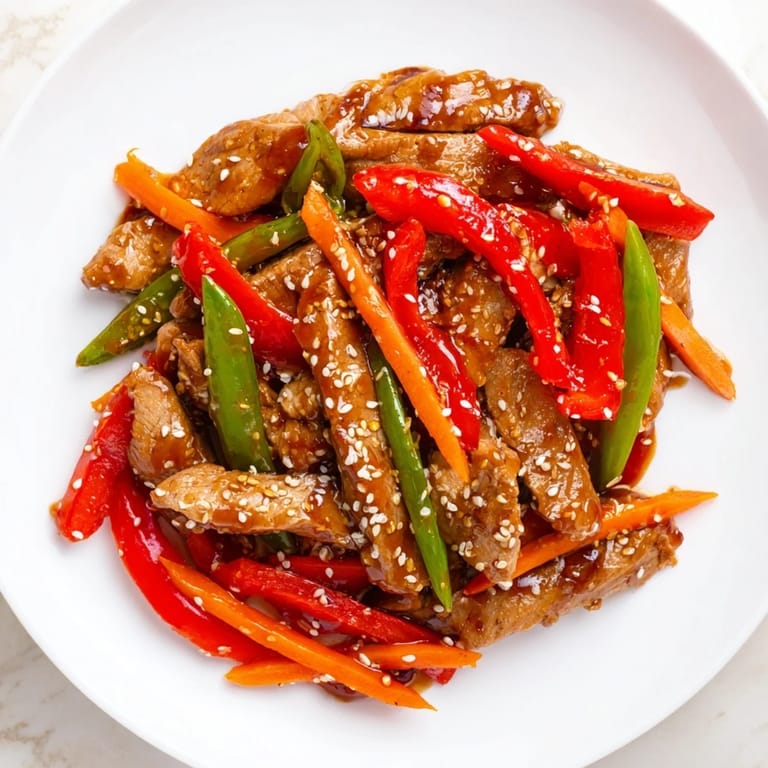
- Return the pork to the pan, give the sauce a quick stir to recombine it, then pour it over everything. Toss constantly for 1–2 minutes, watching as the sauce thickens from thin and glossy to thick and clingy, coating every piece.
- Finish and serve:
- Turn off the heat and scatter sesame seeds and remaining green onions over the top. Serve immediately over steamed rice or noodles while everything is still hot and the sauce hasn't started to set.
 Save to Pinterest
 My daughter once asked why restaurant food always tastes different, and I realized as I was making this that the difference is often just the order of operations and paying attention to when things actually smell right. That question stuck with me, and now I'm more intentional about timing, and somehow the food tastes better.
Why High Heat Matters
The real magic of a stir-fry happens in the thirty seconds between properly cooked and overdone, and that only works if your pan is actually hot enough to sear instead of steam. I used to wonder why my stir-fries looked dull and soggy until I started letting my wok preheat properly—now the vegetables have color and snap, and the pork browns instead of sitting there turning gray. Taking the extra minute to heat the pan changes the whole result.
Building Layers of Flavor
This sauce works because it balances sweetness, salt, acid, and depth all at once, which is harder than it sounds. The mirin adds something honey can't replicate, the rice vinegar keeps it from tasting like dessert, and the sesame oil adds a whisper of something toasted underneath everything else. I used to think teriyaki was just soy sauce and sugar dumped together, but understanding how each ingredient does its job made me braver about adjusting recipes in general.
Make It Yours
The vegetables in this are suggestions, not rules—I've made it with broccoli, bok choy, mushrooms, and once even cabbage when that's all I had, and it was still delicious. Chicken works if you slice it thin, tofu works if you're patient enough not to break it apart, and I've even tried shrimp. The sauce adapts to whatever you put in it, which is partly why I keep making this instead of moving on to something new.
- Use tamari instead of soy sauce if you're cooking for someone who needs gluten-free, and it tastes exactly the same.
- Slice everything before you start cooking because once the pan is hot, there's no time to prep.
- Serve it the moment it's done—the sauce sets as it cools and you'll wish you'd eaten it immediately.
 Save to Pinterest
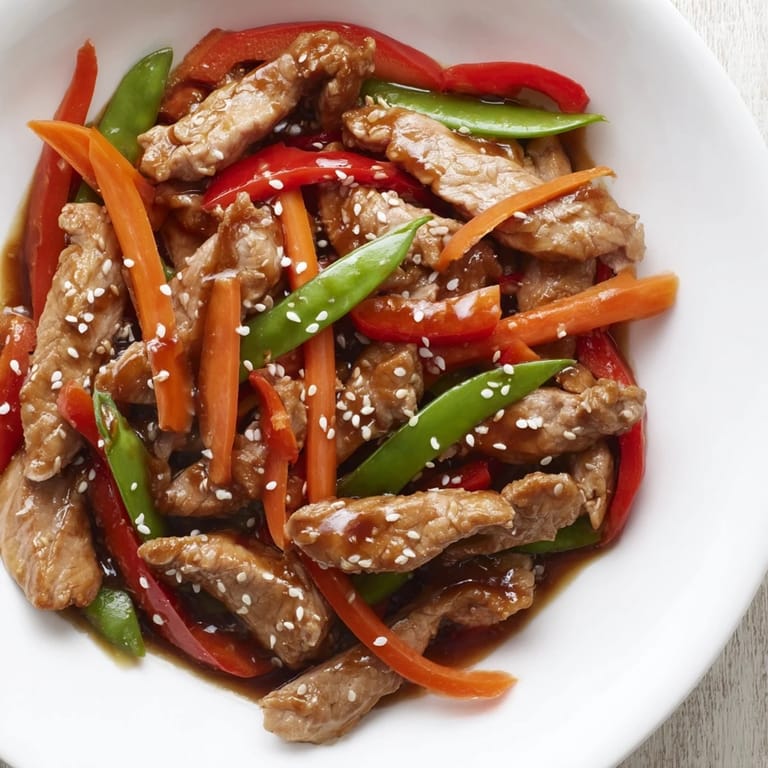
 This recipe gets made in my kitchen at least twice a month, and it's never the same twice because I use whatever vegetables are on hand and whatever I'm hungry for. That's the whole point of knowing how to cook something this well—it becomes the reliable thing you return to, the one that always works.
Recipe FAQ
- → How do I thicken the teriyaki sauce?
Mix cornstarch with cold water and add it to the sauce while cooking, stirring until it thickens to a glossy consistency.
- → Can I substitute the pork with other proteins?
Yes, chicken or tofu work well as alternatives and can be cooked similarly in the stir-fry.
- → What vegetables can I add or swap in this dish?
Broccoli, mushrooms, or bok choy are great additions or substitutions for extra variety and nutrition.
- → Is there a gluten-free option for the soy sauce?
Use tamari or other gluten-free soy sauce alternatives to keep it gluten-free without sacrificing flavor.
- → What cooking tools are recommended?
A large wok or skillet works best for even heat and quick stir-frying of the ingredients.