 Save to Pinterest
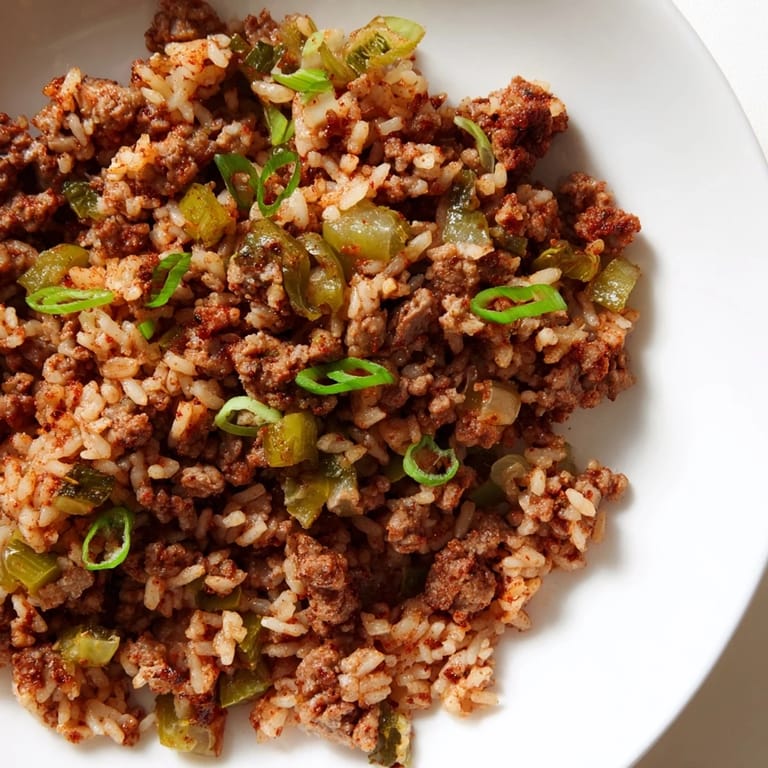
 My uncle's kitchen in New Orleans always smelled like this dish simmering on the stove—that particular mix of caramelizing meat and celery that just meant family dinner was happening. He taught me that dirty rice isn't fancy; it's honest food that tastes better the second day, and the slightly scorched bits stuck to the bottom of the pan are the real treasure. I've made it countless times now, and it never fails to feel like coming home, even when I'm cooking in my own kitchen three states away.
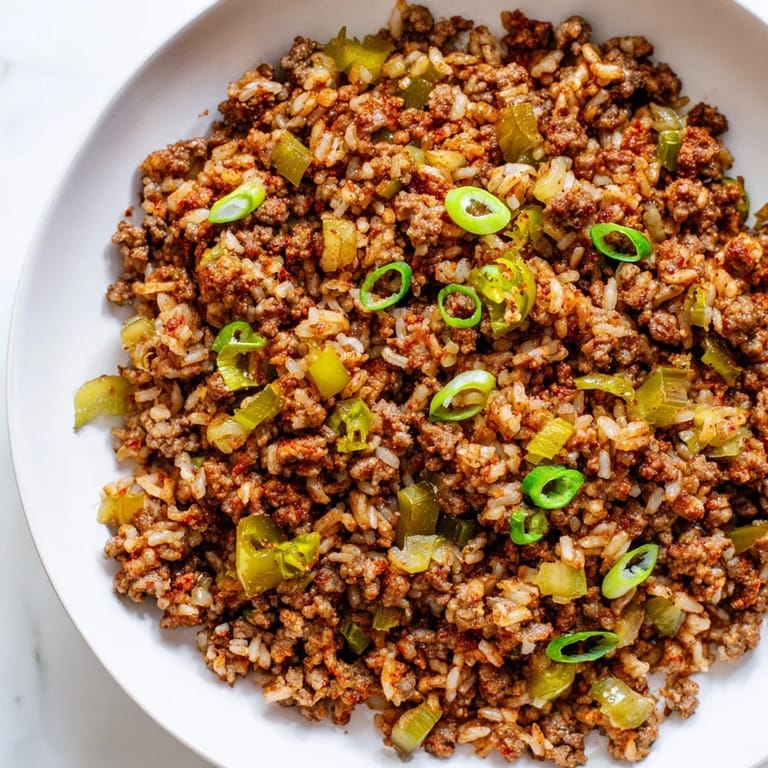
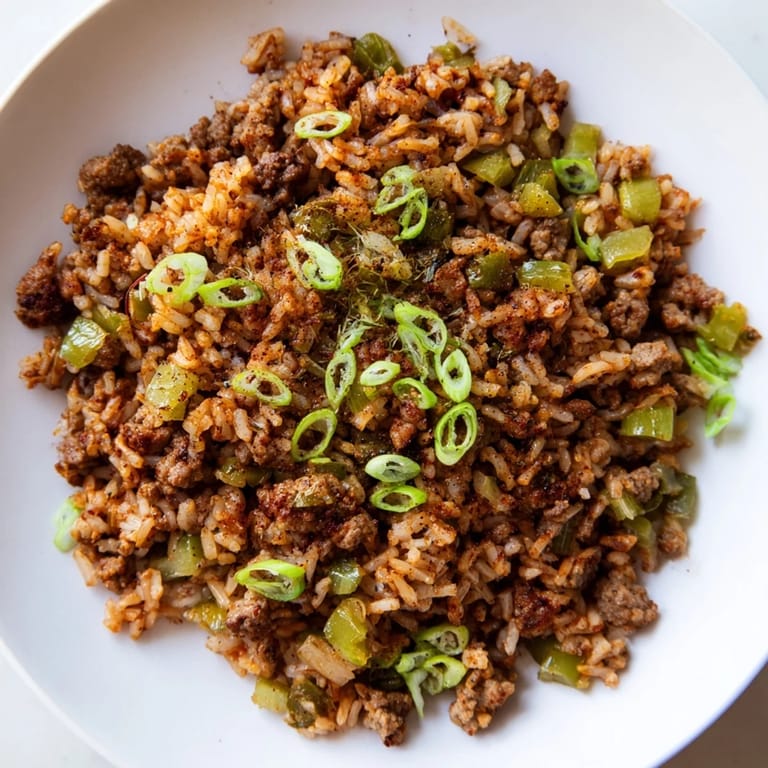
The first time I brought this to a potluck, I wasn't sure if people from other parts of the country would get it—it's not pretty, it's not Instagram-friendly, just a humble bowl of brown rice studded with meat and soft vegetables. But watching people come back for seconds with that satisfied look told me everything I needed to know about comfort food that actually comforts.
Ingredients
- Ground pork (1/2 lb): The backbone of dirty rice; it renders its fat into the oil and seasons the entire dish as it cooks.
- Ground beef or chicken livers (1/2 lb): Beef adds richness, but if you want authenticity, chicken livers give that distinctive gamey depth that makes this feel like real New Orleans cooking.
- Onion, green bell pepper, and celery (the holy trinity): These three vegetables are non-negotiable in Cajun cooking; they're the flavor base that makes everything else taste right.
- Garlic (3 cloves, minced): Add it after the trinity softens so it doesn't burn and turn bitter.
- Long-grain white rice (1 cup, rinsed): Rinsing removes excess starch so the grains stay separate and light instead of clumping together.
- Chicken broth (2 cups): Use good broth; it's half your liquid base and flavors every grain of rice.
- Cajun seasoning (1 1/2 tsp): Store-bought works fine, but if you want control, mix your own from paprika, cayenne, garlic powder, and oregano.
- Smoked paprika (1/2 tsp): This gives that subtle smokiness that makes people ask what your secret is.
- Thyme, salt, black pepper, and cayenne: Layer these carefully; you can always add heat, but you can't take it back.
- Vegetable oil (2 tbsp): Use a neutral oil that can handle medium-high heat without smoking.
- Spring onions (2, sliced for garnish): Fresh garnish cuts through the richness and adds a bright note at the end.
Tired of Takeout? 🥡
Get 10 meals you can make faster than delivery arrives. Seriously.
One email. No spam. Unsubscribe anytime.
Instructions
- Get the meat started:
- Heat oil in a large skillet over medium-high heat until it shimmers slightly. Add the ground pork and beef (or livers) and let it sit for a moment before stirring—you want some browning and crispiness, not a gray, steamed texture. Break the meat into small, irregular pieces as it cooks, about 6–7 minutes total.
- Build the flavor base:
- Once the meat is browned, add the chopped onion, bell pepper, and celery directly to the pan with any rendered fat. Let them soften and begin to stick slightly to the bottom—this is when you add the minced garlic and stir constantly for about 30 seconds so it blooms without burning.
- Toast the spices:
- Sprinkle Cajun seasoning, thyme, paprika, salt, pepper, and cayenne over everything and stir hard for a full minute. You want the spices to coat the meat and vegetables and release their oils into the fat.
- Toast the rice:
- Add the rinsed rice and stir it into the mixture, letting it sit and make contact with the hot pan for 1–2 minutes. You'll hear it click slightly against the pan bottom, which means it's starting to toast and will taste nuttier later.
- Add liquid and simmer:
- Pour in the broth and immediately scrape the bottom of the pan to loosen any flavorful bits stuck there. Bring to a boil, then reduce heat to low, cover tightly, and don't peek for 20–22 minutes—the steam is doing the work.
- Rest and fluff:
- After the rice is tender and liquid is gone, remove from heat, keep it covered, and let it sit for 5 minutes. Then use a fork to gently fluff it, separating any clumps.
- Finish and serve:
- Scatter the sliced spring onions over the top just before serving so they stay bright and fresh.
 Save to Pinterest
 Years ago, my roommate came home to find the kitchen completely dark except for the orange glow of a gas burner and the smell of this dish simmering. He didn't even ask; he just grabbed a bowl and sat at the counter, and we shared the whole skillet without saying much. That's when I knew this was more than just a recipe—it's the kind of food that makes people want to stick around.
The Holy Trinity and Why It Matters
Onion, celery, and bell pepper are the Creole equivalent of French mirepoix, but they're not interchangeable shortcuts. The proportions matter, and they're meant to soften together, releasing their sugars to balance the spice and salt. I once tried rushing this step by using a food processor to mince everything at once, thinking it would save time—the pieces were too small, they practically dissolved, and the dish lost its backbone. Since then, I do it by hand or with a sharp knife, taking those extra minutes because it genuinely changes what ends up in the bowl.
Meat Choices and Authenticity
Most recipes use ground beef, but chicken livers are the traditional choice in New Orleans, and they add an earthy, almost mineral quality that pure beef can't match. The first time I used them, I was nervous because I'd never cooked offal before, but they brown just like ground meat and dissolve slightly into the sauce, creating this rich, savory depth that makes people ask for the recipe. If livers intimidate you, don't dismiss them—they're the secret reason certain versions of this dish taste like actual home cooking rather than a recreation.
Heat Level and Adjustments
Cajun seasoning already has some kick, but the cayenne pepper at the end is your control dial—start with just a pinch if you're serving people who don't like spice, and always offer hot sauce on the side so everyone can adjust. I learned this the hard way when I tried to make one batch that satisfied both my heat-loving brother and my cautious mother; now I season conservatively and let hot sauce do the talking. A good Louisiana hot sauce like Crystal or Frank's does more for this dish than any extra cayenne ever could.
- Taste before you finish cooking and adjust salt first—it's the most important seasoning.
- Let the cayenne sit for a minute after adding it so you can gauge the heat level accurately.
- Serve with hot sauce and let people control their own spice adventure.
 Save to Pinterest
 This dish has fed me through lazy weeknights and impromptu dinners when I realized I had nothing but rice and whatever meat was in the freezer. It's honest food that asks for nothing fancy and gives back a meal that feels like it took hours, even when you're eating by 6:30.
Recipe FAQ
- → What types of meat are used in this dish?
Ground pork and either ground beef or chicken livers are traditionally used to create rich, savory flavors.
- → Can I adjust the spice level?
Yes, you can modify the amount of cayenne pepper or Cajun seasoning to suit your preferred heat intensity.
- → What vegetables are included?
Onion, green bell pepper, celery, and garlic add aromatic depth and texture to the dish.
- → What cooking method is best for this dish?
Sautéing meats and vegetables before simmering the rice in broth enhances flavors and ensures tender textures.
- → How should the rice be prepared before cooking?
Rinse the long-grain white rice to remove excess starch and achieve a fluffier final texture.
- → What can be served alongside for best pairing?
This dish pairs well with crisp lagers or chilled white wine, balancing the spicy, hearty flavors.