 Save to Pinterest
 My first real gumbo came together on a humid September evening when I was trying to impress someone who actually knew Louisiana food. I'd watched my neighbor make her version countless times, admiring how she never rushed the roux, how she let it turn almost black without flinching. That night, I finally understood what she meant about patience and heat—the moment that dark chocolate color hit, something clicked. The smell alone made the whole apartment feel like a proper kitchen.
I made this for a dinner party where half the guests had never had real gumbo before, and watching them take that first spoonful over rice was pure satisfaction. Someone asked for the recipe before they'd even finished their bowl, and I realized right then that this wasn't just food—it was a conversation starter, a memory maker, the kind of dish people remember you by.
Ingredients
- Boneless, skinless chicken thighs (350 g): Thighs stay tender and flavorful during the long simmer, unlike breast meat which can turn dry; they're also more forgiving if you're cooking for the first time.
- Smoked andouille sausage (225 g): This is the backbone of authentic gumbo flavor; the smokiness infuses everything, but regular smoked sausage works fine if you can't find it.
- Fresh or frozen okra (250 g): Okra thickens the gumbo naturally as it breaks down; frozen is just as good as fresh, so don't stress about availability.
- Holy trinity—onion, bell pepper, celery: This combination is called the trinity in Louisiana cooking, and it's non-negotiable; it creates the flavor foundation everything else builds on.
- All-purpose flour and vegetable oil (60 g each): The roux is what separates gumbo from regular soup; equal parts flour and oil cooked slowly until deep brown is the secret to that rich, almost nutty flavor.
- Chicken stock (1.5 liters): Use good quality stock; it's the canvas everything else paints on, and weak stock will leave you with a weak gumbo.
- Bay leaves, thyme, smoked paprika, cayenne: These seasonings build layers; the bay leaves come out at the end, and the cayenne is your heat dial—start with half a teaspoon and taste before adding more.
- Filé powder (optional): Traditional thickener made from sassafras; if you use it, sprinkle it in after removing from heat to preserve its flavor.
Tired of Takeout? 🥡
Get 10 meals you can make faster than delivery arrives. Seriously.
One email. No spam. Unsubscribe anytime.
Instructions
- Build the roux with patience:
- Heat oil over medium heat, add flour, and whisk constantly. This takes 15–20 minutes, and yes, it feels long, but you're creating the soul of this dish. Watch as it goes from blonde to caramel to chocolate brown, and stop before it turns black or bitter.
- Create your aromatic base:
- Once the roux hits that deep brown, add your chopped onion, pepper, and celery. They'll sizzle and soften within minutes, releasing their sweetness into the roux. Add garlic last so it doesn't burn.
- Sear the proteins:
- Add your sausage and chicken pieces to the pot. Let them brown for a few minutes; this creates a flavorful crust that deepens the final broth.
- Introduce the okra:
- Stir in your sliced okra and cook it for 3–4 minutes before adding liquid. This brief cooking helps it release its thickening power.
- Build the broth:
- Add tomatoes, stock, bay leaves, thyme, paprika, cayenne, Worcestershire, salt, and pepper. Bring to a boil, then lower the heat and let it simmer gently for 45–50 minutes. The longer it simmers, the more the flavors meld and mellow.
- Finish and serve:
- Remove bay leaves, taste, adjust seasoning. If you want it thicker, sprinkle in filé powder now. Serve over white rice with garnishes of spring onions and fresh parsley.
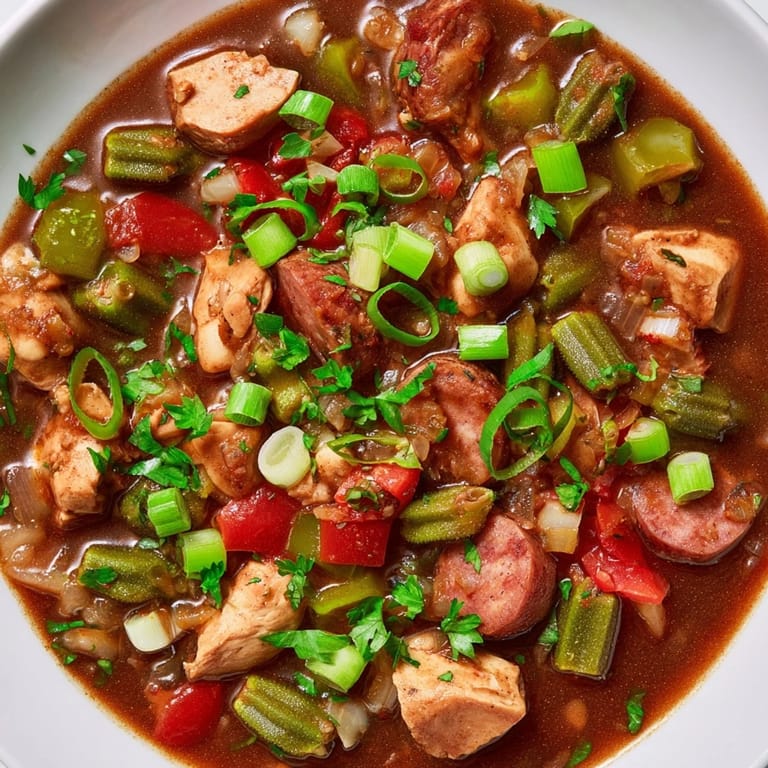 Save to Pinterest
 The moment gumbo stopped being just a recipe for me was when my neighbor tasted my version and gave me that knowing nod, the one that said I'd finally understood the point of all that stirring and waiting. That's when it became ours—a shared language made of roux and smoke and time.
The Art of the Roux
The roux is where gumbo separates itself from every other soup and stew. It's not just a thickener; it's the flavor base, the character, the thing that makes people ask if you have Creole ancestry. A blonde roux tastes mild, a chocolate roux tastes deep and almost sweet, and a burned roux tastes like regret. You're essentially toasting flour in oil, and the longer it toasts, the darker and richer it becomes. The catch is that it can go from perfect to ruined in seconds once it hits the chocolate stage. Watch it like you're hypnotizing a cat, keep your whisk moving, and trust your eyes.
Customizing Your Gumbo
Gumbo is endlessly forgiving if you understand its core. Don't like okra? Use more filé powder instead. Want seafood? Swap the chicken and sausage for shrimp and crab meat in the last 10 minutes. Prefer less heat? Cut the cayenne in half. The trinity—onion, pepper, celery—is non-negotiable, and the roux is non-negotiable, but everything else is a conversation between you and your pantry. I've made versions with extra garlic, with a splash of red wine, with different sausages depending on what looked good at the market. Each one tastes like gumbo, and each one tastes like itself.
Serving and Storage
Gumbo is best served hot over fluffy white rice, with hot sauce on the side and crusty bread for soaking up every last drop. Leftovers freeze beautifully for up to three months, and there's something wonderful about having a container of gumbo waiting in the freezer for a night when you want comfort without effort. The flavors actually deepen as it sits, so day-two gumbo often tastes better than day-one.
- Store in airtight containers and cool completely before freezing to prevent condensation.
- Reheat gently on the stovetop with a splash of stock to restore the broth's body.
- Filé powder should only be added fresh, right before serving, so add it after reheating.
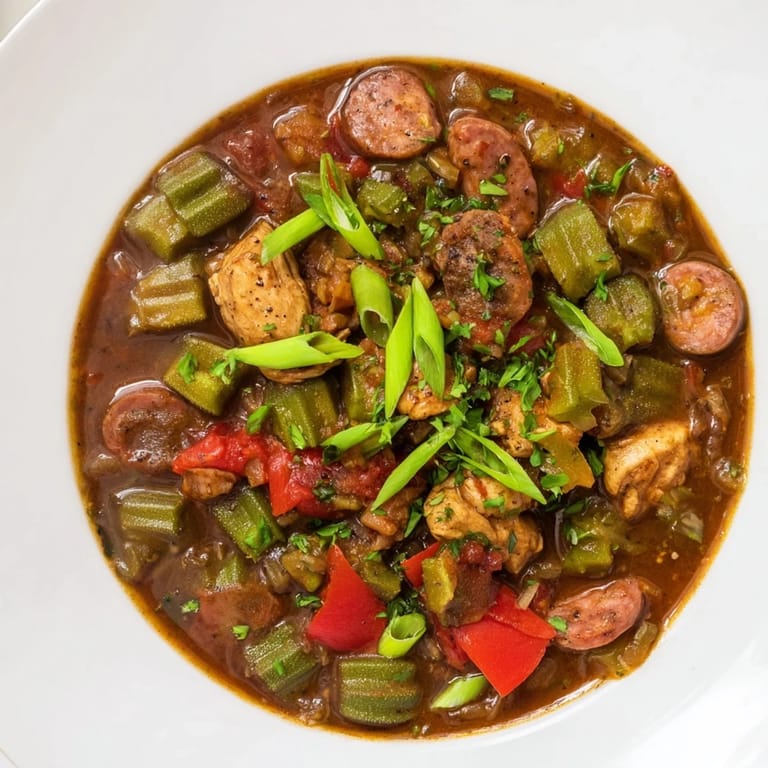 Save to Pinterest
 Gumbo isn't fancy, but it's honest food that tastes like someone cared enough to spend time. Make it once and you'll understand why Louisiana cooks guard their versions so carefully.
Recipe FAQ
- → What type of sausage is best for this dish?
Smoked andouille sausage offers authentic smoky depth, but any smoked sausage works well.
- → Can I use frozen okra instead of fresh?
Yes, thaw and drain frozen okra before adding to maintain texture.
- → How is the dark roux prepared without burning?
Constantly whisk flour and oil over medium heat until chocolate brown, about 15-20 minutes, careful not to scorch.
- → What does filé powder add to the dish?
Filé powder thickens the broth and imparts a subtle earthy sassafras flavor, enhancing authenticity.
- → Can this dish be made gluten-free?
Use a gluten-free flour blend for the roux and verify that the sausage and stock contain no gluten.
- → Is seafood an option for this stew?
Yes, peeled shrimp or crab meat can be added during the final simmer for a seafood variation.