 Save to Pinterest
 The first time I made jambalaya, I was standing in a cramped kitchen with a friend who'd just returned from New Orleans, and she kept insisting that the real magic wasn't in following a recipe but in the smell—that moment when the sausage hits the hot oil and releases this smoky, almost intoxicating aroma that fills the whole space. I was skeptical at first, thinking it was just rice and vegetables, but then the peppers started to soften and the garlic joined in, and suddenly I understood what she meant. This one-skillet meal became my go-to when I wanted to impress without spending hours at the stove, and over time it's become less about impressing and more about that singular moment when everything comes together in one pan.
I remember making this for my sister on a random Tuesday when she'd had a long day, and watching her face when she took the first bite—that slight surprise when her palate registered both the smoky depth and the brightness of the tomatoes at the same time. She asked for the recipe that same night, and I realized then that this dish has a way of making people feel welcomed, the way food sometimes does when it carries a little history and a lot of flavor in every spoonful.
Ingredients
- Andouille sausage (8 oz): The smokiness is non-negotiable here—it's what gives the whole dish its backbone and makes the rice absorb all those deep, layered flavors.
- Large shrimp (8 oz): Peel and devein them yourself if you can; it takes five minutes and makes a difference in how they cook evenly.
- Yellow onion (1 medium): The sweetness balances the spice and smoke, so don't skip it or cut corners with size.
- Red and green bell peppers (1 each): The color isn't just for looks—different peppers bring different notes, and using both gives you complexity.
- Celery (2 stalks): This is the Holy Trinity's quiet partner; it adds an earthy undertone you won't identify but will definitely taste.
- Garlic (3 cloves): Mince it fine so it distributes evenly and doesn't dominate any single bite.
- Long-grain white rice (1 cup): The grains stay separate and don't get mushy, which matters more than you'd think.
- Low-sodium chicken broth (1 2/3 cups): The liquid is doing the seasoning work here, so the broth quality affects the whole dish.
- Diced tomatoes (1 can, with juice): Don't drain them; that juice carries flavor and helps cook the rice through.
- Smoked paprika (1 tsp): This is where the smoke lives when the sausage isn't enough—use the real stuff, not the sweet kind.
- Dried thyme, oregano, cayenne, black pepper (1/2 tsp each, plus salt): These spices work together like a conversation, each one adding its own voice without drowning out the others.
- Olive oil (2 tbsp total): Split between browning the sausage and sautéing the vegetables for even flavor building.
- Fresh parsley (2 tbsp): The final brightness that cuts through the richness and makes everything feel alive.
Tired of Takeout? 🥡
Get 10 meals you can make faster than delivery arrives. Seriously.
One email. No spam. Unsubscribe anytime.
Instructions
- Brown the sausage:
- Heat a tablespoon of oil in your skillet over medium-high heat and let the sausage slices get deeply browned on both sides—this should take about three to four minutes, and you'll know it's right when the kitchen smells like a smokehouse. Don't crowd the pan or stir too much; let the heat do the work and develop that caramelized exterior that carries flavor throughout the whole dish.
- Build the aromatics:
- Add the remaining oil and sauté your onion, peppers, and celery for a good four to five minutes until they soften and start to release their juices. Once they're ready, add the garlic and cook just long enough to hear it sizzle—about one minute—so it flavors the oil without turning bitter.
- Toast the rice with spices:
- Stir in the rice and all your spices, coating every grain with the oil and vegetables for about a minute; this step toasts the rice slightly and helps it stay separate during cooking. You'll see the rice turn from translucent to slightly opaque, and that's when you know the spices have done their job.
- Combine and simmer:
- Return the sausage to the skillet and pour in the tomatoes with their juice, then the broth, stirring until everything's evenly distributed. Bring it to a simmer, then reduce the heat to low, cover it, and let it cook undisturbed for twenty minutes while the rice absorbs all that flavorful liquid.
- Add the shrimp:
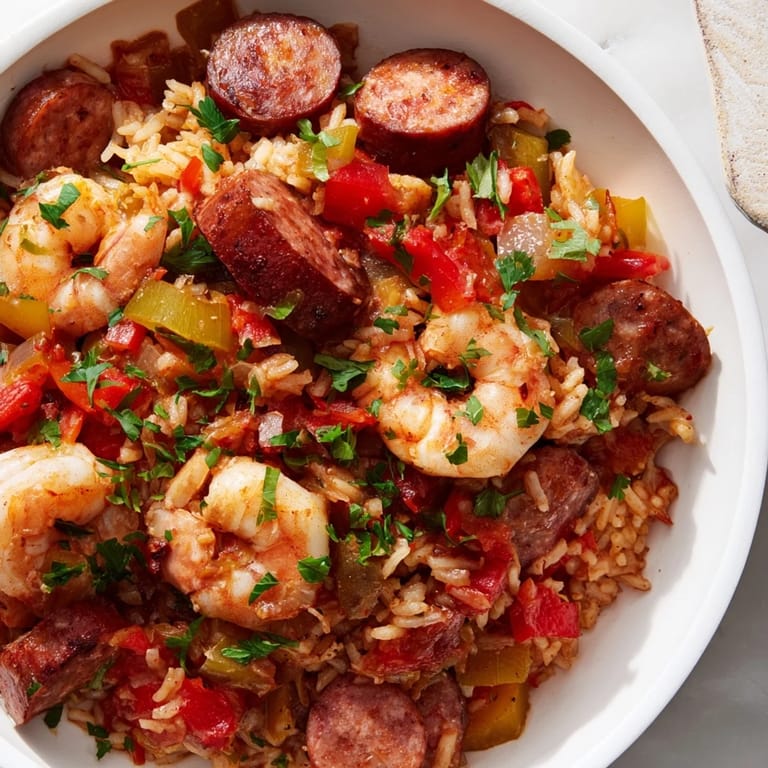
- After twenty minutes, arrange the shrimp on top of the rice mixture like they're nestling into a bed, cover, and cook for five to seven minutes until they turn pink and firm. Watch for that color change rather than relying on a timer; every stove is different, and the shrimp should be tender, not rubbery.
- Rest and serve:
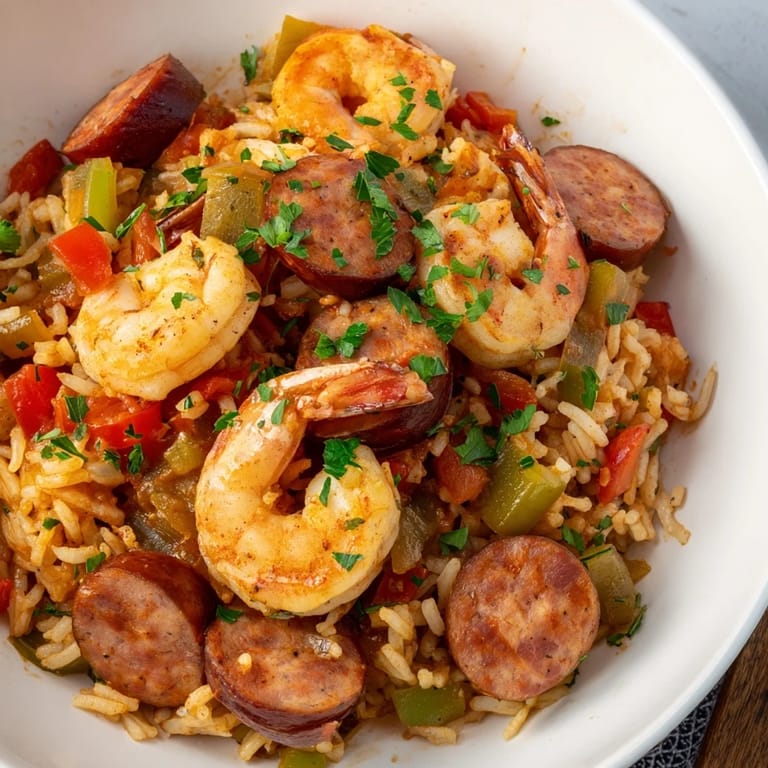
- Fluff everything gently with a fork to incorporate the shrimp and release some steam, letting the residual heat finish any last cooking. Scatter the fresh parsley over the top and serve immediately while the skillet is still warm and every component is at its best.
 Save to Pinterest
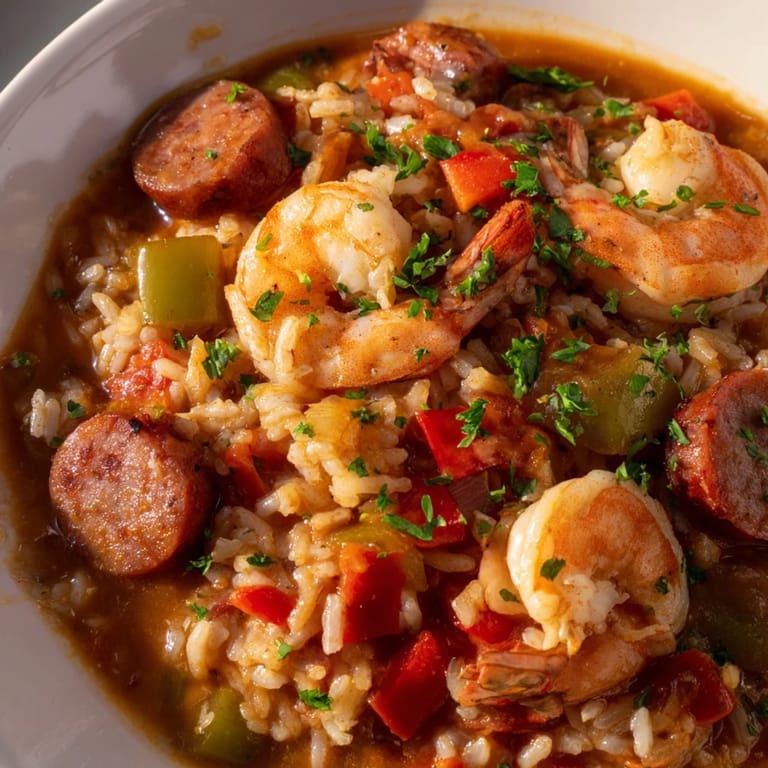
 There's a moment right when you fluff the rice and the shrimp are revealed, still glistening from their quick steam bath, when you realize this simple dish is actually a celebration—of flavors that shouldn't work together but do, of a meal that nourishes without fuss, of the kind of cooking that makes a regular evening feel like an occasion.
The Soul of the Dish
Jambalaya isn't really French, despite what some people claim—it's a New Orleans invention that borrowed from Spanish paella, West African cooking traditions, and whatever ingredients were on hand in a port city where cultures collided on street corners. The result is a dish that's raucous and joyful, with no pretense about what it is: honest, flavorful, and designed to feed people without apology. When you're making this, you're participating in that same kind of improvisation and cultural exchange that created it in the first place.
Cooking It Your Way
The beauty of jambalaya is that it's forgiving in some ways and strict in others—you can swap the shrimp for chicken or keep both if you're feeling generous, and you can dial the heat up or down depending on your comfort level and who's eating. What you can't skip is the browning of the sausage, the proper sautéing of the vegetables, and the patience to let the rice cook covered without poking at it. These aren't rules to make the recipe precious; they're shortcuts to flavor that people have figured out over generations.
Serving and Pairing
Serve this straight from the skillet if you're feeling casual, or transfer it to a nice serving dish if the occasion calls for it—the food doesn't care, but the people eating it might appreciate the gesture. A crusty piece of bread soaks up the saucy bits at the bottom, and if you can pair it with a crisp white wine like Sauvignon Blanc, you've moved from weeknight dinner into something that feels a bit more intentional.
- Hot sauce on the side lets people adjust the heat to their preference without you having to cook multiple versions.
- A simple green salad cuts through the richness and gives your palate something to rest on between bites.
- If you're cooking for people who love spice, keep some extra cayenne and maybe some Creole seasoning nearby so they can customize their bowl.
 Save to Pinterest
 This dish is one of those meals that justifies a weeknight spent in the kitchen—it's restaurant-quality flavor that you made yourself, in one skillet, in under an hour. That's its own kind of magic.
Recipe FAQ
- → Can I use different proteins in this jambalaya?
Yes, chicken can replace shrimp or be combined with sausage for a varied protein profile.
- → How do I adjust the heat level?
Modify cayenne pepper quantity or add hot sauce to reach your preferred spice level.
- → What type of rice works best?
Long-grain white rice absorbs flavors well and maintains texture during simmering.
- → Is there a recommended cooking vessel?
A large deep skillet with a lid ensures even cooking and prevents liquid evaporation.
- → How can I make this dish dairy-free?
This formulation is dairy-free as is, using olive oil and broth without any dairy ingredients.
- → What garnish best complements the flavors?
Fresh chopped parsley adds a bright and fresh finish to the hearty dish.