 Save to Pinterest
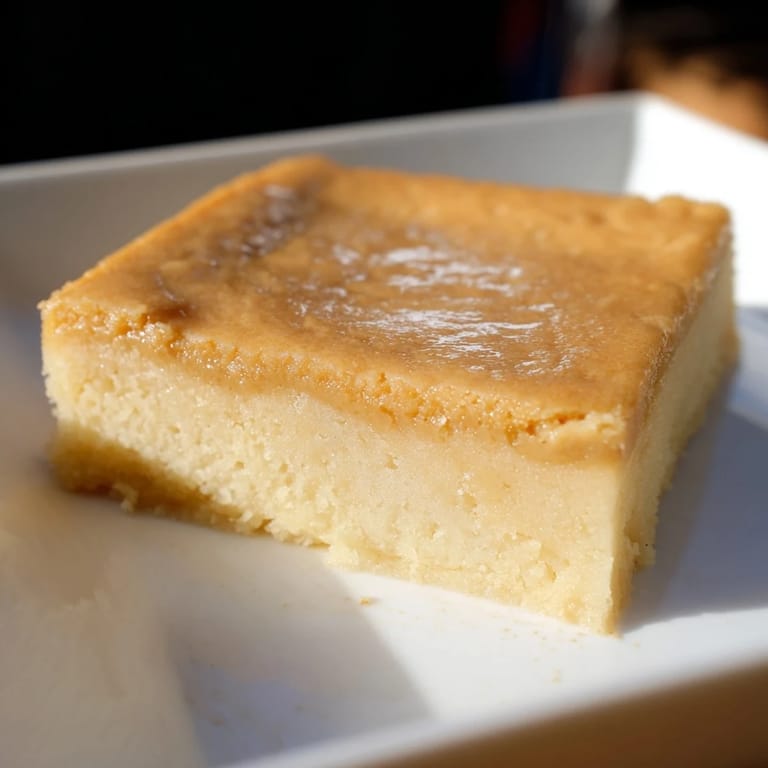
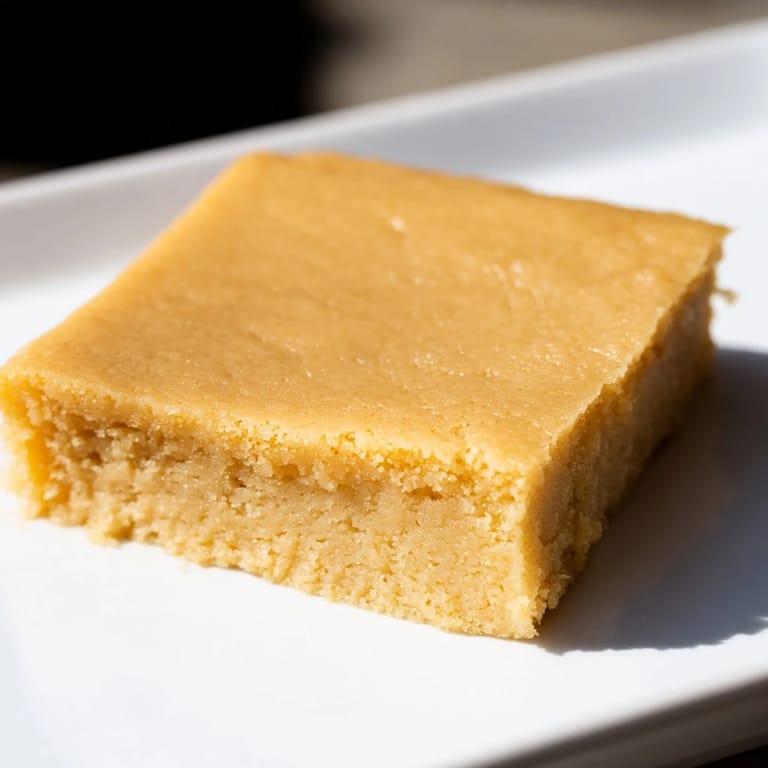
 The first time I made mochi cake was a Sunday afternoon when my neighbor brought over a container of homemade mochiko and said, casually, that I should try combining it with peanut butter sometime. I'd never heard of that pairing before, but something about it stuck with me. A few weeks later, I found myself standing in my kitchen with a whisk in one hand and zero certainty about what I was doing, but the smell of coconut milk mixing with peanut butter as I stirred was so immediately comforting that I knew I was onto something. That first cake came out chewy and tender, a little denser than I expected, but when I bit into it, that gentle chewiness combined with the rich peanut flavor made everything click. Now it's the dessert I make whenever I want something that feels both indulgent and simple.
I made this for a potluck once and watched people come back for seconds without even asking what it was made from. One friend thought it had something Asian in it because of the texture, another swore there was more chocolate than there actually was. No one could quite pin down the flavor profile, which felt like the best compliment possible—it was familiar enough to be comforting, unique enough to feel special. That's when I realized this cake works because it's genuinely a bridge between two food traditions.
Ingredients
- Sweet rice flour (mochiko): This is the star ingredient that creates that signature chewy texture; regular rice flour won't give you the same result, so don't skip this step.
- Granulated sugar: Standard white sugar is all you need here to balance the richness of the peanut butter without competing flavors.
- Baking powder: Just a teaspoon gives the cake a subtle lift so it doesn't sink into a brick in the middle.
- Salt: A quarter teaspoon is your secret weapon for making the peanut butter taste deeper and less one-note.
- Whole milk and coconut milk: The combination creates a tender crumb and adds a gentle sweetness that makes the cake taste almost custardy when it bakes.
- Eggs: Three large eggs bind everything and add structure while keeping the cake moist.
- Creamy peanut butter: Use the smooth kind for a uniform texture; natural peanut butter will work but the separated oil can change how the cake bakes.
- Unsalted butter, melted: Melted butter incorporates more smoothly than cold, and it helps create that tender crumb.
- Vanilla extract: Just a teaspoon rounds out the flavor without making the cake taste like vanilla cake.
Tired of Takeout? 🥡
Get 10 meals you can make faster than delivery arrives. Seriously.
One email. No spam. Unsubscribe anytime.
Instructions
- Set up your stage:
- Preheat your oven to 350°F and grease a 9x13 pan well or line it with parchment—this batter is thick and wants to stick. Having everything prepped now means you can move quickly once you start mixing.
- Combine your dry ingredients:
- In a large bowl, whisk the sweet rice flour, sugar, baking powder, and salt together until there are no lumps hiding in the flour. The drier ingredients blend easier this way.
- Build your wet mixture:
- In a separate bowl, whisk the milk, coconut milk, eggs, peanut butter, melted butter, and vanilla until completely smooth—this takes a minute or two because peanut butter is thick. A few small lumps are fine; they'll disappear as the batter bakes.
- Bring it together:
- Pour the wet ingredients into the dry ones and whisk steadily until the batter is smooth and uniform. You'll feel it transform from gritty to silky over about thirty seconds of whisking.
- Pour and prep:
- Transfer the batter into your prepared pan and give it a few gentle taps on the counter to release trapped air bubbles. The batter should settle evenly across the pan.
- Bake until golden:
- Slide it into the oven for 45 to 50 minutes, watching for a golden-brown top and a toothpick that comes out clean from the center. The edges will start to pull away slightly from the pan when it's done.
- Cool and rest:
- Let the cake sit in the pan until it cools completely—this is important because mochi cake is delicate while warm and needs time to set. Slice it into squares once it's fully cooled.
- Serve and store:
- Eat it at room temperature or chilled, whichever you prefer. Keep leftovers in an airtight container in the fridge for up to five days.
 Save to Pinterest
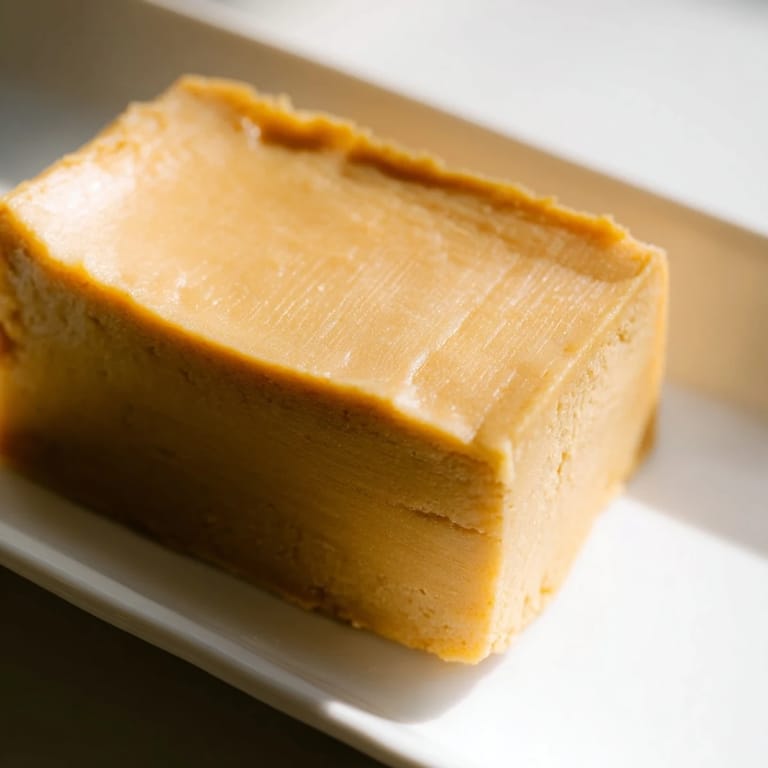
 There's a moment when this cake is still warm and you cut into it with a knife and that chewy texture pulls just slightly, releasing a little puff of peanut butter-scented steam. That's the moment this stops being just a dessert and becomes something people actually crave. I've had friends text me weeks later asking if I'm making it again.
Texture and Why It Matters
Mochi cake lives in its own category because of how the glutinous rice flour works. As the cake bakes, the flour absorbs moisture from the milk and coconut milk, creating this tender, almost silky crumb that's completely different from wheat flour. The chewiness isn't gumminess—it's a delicate texture that feels luxurious in your mouth. This is why you can't shortcut with regular rice flour or all-purpose flour; the science is different, and the result won't be the same.
Flavor Balance and Customization
The peanut butter is the main character here, but the coconut milk plays an important supporting role by adding sweetness and creaminess without peanut flavor. If you want to lean even further into that nuttiness, sprinkle roasted peanuts on top before baking, or stir a tablespoon of peanut butter powder into your dry ingredients. For a lighter version, swap the coconut milk for evaporated milk or even heavy cream thinned with water. The cake is flexible enough to handle these adjustments without falling apart.
Serving Suggestions and Storage
This cake is honestly perfect on its own, but I love serving it alongside fresh berries or a dollop of whipped cream for contrast. It keeps beautifully in the fridge for about five days in an airtight container, and honestly it's almost better the next day when the flavors have had time to settle. If you want to make it ahead for an event, you can bake it the day before and keep it covered—just pull it out an hour before serving so it reaches room temperature.
- Pair it with cold milk for the most satisfying late-night snack.
- If you have a nut allergy in your crowd, this recipe works beautifully with sunflower seed butter as a one-to-one swap.
- For extra richness, serve it with a side of dulce de leche or a drizzle of chocolate sauce.
 Save to Pinterest
 This cake has become one of my most reliable recipes because it never fails and it genuinely makes people happy. Make it once and you'll understand why it's worth keeping in your rotation.
Recipe FAQ
- → What makes the cake chewy?
The use of sweet rice flour (mochiko) creates the characteristic chewy texture unique to mochi-style desserts.
- → Can I substitute coconut milk?
Yes, evaporated milk can be used as a lighter alternative without compromising moisture and flavor.
- → How do I know when the cake is done?
When the top is golden brown and a toothpick inserted in the center comes out clean, the cake is perfectly baked.
- → Can this be made gluten-free?
Using glutinous rice flour and ensuring all ingredients are gluten-free makes this cake suitable for gluten-free diets.
- → How should leftovers be stored?
Store leftover portions in an airtight container in the refrigerator to maintain freshness and texture.