 Save to Pinterest
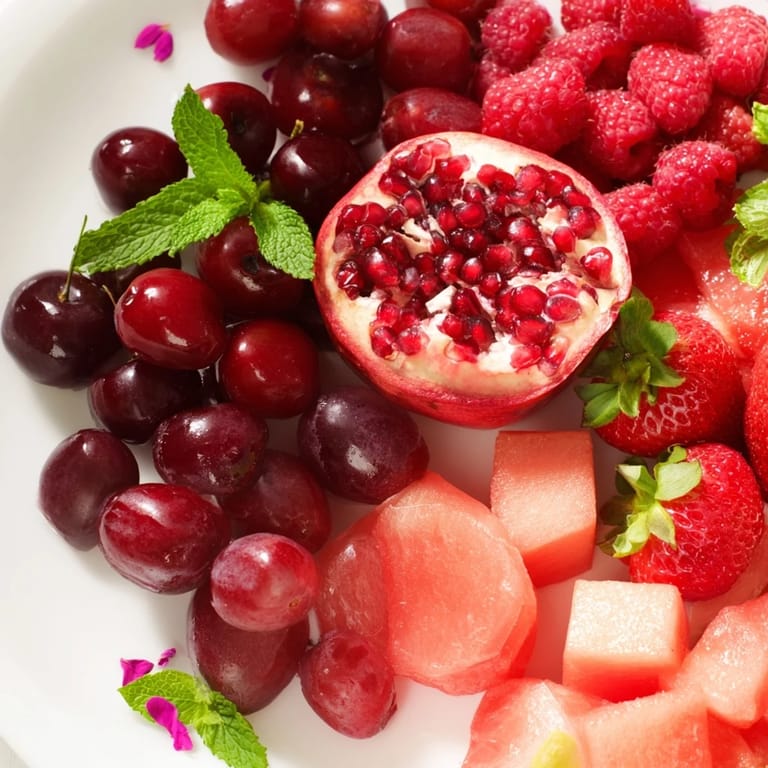
 I stumbled onto this platter by accident one winter afternoon when my sister arrived unannounced with a bag of pomegranates from the farmer's market. She halved one while chatting, and watching those jewel-like arils catch the kitchen light sparked something—what if we built an entire arrangement around that vivid centerpiece? Within an hour, I'd gathered every red and pink fruit in my fridge, and suddenly our humble wooden platter transformed into something that looked like it belonged in a gallery. It became our thing after that, the arrangement that made every gathering feel intentional.
The first time I made this for my book club, someone asked if it was too beautiful to eat. That question stuck with me because it meant the arrangement had done exactly what it was supposed to—make people pause and actually look at their food. We ended up photographing it before anyone touched it, and I caught my friend Sarah sneaking a strawberry when she thought no one was watching. Within minutes, the gradient started to blur, and honestly, that felt right. Beauty served a purpose here.
Ingredients
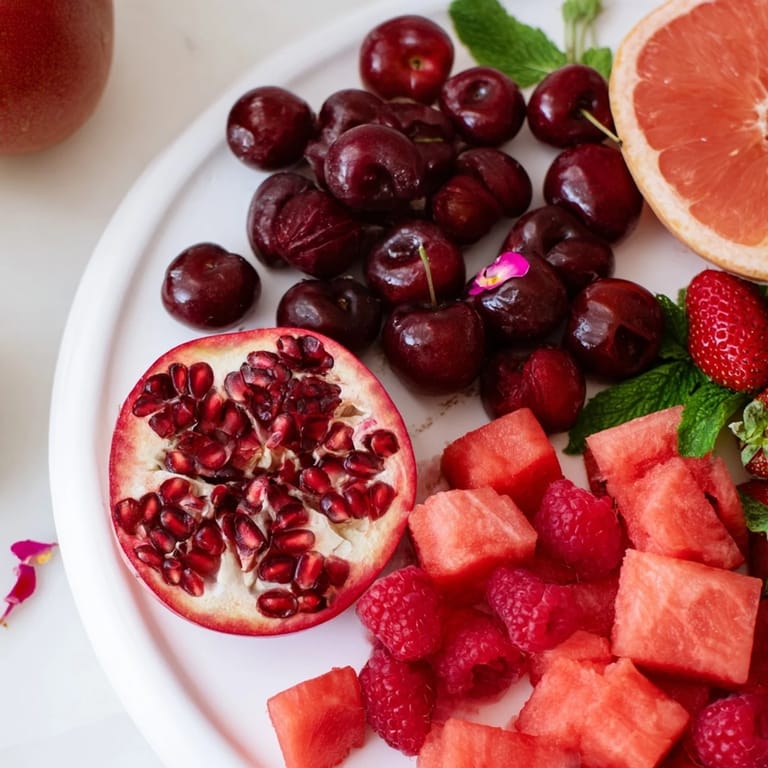
- 1 large pomegranate, halved: This is your anchor, the jeweled focal point that everything else orbits around. Choose one with tight, unblemished skin and a deep crimson color.
- 1 cup dark cherries, pitted: These set the deepest tone of your gradient; their almost black-red creates a visual anchor for the eye.
- 1 cup red grapes: They roll easily into gaps and add a glossy, polished look to the deep red section.
- 1 cup strawberries, hulled: Their soft red bridges the gap between deep crimson and brighter reds; slice them lengthwise to show off that pale center.
- 1 cup raspberries: Delicate and bumpy-textured, they signal the shift toward pink beautifully.
- 1 cup watermelon, cubed: The pale pink cubes are softer visually than the jewel tones, advancing the gradient toward white.
- 1 cup pink grapefruit segments: These add translucency and a slight shimmer that catches light differently than solid fruits.
- 1 cup dragon fruit, cubed: The pale interior with tiny black seeds creates an almost ethereal quality as you move toward the outer ring.
- 1 cup apple slices, pink or blush varieties: Use a mandoline for gossamer-thin slices that look more refined, and toss them in lemon juice immediately to prevent browning.
- 1 cup pear slices: Their creamy pale color anchors the lightest end of your spectrum and adds a delicate sweetness.
- Fresh mint leaves: A whisper of green breaks up the monochromatic pink and adds aroma.
- Edible rose petals (optional): If you use them, scatter sparingly—they're a flourish, not a foundation.
Tired of Takeout? 🥡
Get 10 meals you can make faster than delivery arrives. Seriously.
One email. No spam. Unsubscribe anytime.
Instructions
- Set Your Anchor:
- Place the pomegranate halves, cut-side up, in the dead center of your platter. This isn't decoration yet—it's the gravitational pull everything else will circle around. Step back and make sure it feels centered to your eye, not just mathematically.
- Establish the Deep Reds:
- Working in a crescent around the pomegranate, layer cherries, grapes, and strawberries as your first ring. Think of this as creating a shadow—the darkest, most dramatic moment of the gradient. Overlap them slightly so the platter doesn't peek through, and let the shapes vary so it feels organic.
- Transition into Pink:
- Next ring: raspberries, watermelon cubes, and grapefruit segments. You're bridging now, so place these thoughtfully where they kiss the red fruits. The texture shift from glossy grapes to bumpy raspberries should feel intentional, like an ombré moving across fabric.
- Arrive at Pale Tones:
- Dragon fruit, apple slices, and pears form your outer edge, the lightest part of the spectrum. These pale, almost shy fruits benefit from careful arrangement—let them rest against each other rather than competing for space. If your apple slices have browned even slightly, flip them and show their fresher underside.
- Add Final Touches:
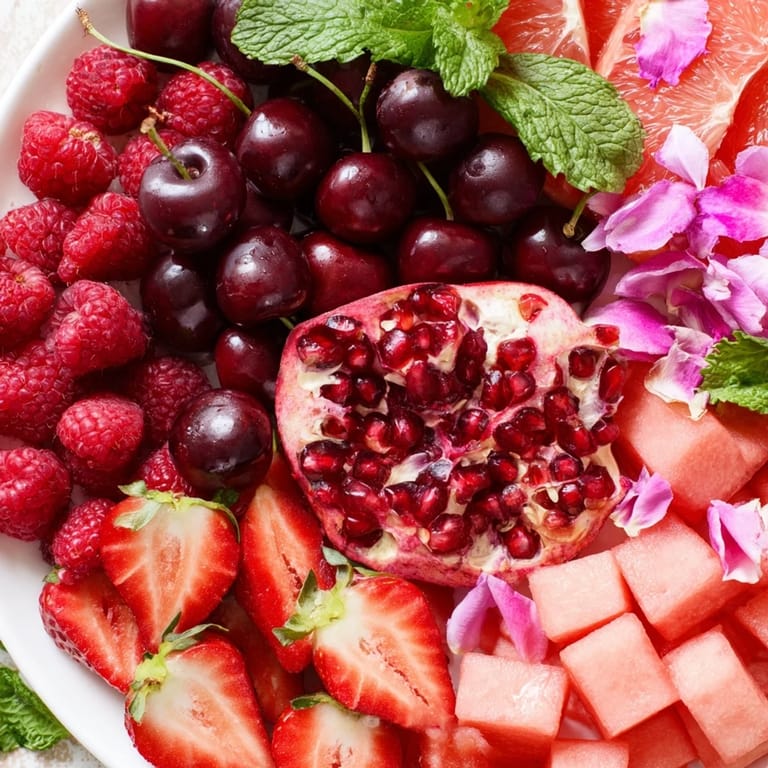
- Tuck mint leaves into crevices—enough to be visible, not enough to obscure the fruits. If you're using rose petals, scatter them as a whisper across the top, concentrating them slightly around the pomegranate for visual connection.
- Finish and Present:
- Step back. Does it flow? Does your eye move naturally from deep to light? If something feels off, don't hesitate to nudge individual fruits—this is the pleasure of it, the small refinements. Serve immediately, or cover loosely with plastic wrap and refrigerate for up to 4 hours.
 Save to Pinterest
 What made this platter memorable wasn't just how it looked—it was watching people reach for it. Someone who claimed they never ate fruit suddenly found themselves holding a handful of berries, then another. The arrangement gave each fruit permission to be noticed individually, even as they sang together. That's when I realized this wasn't really about the pomegranate at all.
Why Fruit Matters More Than You Think
Growing up, fruit was an afterthought, something that showed up in a bowl on the counter if we remembered to buy it. This platter changed how I think about fruit presentation entirely. When fruits are arranged with intention instead of casualness, they stop being a side note and become a focal point. The flavor doesn't change, but somehow it tastes richer when it looks like someone cared enough to arrange it thoughtfully.
Choosing Fruits by Season and Mood
Summer asks for cherries and berries; winter for pears and persimmons. But I've learned that the best version of this platter is the one you can actually make, not the one you're imagining. Some days you have access to dragon fruit, some days you don't. Lychees work beautifully in place of watermelon. Red currants are smaller and fit differently than grapes. The gradient logic stays the same—darkest to lightest—but your specific fruits should reflect what's alive right now in your region.
The Power of Simplicity
I used to think impressive food required technique and complexity, probably because I'd spent so much time reading recipes written like engineering manuals. This platter taught me something quieter: that thoughtful arrangement and fresh ingredients can achieve more impact than elaborate cooking. There's a freedom in that, a permission to feed people beautifully without burning yourself out in the process.
- Plan your color flow before you arrange—lay everything out in a rough circle on your counter first to see how the gradient reads.
- Use chilled fruit when possible; it holds its shape better and looks crisper under light.
- If you're serving outdoors or in a warm room, keep fruits cold until the last moment by storing them in shallow bowls of ice.
 Save to Pinterest
 This platter has become my answer to the question 'what do I make when I want to feed people something beautiful but honest.' Every arrangement is different, a reflection of what season it is and what you managed to find, and that variation is the whole point. The pomegranate stays centered, and everything else moves around it like planets in a small, delicious orbit.
Recipe FAQ
- → How do I prevent the apple and pear slices from browning?
Lightly drizzle lime juice over the apple and pear slices to maintain their fresh appearance and prevent browning.
- → Can I substitute any fruits in the platter?
Yes, seasonal fruits like red currants, pomegranate seeds, lychees, or peaches can replace some items while maintaining color gradient and flavor balance.
- → What is the best way to arrange the fruits visually?
Arrange fruits in overlapping layers with smooth color transitions—from deep reds near the center to pale pinks and whites at the edges—to create a stunning gradient effect.
- → Are there any garnishes recommended for extra aroma and color?
Fresh mint leaves and edible rose petals can be added optionally to enhance both aroma and visual appeal of the platter.
- → How should the fruit platter be served or stored before serving?
Serve immediately for the best freshness or cover and refrigerate until ready to serve. This helps maintain the vibrant colors and textures.