 Save to Pinterest
 The first time I made meringues, I was convinced they'd collapse the moment I opened the oven door—turns out I was right, but only because I didn't know better. Years later, a friend brought black currant powder to my kitchen, and something clicked: these airy, crisp clouds needed that tart, jewel-toned swirl. Now they're my quiet win, the dessert I make when I want something that feels fancy but asks almost nothing of me.
I served these at a small dinner party on a rainy Tuesday, and watching guests pick them up with their fingers, surprised by how they dissolved on the tongue, reminded me why I love meringues—they're humble ingredients doing something a little bit magical.
Ingredients
- Egg whites (4 large, room temperature): Cold eggs won't whip properly, so pull them out an hour before and let them sit on the counter—this one trick changes everything.
- Superfine sugar (1 cup/200 g): Regular sugar works, but superfine dissolves faster and gives you smoother peaks, worth the small upgrade.
- Cream of tartar (1/4 tsp): This stabilizes the egg whites and helps them hold their shape through baking; it's non-negotiable.
- Salt (1/4 tsp): A small pinch brings out the sweetness and balances the tartness of the black currant.
- Black currant powder (2 tbsp freeze-dried, finely ground): The star of the show—it marbles beautifully and gives you that sophisticated fruity tang.
- Lemon juice (1 tsp, optional): If you use it, it sharpens the flavor and adds a subtle brightness that plays well with black currant.
Tired of Takeout? 🥡
Get 10 meals you can make faster than delivery arrives. Seriously.
One email. No spam. Unsubscribe anytime.
Instructions
- Get everything ready:
- Preheat your oven to 225°F and line two baking sheets with parchment paper—a cool oven is your friend here, as it lets the meringues dry out rather than brown.
- Start the egg whites:
- In a spotlessly clean bowl (any grease will sabotage you), whisk the egg whites and cream of tartar on medium speed until they turn foamy and you can see the mixer leaving trails. This usually takes about 2 minutes.
- Build the peaks:
- Add the sugar one tablespoon at a time while whisking, waiting a few seconds between additions so it incorporates smoothly. Keep going until you have stiff, glossy peaks that stand up straight when you lift the whisk.
- Season and finish:
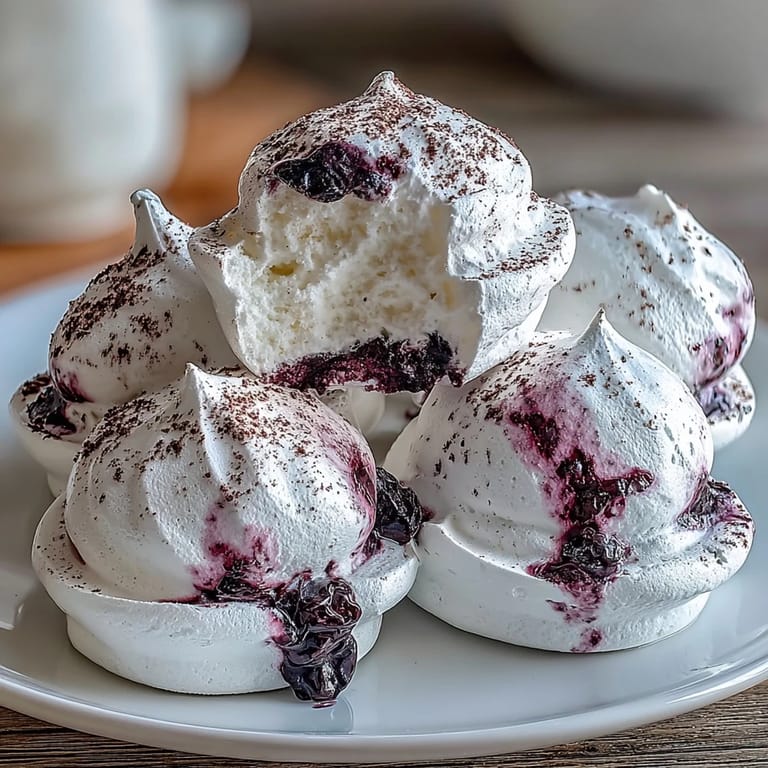
- Beat in the salt and lemon juice if you're using it, then gently fold in the black currant powder with a spatula—use a light hand so you don't deflate all that air you've just whipped in. The powder will create a marbled effect.
- Scoop and top:
- Using a spoon or piping bag, portion the meringues onto your prepared trays, leaving about an inch between each one. Dust the tops with the remaining black currant powder for extra color and flavor.
- Bake low and slow:
- Bake for 1 hour 30 minutes—they should be crisp on the outside and lift easily from the parchment when ready. The low temperature dries them out without cooking them too fast.
- Cool gradually:
- Turn off the oven and crack the door open slightly, letting the meringues cool inside for at least another hour. This gradual temperature change prevents cracking.
- Store with care:
- Once cool, transfer them to an airtight container where they'll stay crisp for up to a week if you can keep your hands off them.
 Save to Pinterest
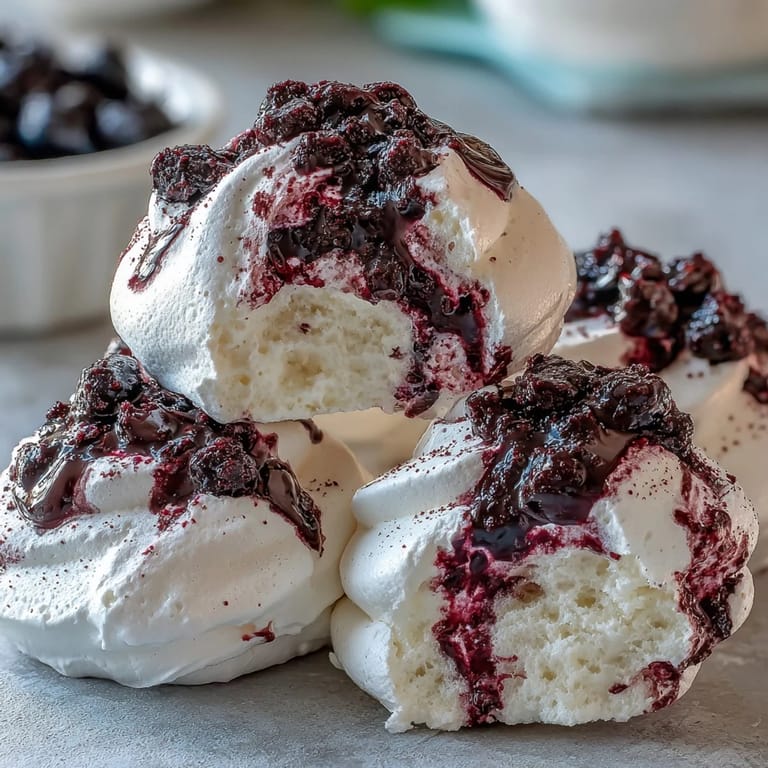
 There's a moment when you fold that black currant powder in and see the deep purple swirl through the white meringue that makes you feel like you've done something right, even though all you've really done is whip some eggs and fold in powder. It's those small moments that make cooking feel less like a chore and more like creating something to share.
Why Black Currant is Your Secret Weapon
Black currant has this natural tartness that cuts through sweetness in a way that feels sophisticated without being sour—it's the reason these meringues taste like dessert and not just sugar air. I tried making these with strawberry powder once and they felt generic, but the moment I went back to black currant, they became something I actually wanted to sit down and eat. If you can't find black currant powder, raspberry is your next best bet, but the black currant really is the thing that makes people ask for the recipe.
The Patience Game
The hardest part isn't the technique—it's resisting the urge to check on them every five minutes or crank up the oven because you think they should be done by now. I learned this the expensive way when I opened the oven at 45 minutes to check, and a draft collapsed half a batch. Now I set a timer, walk away, and trust the process. The low, slow bake is what creates that crispy exterior and light, airy center.
Serving and Stretching Your Batch
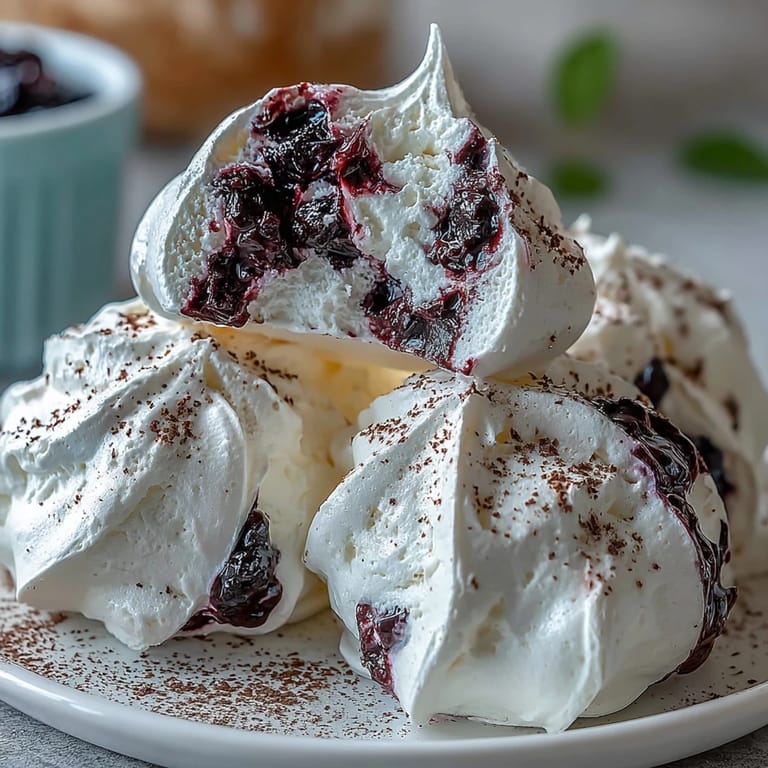
These meringues are delicate enough to stand alone on a plate, but they also play beautifully with other things—a dollop of whipped cream, fresh berries, a thin layer of dark chocolate on the bottom if you're feeling fancy. I've served them as petit fours at the end of dinner, tucked them into dessert boxes as gifts, and crumbled them over yogurt when I had extras. They're versatile in a way that most desserts aren't, which is exactly why I keep making them.
- Serve them within an hour of taking them out of storage for the best crispy texture.
- If they soften in humid weather, pop them back in a 225°F oven for 10 minutes to re-crisp.
- They make beautiful gifts tucked into a box with tissue paper, and people always think you spent more time than you actually did.
 Save to Pinterest
 These meringues are proof that simple ingredients and a little restraint can create something memorable. Make them when you want to feel like a baker without the stress.
Recipe FAQ
- → What makes blackcurrant meringues different from plain ones?
The addition of freeze-dried blackcurrant powder creates both visual beauty and intense fruity flavor. The powder swirled through the egg white mixture produces stunning marbled patterns while adding a tangy contrast to the sweet meringue. Each bite delivers that classic crisp exterior with a burst of berry brightness.
- → Why must the meringues cool in the oven?
Cooling inside the oven with the door slightly ajar prevents thermal shock that could cause cracking or collapse. This gradual cooling allows the structure to set completely, ensuring that characteristic crisp exterior and soft interior. Rushing this step often results in chewy or sticky meringues rather than perfectly crisp ones.
- → Can I use fresh blackcurrants instead of powder?
Fresh blackcurrants contain too much moisture for meringues and would cause the egg whites to collapse. Freeze-dried powder provides concentrated flavor without adding liquid. If unavailable, substitute with other freeze-dried fruit powders like raspberry, blueberry, or even freeze-dried strawberry for different variations.
- → How do I know when the meringues are done baking?
Properly baked meringues should lift easily from the parchment paper without sticking and feel dry and crisp to the touch. They should not brown—if you notice any coloration, reduce the oven temperature slightly. The meringues will firm further during the cooling period, so don't worry if they feel slightly soft immediately after baking.
- → Why is cream of tartar essential in this recipe?
Cream of tartar stabilizes the egg whites, helping them reach maximum volume and maintain their structure throughout baking. It prevents the protein strands from collapsing, which is especially important when creating the marbled swirl effect. The result is a stiffer, more stable meringue that holds its shape beautifully during piping and baking.
- → What's the best way to store these meringues?
Keep in an airtight container at room temperature away from humidity and direct sunlight. Properly stored, they'll remain crisp for up to two weeks. Avoid refrigeration as moisture can make them sticky. If they do soften slightly, a quick 10-minute refresh in a 200°F oven can restore their crisp texture.