 Save to Pinterest
 There's something about black currants that stops you mid-breath—that deep, almost purple-black shine when you hold them up to light, the way they smell faintly of forest and jam all at once. I discovered this tart on a grey afternoon in a small pâtisserie outside Lyon, where the baker casually mentioned she'd been making the same recipe for thirty years. One bite and I understood why. The buttery crust shattered under my fork, giving way to a silky, tart-sweet curd that tasted like summer preserved in a spoon.
I made this for my sister's birthday last June, and honestly, watching her face when she tasted it made the whole two hours of work feel like five minutes. She kept asking what was in the filling because she'd never had anything quite like it—that balance between tart and rich, fresh and cooked. We ended up sitting on the porch with coffee, the tart barely half-gone, talking about nothing in particular while the evening cooled around us.
Ingredients
- All-purpose flour (1 1/4 cups): The foundation of a tart that holds its shape and shatters beautifully when you bite into it.
- Unsalted butter, cold and cubed (1/2 cup for crust): Cold butter is non-negotiable here—it's what creates those flaky, tender layers that make people wonder if you went to culinary school.
- Powdered sugar (1/4 cup for crust): Just enough sweetness to balance the salt without making the crust taste like dessert on its own.
- Fine sea salt (1/4 tsp): A pinch that makes everything taste more like itself, somehow.
- Egg yolk (1 for crust): The binder that holds everything together while keeping the texture light and tender.
- Cold water (1–2 tbsp): Add it drop by drop—too much and your crust turns tough and dense.
- Fresh or frozen black currants (1 cup for curd): Frozen works brilliantly if you can't find fresh; they release their juice beautifully as they thaw and cook.
- Granulated sugar (1/2 cup): Balances the natural tartness of black currants and creates that glossy, jammy texture.
- Lemon juice (2 tbsp): Brightens the curd and prevents it from feeling one-note and heavy.
- Eggs and egg yolk (2 large eggs plus 1 yolk for curd): These cook into a silky custard-like filling that's rich without being overwhelming.
- Unsalted butter, cubed (4 tbsp for curd): Whisked in at the end for richness and that final, glossy finish.
- Fresh berries for topping (1/2 cup): A mix of black currants, raspberries, and blueberries creates visual depth and keeps each bite interesting.
- Powdered sugar for dusting and fresh mint for garnish: Small touches that signal you actually cared about presentation.
Tired of Takeout? 🥡
Get 10 meals you can make faster than delivery arrives. Seriously.
One email. No spam. Unsubscribe anytime.
Instructions
- Make the dough without overthinking it:
- Pulse your flour, powdered sugar, and salt together in a food processor until combined. Add your cold butter cubes and pulse until the mixture looks like coarse breadcrumbs—this texture is what you're after, so don't get impatient and overwork it. Add your egg yolk and just 1 tablespoon of cold water, pulsing gently until the dough barely holds together when you squeeze a pinch, adding another tablespoon of water only if it feels too crumbly to bring together.
- Let the dough rest:
- Shape it into a flat disk, wrap it tightly in plastic wrap, and slide it into the fridge for thirty minutes. This isn't busywork—the gluten relaxes and the butter firms up, both essential for a crust that's tender rather than springy.
- Blind-bake the shell:
- Preheat your oven to 350°F. On a lightly floured surface, roll your dough out thin enough to fit into a 9-inch tart pan, pressing it gently into the corners and up the sides. Prick the bottom all over with a fork—this prevents the center from puffing up like a balloon. Line it with parchment paper and fill with pie weights or dried beans, baking for fifteen minutes until the sides are set but still pale.
- Finish baking the crust to golden:
- Remove the weights and parchment carefully and bake for another ten to twelve minutes until the bottom turns a light golden brown and the whole shell feels crisp and dry to the touch. This step matters more than you'd think—a soggy bottom crust ruins everything. Let it cool completely before moving on.
- Cook the black currants down:
- In a saucepan, combine your black currants, sugar, and lemon juice over medium heat, stirring occasionally. Watch as the fruit softens and starts to burst open, releasing dark juice that stains the spoon—this takes about five to seven minutes and smells like autumn in a kitchen. Once it's broken down, pour the whole thing through a fine-mesh sieve, pushing gently with the back of a spoon to extract all the liquid and pulp while leaving the skins and seeds behind.
- Transform it into curd:
- Return your strained purée to the saucepan and whisk in your eggs and egg yolk until completely combined. Cook over low heat, stirring constantly with a whisk, until the mixture thickens enough to coat the back of a spoon in a thin, glossy layer—this usually takes seven to ten minutes and you'll feel the exact moment when it goes from thin to luscious. Don't let it boil or the eggs will scramble and you'll have to start over, which is not fun.
- Finish the curd with butter:
- Remove the pan from heat and whisk in your cold butter cubes until they disappear into the curd, leaving you with something silky and smooth. Pour it into a bowl, press plastic wrap directly onto the surface so no skin forms, and refrigerate for about thirty minutes until it's slightly set but still spreadable.
- Assemble with care:
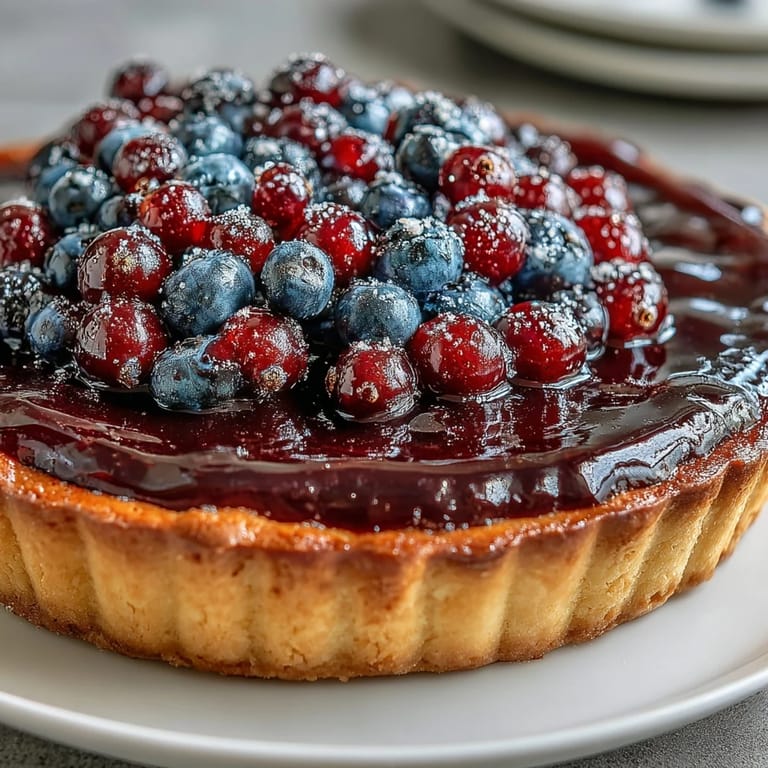
- Spread the black currant curd evenly across your cooled tart shell in a thin, even layer using an offset spatula or the back of a spoon. Arrange your fresh berries on top in whatever pattern makes you happy—concentric circles look fancy, scattered clusters feel more casual. Chill the whole tart for at least an hour before serving, which gives everything time to set and flavors to meld slightly.
- Finish and serve:
- Just before serving, dust lightly with powdered sugar if you like and scatter fresh mint leaves across the top for a whisper of color and freshness. Slice carefully with a warm, dry knife, wiping it clean between cuts.
 Save to Pinterest
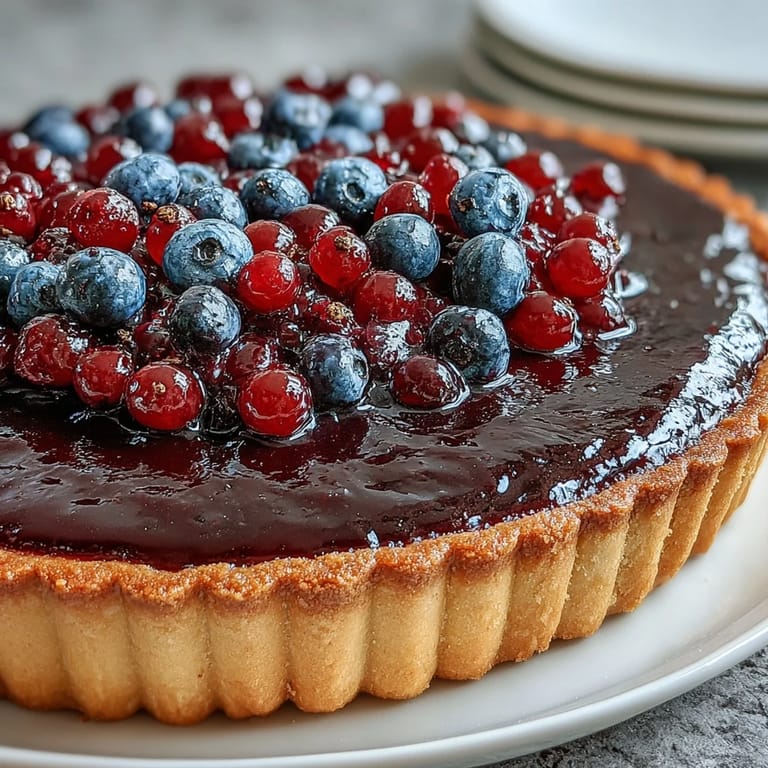
 There was a moment, right before we cut into that tart for my sister, when the three of us just stood there looking at it—the way the berries caught the kitchen light, the deep purple-black of the curd visible through the gaps. It wasn't fancy or complicated, but it felt like proof that you can make something beautiful with patience and attention to detail. That's the thing about this tart: it's not hard, but it asks you to slow down.
Why Temperature Matters More Than You Think
Cold butter in the crust, cold dough before rolling, low heat for the curd—temperature is the secret language of this recipe. When I finally understood that these weren't arbitrary instructions but actual physics, everything clicked. Cold butter creates steam pockets that become flaky layers; cold dough doesn't shrink and resist; low heat turns eggs into silk instead of scramble. It's the difference between a good tart and one that makes people ask for the recipe.
How to Know When Everything Is Done
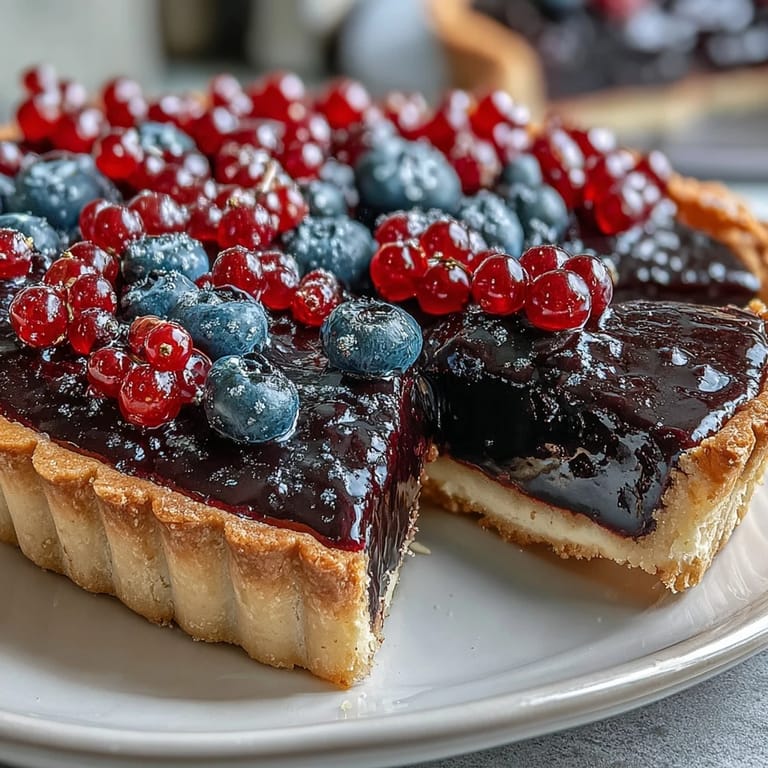
The crust should look golden and feel genuinely crisp when you tap it, never pale or soft. The curd, when stirred with a spoon, should leave a trail that slowly fills back in—if it's too thin, it'll never hold the berries; if you overcook it, it'll be grainy and broken. The tart needs that full hour of chilling before serving so the curd sets properly and the flavors have time to calm down and marry together beautifully.
Serving and Storage Secrets
This tart is best served within a few hours of assembly, when the crust is still crisp and the berries look freshly placed. If you need to make it ahead, bake the shell and make the curd the day before, then assemble everything just before guests arrive. The unfilled tart shell keeps well in an airtight container for two days, and the curd actually improves overnight in the fridge, becoming even smoother and more velvety.
- Serve with lightly whipped cream or a scoop of vanilla ice cream to add richness and contrast to the tartness.
- A brush of warmed apricot jam over the berries gives them shine and a subtle sweetness that catches the light beautifully.
- Use a warm knife dipped in hot water and wiped clean between cuts to slice cleanly without shattering the crust.
 Save to Pinterest
 This tart is the kind of dessert that turns an ordinary evening into something worth remembering. Make it, and you'll understand why that baker in Lyon has been making the same thing for three decades.
Recipe FAQ
- → Can I use frozen black currants for the curd?
Yes, frozen black currants work perfectly for making the curd. Thaw them slightly before cooking, and expect similar results to fresh berries in both flavor and texture.
- → How far ahead can I make this tart?
The tart crust can be made 2 days ahead and stored wrapped at room temperature. The curd keeps refrigerated for up to 5 days. Assemble the tart no more than 6 hours before serving for best texture.
- → What can I substitute for black currants?
Red currants, blackberries, or raspberries make excellent substitutes. Each will slightly alter the flavor profile while maintaining the beautiful presentation and creamy texture.
- → Why did my curd turn out grainy?
Grainy curd usually results from cooking at too high heat or not whisking constantly. Keep heat low and stir continuously until thickened. Straining through a fine-mesh sieve also ensures silkiness.
- → Can I make this tart gluten-free?
Substitute the all-purpose flour with a 1:1 gluten-free baking blend. Ensure other ingredients are certified gluten-free. The texture may be slightly more delicate but equally delicious.
- → How should I store leftovers?
Refrigerate any remaining tart loosely covered for up to 3 days. The crust will soften slightly over time. Bring to room temperature 20 minutes before serving for best flavor.