 Save to Pinterest
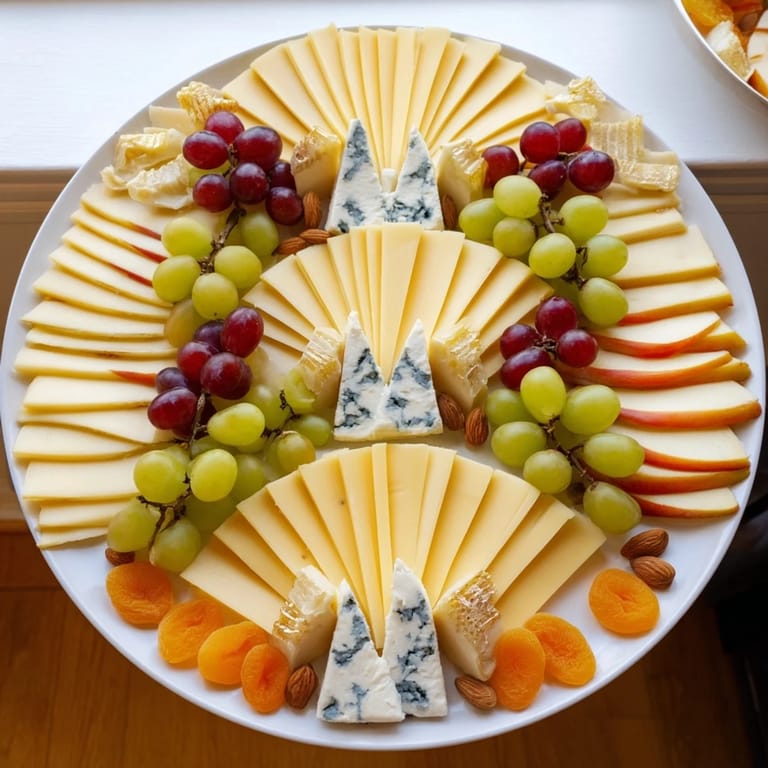
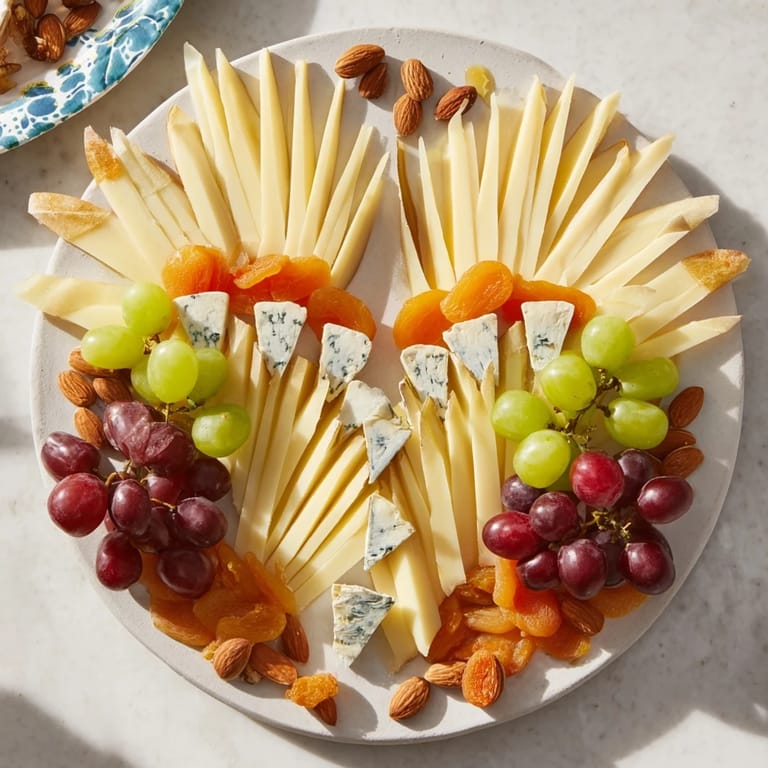
 I stumbled upon Art Deco architecture during a rainy afternoon at the library, surrounded by glossy books of 1920s design. The geometric precision, those towering arches and symmetrical patterns, stuck with me long after I left. Weeks later, while arranging cheese for a dinner party, something clicked—what if I could translate those rigid, beautiful lines onto a platter? The result was this Art Deco Arch Cheese Platter, and it's become my favorite way to turn simple ingredients into something that feels almost too elegant to eat.
I made this for my sister's engagement party last spring, and I'll never forget how people slowed down when they saw it. Instead of grabbing frantically, they paused, studied the geometric patterns, and actually talked about what they were eating. One guest asked if she could take a photo before touching anything, which I took as the highest compliment.
Ingredients
- Aged Cheddar, 150g: Its sharpness cuts through richness; slice it thin so it fans properly without snapping.
- Gruyère, 150g: This is the workhorse cheese—nutty and dependable, it holds its shape beautifully in folds.
- Manchego, 150g: The Spanish touch brings a slightly salty, caramel note that bridges sweet and savory moments.
- Creamy Brie, 120g: Wedged at the base, it acts like the architectural foundation of your Art Deco dream.
- Blue Cheese, 100g: Those dramatic triangles at the top give you visual drama and umami punch.
- Seedless Grapes (green and red), 2 small bunches: They fill gaps with color and provide textural contrast without overwhelming.
- Pear and Apple, 1 small each: Slice them last and toss with lemon juice to prevent browning; they add freshness that cuts cheese fatigue.
- Roasted Almonds, 40g: Toast them yourself if you can—the smell alone builds anticipation.
- Dried Apricots, 40g: These scatter like jewels and provide gentle sweetness between savory bites.
- Honeycomb or Honey, 40g: A drizzle near the brie creates a visual focal point and a flavor revelation.
- Baguette and Assorted Crackers: Choose sturdy crackers that won't crumble under cheese weight; they're the canvas for your edible art.
Tired of Takeout? 🥡
Get 10 meals you can make faster than delivery arrives. Seriously.
One email. No spam. Unsubscribe anytime.
Instructions
- Build Your First Arch:
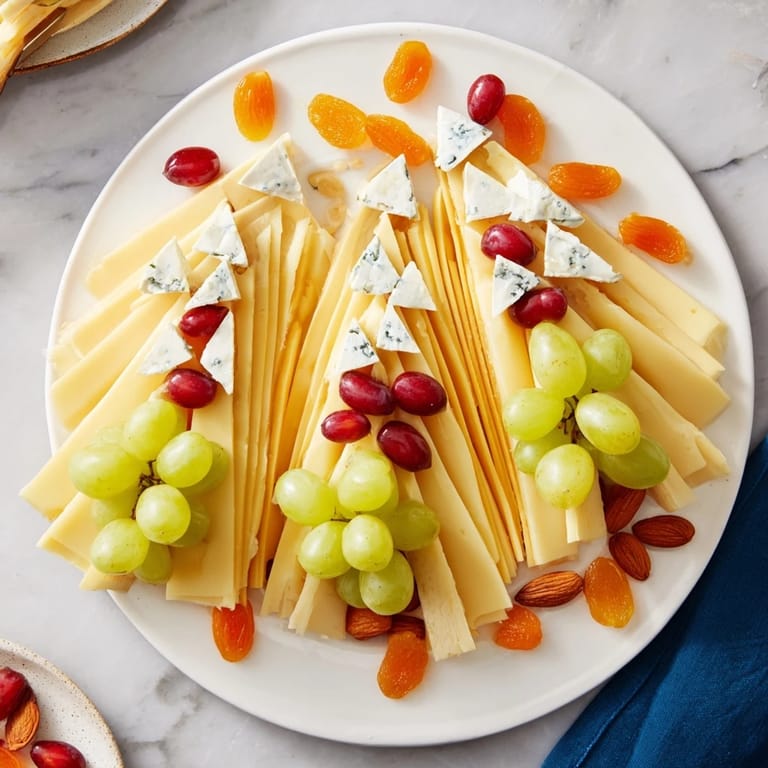
- Start with cheddar slices arranged in a fan pattern, overlapping each one slightly like roof tiles. This becomes your foundation, so take your time and adjust as you go.
- Layer the Second Arch:
- Use Gruyère for the next arch, positioning it slightly higher and tighter than the first. The repetition creates visual rhythm.
- Crown with Manchego:
- The final arch sits highest, creating that sense of height and grandeur. If a slice tears, use it—imperfection adds character.
- Plant the Foundations:
- Nestle brie wedges at the base of each arch, tucking them snugly so they feel intentional, like they're supporting the whole structure.
- Add the Pinnacles:
- Place blue cheese triangles at the top-center of each arch—these are your skyscraper tips, your punctuation marks.
- Fill the Gaps:
- Position grape bunches and fruit slices in the negative spaces between arches. Think of these as the plazas and streets between buildings.
- Scatter Warmth:
- Distribute almonds and apricots artistically around the platter. There's no right way to do this—let your eye guide you.
- Finish and Frame:
- Drizzle honey near the brie, then arrange bread and crackers along the perimeter as the supporting structure for everything.
 Save to Pinterest
 The moment that changed everything was when I realized this platter wasn't about perfection—it was about intention. A friend noticed I was agonizing over a slightly crooked slice of Manchego, and she said, 'It looks like a real building now,' and suddenly the vulnerability became the beauty.
Choosing Your Cheeses Wisely
The trinity of aged cheddar, Gruyère, and Manchego creates a flavor journey from sharp to nutty to slightly sweet, but you have room to play. If aged cheddar feels too intense, Comté brings similar structure with more smoothness. Emmental and aged Gouda are equally stunning and won't disrupt the balance. Blue cheese is where bravery lives—it's assertive and rewarding for those who love it, so don't apologize for featuring it prominently.
The Architecture of Pairing
I learned this the hard way: every element on the platter should have a reason to be there. Grapes refresh your palate between salty bites. Apricots and almonds add textural variety and subtle sweetness. Honey is the final note that makes someone close their eyes for a second. When you understand these roles, every item becomes a character in a story rather than decoration.
Building Confidence in Your Vision
The first time you make this, it might feel fussy. That's okay—geometry takes practice, and cheese slicing is a skill that improves with repetition. By your third platter, your hands will remember the angle, your eye will know the spacing, and it'll feel less like cooking and more like drawing. The beauty is that even if you start overthinking it, cheese tastes wonderful no matter what.
- If a cheese slice breaks, layer it differently or use it as filler between sections—nothing is wasted.
- Chill your cheese knife under cold water before slicing; warm metal drags and ruins the edges.
- Arrange everything at room temperature so flavors shine, but keep the platter in a cool place until serving.
 Save to Pinterest
 This platter has become my signature move at gatherings, and I love it not because it's complicated, but because it proves that food can be art without pretension. Serve it with crisp Champagne or a dry Riesling, and watch people slow down and actually taste.
Recipe FAQ
- → How should the cheeses be sliced for the best presentation?
Use a wire slicer to achieve thin, even slices that fan out smoothly, enhancing the tiered arch effect.
- → Can the cheese selections be substituted?
Yes, alternatives like Comté, Emmental, or aged Gouda work well to maintain texture and flavor variety.
- → What is the best way to arrange the fruit on the platter?
Place fresh grapes, sliced pears, and apples strategically between cheese arches to add vibrant color and freshness.
- → Are there vegan options for this setup?
Absolutely. Use plant-based cheeses and replace honey with a suitable vegan sweetener to maintain flavor harmony.
- → How far in advance can this board be prepared?
Arrange the components up to one hour before serving, covering it loosely and chilling to preserve freshness.
- → What beverages pair well with this cheese arrangement?
Classic choices include crisp Champagne or dry Riesling, which complement the range of cheeses and fruit.