 Save to Pinterest
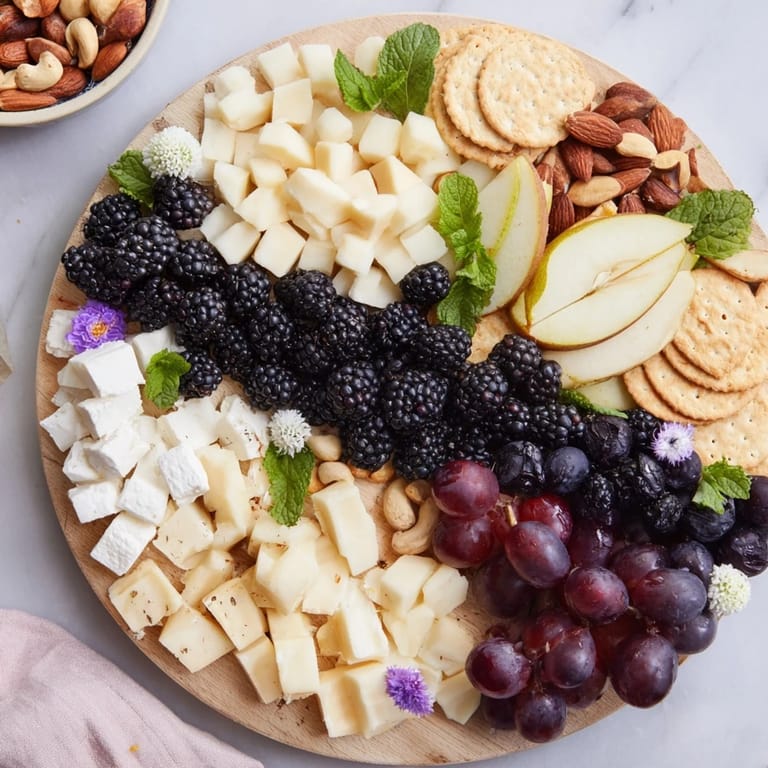
 I was hosting a dinner party when my friend mentioned she loved the visual balance of yin-yang symbols, and suddenly I saw it: a cheese board could tell that same story of harmony. That afternoon, I scattered blackberries across a round board like a brushstroke, and what started as a playful idea became something guests couldn't stop talking about—not just for how it looked, but because every bite felt intentional. The light and dark sides weren't just different cheeses; they were two conversations happening on the same plate.
My sister used to say I made complicated things look effortless, which wasn't true until this board came along. When I finally nailed the curve of blackberries, she walked in, stopped mid-sentence, and just stared. That's when I realized this wasn't really about cheese—it was about creating a moment where people slowed down and noticed what they were eating.
Ingredients
- Fresh blackberries (150 g): These form your dividing line and should be plump and ripe; they're delicate, so handle them last to avoid bruising.
- Goat cheese (100 g): The creamy anchor of the light side—buy it fresh if you can, and let it warm slightly for easier slicing.
- Young Manchego or white cheddar (100 g): Choose something with a clean, mild flavor that won't overpower the delicate fruits nearby.
- Aged blue cheese (100 g): The bold hero of the dark side; its saltiness demands the sweeter plum slices as its partner.
- Aged Gouda or sharp cheddar (100 g): Something rich enough to stand beside the blue but smooth enough to invite the hazelnuts.
- Pear (1 small): Slice it just before serving so it doesn't brown, and use the thinnest blade you have for delicate, almost translucent slices.
- Black plum (1 small): Its tartness balances the intensity of the dark cheeses in a way grapes alone can't.
- White and red or black grapes (50 g each): They're your visual punctuation marks and palate cleansers between bold flavors.
- Raw almonds and roasted hazelnuts (30 g each): Toast the hazelnuts yourself if you have time—store-bought roasted is fine, but the smell of warming them in a dry pan is worth the effort.
- Rice crackers and dark rye crisps (30 g each): The texture matters here; avoid anything too delicate that might crumble under the weight of cheese.
- Fresh mint leaves: Tear them just before serving so they stay vibrant green and aromatic.
- Edible flowers (optional): A small handful of pansies or cornflowers adds wonder without tasting like much of anything.
Tired of Takeout? 🥡
Get 10 meals you can make faster than delivery arrives. Seriously.
One email. No spam. Unsubscribe anytime.
Instructions
- Start with your canvas:
- Place your round board where you can walk around it and see all angles. This isn't just about laying things down—it's about creating a composition.
- Draw the dividing line:
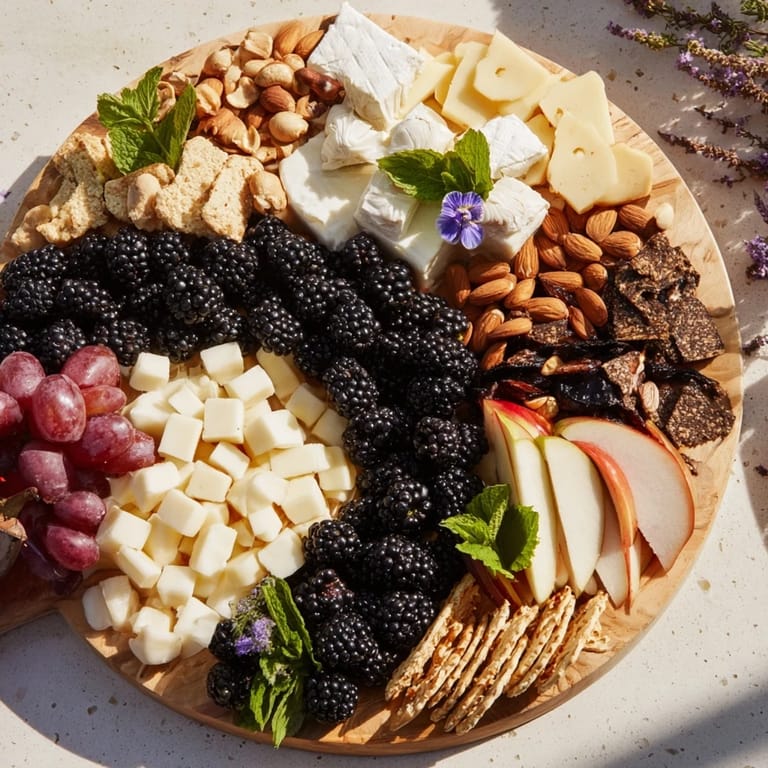
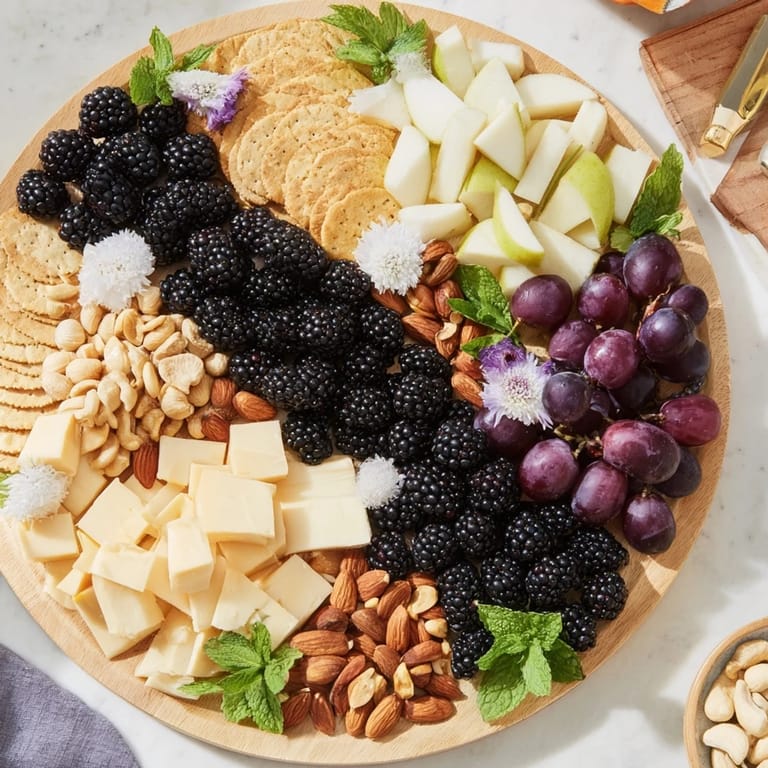
- Arrange the blackberries in a curved S-shape or gentle wave across the center, pressing them gently into place so they stay put. Step back and let your eye tell you if it feels balanced.
- Fill the light side:
- Cluster the goat cheese, Manchego, pear slices, white grapes, almonds, and rice crackers on one half, leaving small pockets of space so nothing feels crowded. Think of it like you're creating little neighborhoods of flavor.
- Balance with the dark side:
- Mirror the arrangement on the opposite half with the blue cheese, Gouda, plum, dark grapes, hazelnuts, and rye crisps, keeping the same sense of generous spacing and intentional grouping.
- Add the finishing touches:
- Scatter fresh mint leaves and edible flowers across both sides, tucking them between cheeses and fruits for pops of color and freshness.
- Serve with intention:
- Bring it straight to the table and let people discover the balance themselves—that moment of recognition is part of the magic.
 Save to Pinterest
 A stranger at my dinner party asked why I'd taken so much care with the arrangement, and I almost brushed it off as just decoration. But watching her taste the goat cheese first, then the blue, then pause to appreciate how different they were, I understood—this board was an invitation to slow down and actually taste things, not just eat them.
Choosing Your Cheeses
The magic of this board lives in contrast, and that starts with choosing cheeses that genuinely taste different. I spent years buying whatever looked good at the counter until I realized soft cheeses and hard cheeses need each other—one melts on your tongue, the other requires a moment's chewing. The light side should feel gentle and creamy; the dark side bold and complex. If you can, taste before you buy, or ask the cheesemonger what they'd pair with blackberries. That conversation alone will teach you more than any recipe can.
Timing and Temperature
Cold cheese tastes like nothing—it's a harsh, squeaky thing that misses all its potential. I learned this the hard way after a party where I pulled everything from the fridge thirty seconds before guests arrived. Now I give myself at least ten minutes of room-temperature rest, and the difference is honestly staggering. The fruits should be cool but not ice-cold; the crackers should be at room temperature so they don't shatter under the weight of a generous cheese slice.
Making It Your Own
This board is a framework, not a rule, and the best versions I've made have been when I stopped following the original recipe and started listening to what was in season. In autumn, I swap grapes for figs and add a thin spread of fig jam to the dark side. In spring, I use fresh berries instead of blackberries for the dividing line and pair them with lighter, brighter cheeses. The yin-yang concept doesn't care what goes inside it—it just asks that you think about balance, which is honestly a nice way to approach cooking anything.
- Try honeycomb drizzled on the light side for unexpected sweetness and texture.
- A small bowl of fig jam or quince paste on the dark side transforms everything around it.
- Fresh thyme or rosemary sprigs tucked between cheeses add aroma without overwhelming the flavors.
 Save to Pinterest
 This board taught me that the most elegant meals don't require skill—they require intention. When you gather good ingredients and arrange them with care, people taste that attention the moment something touches their tongue.
Recipe FAQ
- → How do I create the dividing line on the board?
Arrange fresh blackberries in a curved line across the center of the board to visually separate the light and dark sections.
- → Can I substitute the cheeses on the board?
Yes, you can swap cheeses based on preference or seasonality, such as replacing Manchego with white cheddar or Gouda with sharp cheddar.
- → What crackers pair best with this board?
Light-colored rice crackers complement the light side, while dark rye crisps or seeded crackers enhance the dark side’s flavors.
- → Are there any suggested garnishes to add freshness?
Fresh mint leaves and edible flowers add color contrast and a refreshing note to the board.
- → What drinks complement this balanced board?
A crisp white wine or a light-bodied red pairs well, balancing the rich and fresh flavors.