 Save to Pinterest
 I discovered this platter arrangement at a small gathering where a friend brought a towering spread of vegetables that looked almost architectural—striped like a tent against the white plate. It was such a simple idea that suddenly made everything feel celebratory, even though she'd made it in under an hour. The way the colors caught the light, how people naturally gravitated to it first, how the whole thing disappeared without anyone really noticing—that's when I realized presentation could be just as satisfying as flavor. I wanted to recreate that exact moment in my own kitchen.
The first time I made this for a dinner party, I panicked about whether everything would look good enough. As I was slicing the peppers, my young nephew wandered in and watched me arrange the triangles of bread standing up against the vegetables. He said it looked like a teepee, and suddenly I wasn't worried anymore—the presentation didn't need to be perfect, just playful. His enthusiasm made me feel like I was onto something.
Ingredients
- Cucumber: Choose firm ones and slice lengthwise so they stay sturdy and don't curl as the platter sits out.
- Red and yellow bell peppers: These are your visual anchors, so pick ones without soft spots and slice them thick enough to hold the dip without breaking.
- Carrots: Raw carrots stay crisp longer than anything else here, making them perfect for a platter that needs to look good for a while.
- Cherry tomatoes: Halving them lets the dips cling to the cut side and keeps them from rolling across the plate.
- Red onion: The thinness matters more here than anywhere else because you want it to be tender enough to pull apart easily with your teeth.
- Radishes: They add a peppery bite and stay impossibly crisp, no matter how long the platter sits out.
- Pita or msemen: Warming them changes everything—they become flexible and flavorful instead of stiff and forgettable.
- Hummus: Store-bought is fine, but taste it first because quality varies wildly.
- Muhammara: This red pepper dip is slightly sweet and smoky, the one people always ask about.
- Baba ganoush: Its earthiness balances the other dips and gives you three completely different flavor profiles.
- Olives: Mix green and black for color and because they have subtly different tastes.
- Fresh herbs and spices: The cilantro, sesame seeds, cumin, and paprika finish it—don't skip this part because it's what makes it feel Moroccan.
Tired of Takeout? 🥡
Get 10 meals you can make faster than delivery arrives. Seriously.
One email. No spam. Unsubscribe anytime.
Instructions
- Prep your canvas:
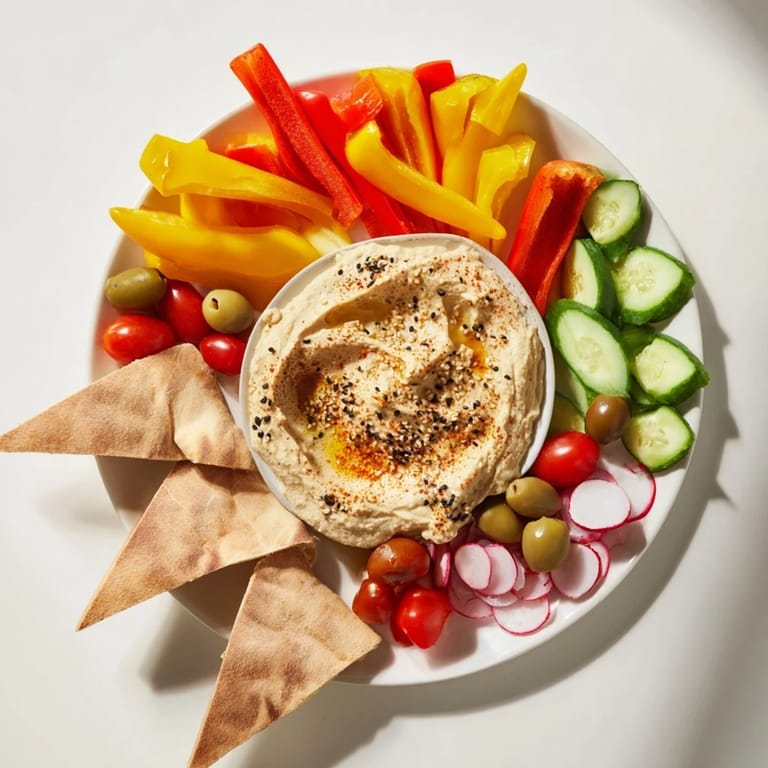
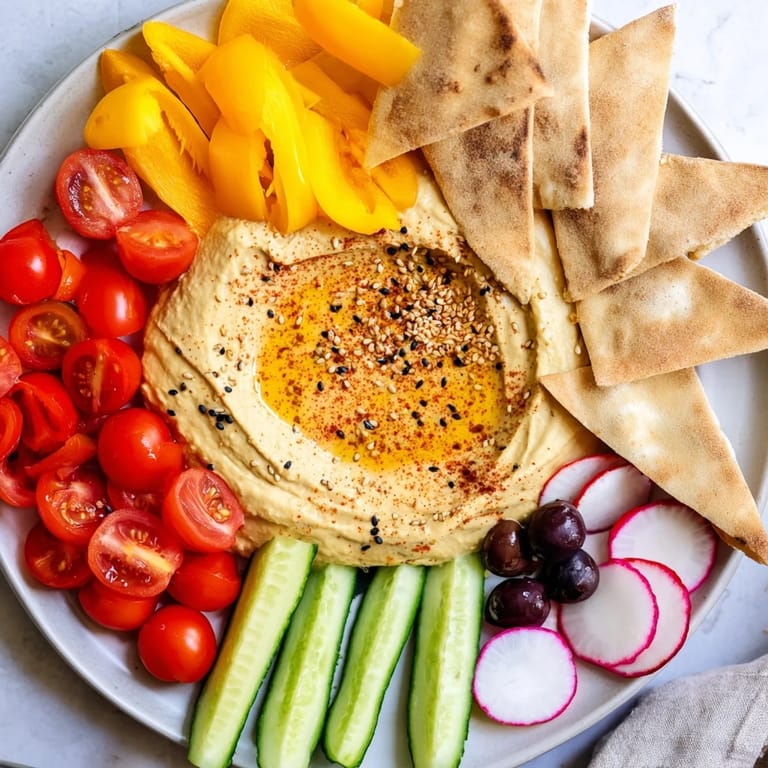
- Slice every vegetable and arrange them in tall, pointed groups that lean toward the center of your platter like they're meeting at a peak. Think more about creating a visual rhythm than achieving perfection.
- Warm the bread:
- A quick toast in a dry skillet makes the pita or msemen pliable and fragrant, not stale. Cut them into triangles and fan them around the base like the walls of your tent structure.
- Compose the dips:
- Spoon each dip into its own small bowl and nestle them in the center where all the vegetable lines seem to converge. A sprinkle of cumin, paprika, and sesame on each one makes them look intentional.
- The finishing touch:
- Scatter olives across the arrangement and add herbs like confetti—this is where the platter stops looking like just vegetables and starts looking like an event.
- Serve with intention:
- Set it down and step back before anyone touches it so everyone can see it as a whole before it becomes a memory.
 Save to Pinterest
 What I remember most about bringing this to a potluck wasn't how it looked, but watching a normally reserved neighbor pile her plate high and say she'd never thought vegetables could be this interesting. That moment mattered more than any compliment about the arrangement. Food that brings people together, even quietly, is always worth the effort.
Why the Tent Shape Works
The pointed arrangement isn't just for show—it actually solves practical problems. Vegetables clustered in triangular groups don't spread flat and lose their presence; they stay standing and visible even as people start dipping. The bread fanned at the base becomes both a structural element and an invitation, showing guests exactly what they're supposed to do with everything else. I've found that when you give people a clear visual structure, they know how to navigate the platter without asking.
The Dips Are the Real Star
Three dips sounds like a lot, but each one has its own personality. The hummus is familiar and grounding, the muhammara brings smoke and sweetness, and the baba ganoush adds something earthy and almost luxurious. I used to make this with just one dip until someone asked if I had anything else, and I realized the variety was what made people keep coming back for more bites. The dips are where you can taste Moroccan flavors without anything being complicated or difficult.
Variations and Customizations
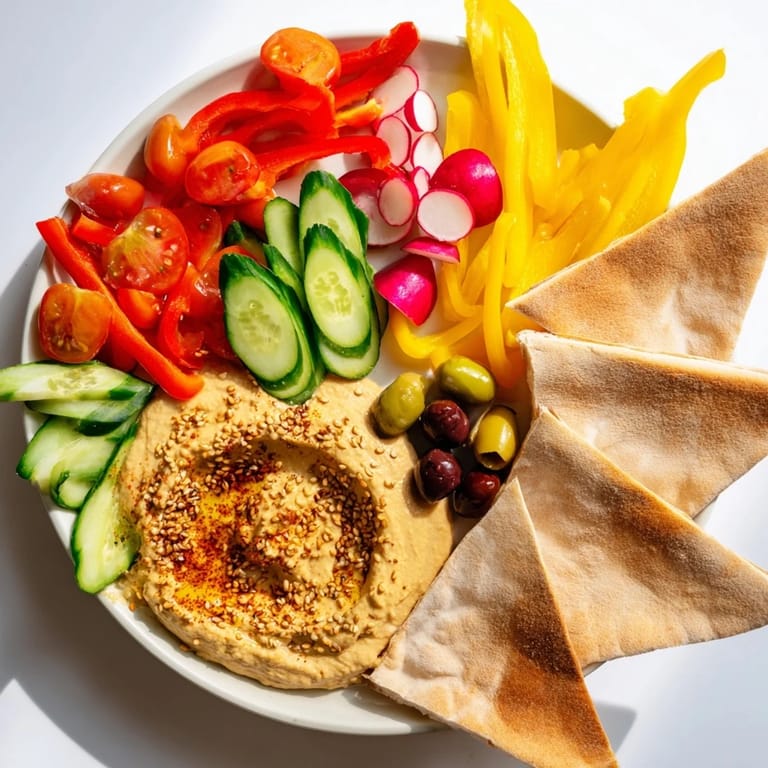
This platter is genuinely flexible depending on what's in your kitchen or what your guests actually eat. I've added roasted chickpeas for crunch, marinated feta for a salty punch, blanched green beans for a different texture, and snap peas because they're naturally sweet. The formula stays the same—vegetables, bread, dips, scattered garnish—but the details can shift based on what you find at the market or what sounds good that day. For vegan guests, just double-check that your store-bought hummus and other dips don't sneak in dairy.
- Roasted chickpeas add texture and make the platter more substantial for people eating it as a full meal.
- Marinated artichokes or preserved lemons introduce bright, briny notes that pair beautifully with the other flavors.
- Snap peas or blanched green beans give you a different texture profile without changing the overall feel.
 Save to Pinterest
 This platter has become my shorthand for saying yes to gatherings without saying yes to stress. It brings people joy without asking for anything difficult in return.
Recipe FAQ
- → What types of vegetables are best for this platter?
Use crisp and colorful vegetables like cucumbers, bell peppers, carrots, cherry tomatoes, red onions, and radishes for a vibrant mix.
- → Can I substitute the flatbreads if msemen or pita are unavailable?
Yes, other flatbreads such as naan or lavash can work well once warmed and cut into triangles.
- → How should I warm the flatbreads for best texture?
Lightly warm them in a dry skillet or oven for 2-3 minutes to make them soft yet slightly crisp on edges.
- → What spices enhance the dips on this platter?
Ground cumin, smoked paprika, and toasted sesame seeds add smoky, earthy, and nutty notes to the dips.
- → Are there vegetarian or vegan considerations for this arrangement?
All ingredients are vegetarian; for vegan, ensure dips and breads are dairy-free and fresh vegetables are used.
- → How can I add more texture or flair to this display?
Consider adding roasted chickpeas or marinated feta cubes to boost texture and flavor contrast.