 Save to Pinterest
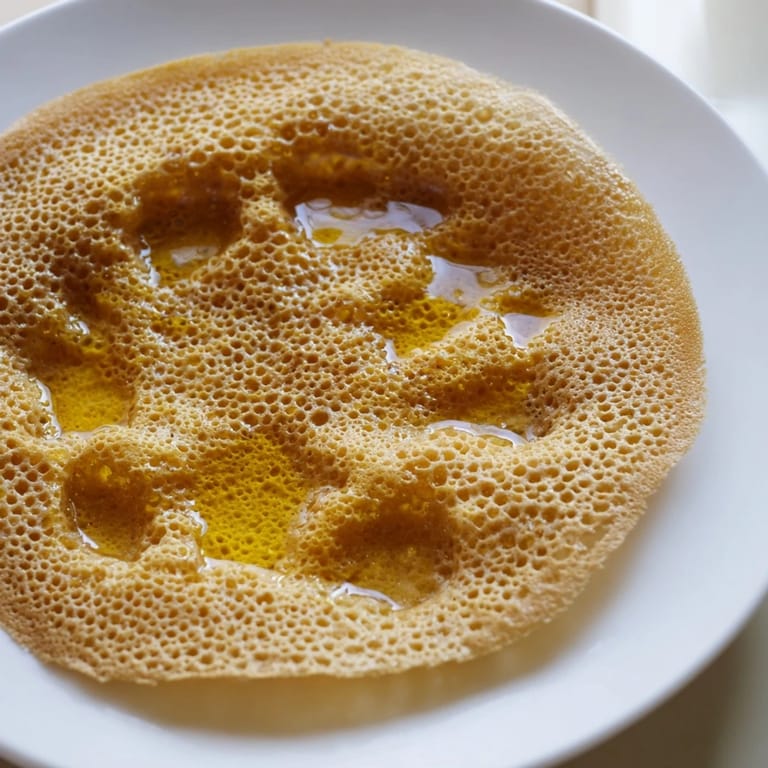
 I first tasted baghrir at a friend's kitchen table on a cold Saturday morning, still in my slippers. She poured the batter without measuring, and I watched those tiny bubbles rise and pop across the surface like magic. The smell of warm semolina filled the room, and when she drizzled that glossy honey-butter over the top, I knew I'd be making these every weekend. There was no flipping, no fuss, just patience and a hot pan. It felt like discovering a secret.
I made these for my sister's birthday brunch last spring, and she ate four in a row without saying a word. She just kept reaching for the honey jar, pouring more than I thought was humanly reasonable. Later she told me it reminded her of a trip we took years ago, even though we'd never had baghrir together before. Food has a way of inventing memories, I think.
Ingredients
- Fine semolina: This is what gives baghrir its signature texture, light but sturdy enough to hold all those beautiful holes.
- All-purpose flour: Blended with semolina, it keeps the crepes tender and prevents them from turning too dense or gritty.
- Warm water: Temperature matters here, too cold and the yeast won't wake up, too hot and you'll kill it before it even starts.
- Granulated sugar: Just a touch to feed the yeast and add a whisper of sweetness that balances the honey later.
- Active dry yeast: The quiet hero that creates all those bubbles, turning a simple batter into something magical.
- Baking powder: Works with the yeast to guarantee those honeycomb craters, even if your kitchen is a little cool.
- Salt: A small amount sharpens every other flavor and keeps the sweetness from becoming flat.
- Unsalted butter: Melts into the honey to create a glaze that seeps into every pore of the crepe.
- Honey: The classic finish, golden and floral, though I've used maple syrup in a pinch and no one complained.
Tired of Takeout? 🥡
Get 10 meals you can make faster than delivery arrives. Seriously.
One email. No spam. Unsubscribe anytime.
Instructions
- Mix the dry ingredients:
- Whisk together semolina, flour, sugar, yeast, baking powder, and salt in a large bowl until evenly combined. This step prevents clumps later and makes sure the yeast is distributed throughout.
- Add the water:
- Pour in warm water gradually, whisking constantly until the batter is smooth and pourable, like thin pancake batter. If you see lumps, keep whisking, they'll disappear.
- Let it rest:
- Cover the bowl with a clean towel and leave it at room temperature for 30 minutes. You'll see tiny bubbles forming on the surface, that's the yeast doing its job.
- Heat the pan:
- Warm a nonstick skillet over medium heat without any oil or butter. The pan should be hot enough that a drop of water sizzles gently but doesn't smoke.
- Pour and cook:
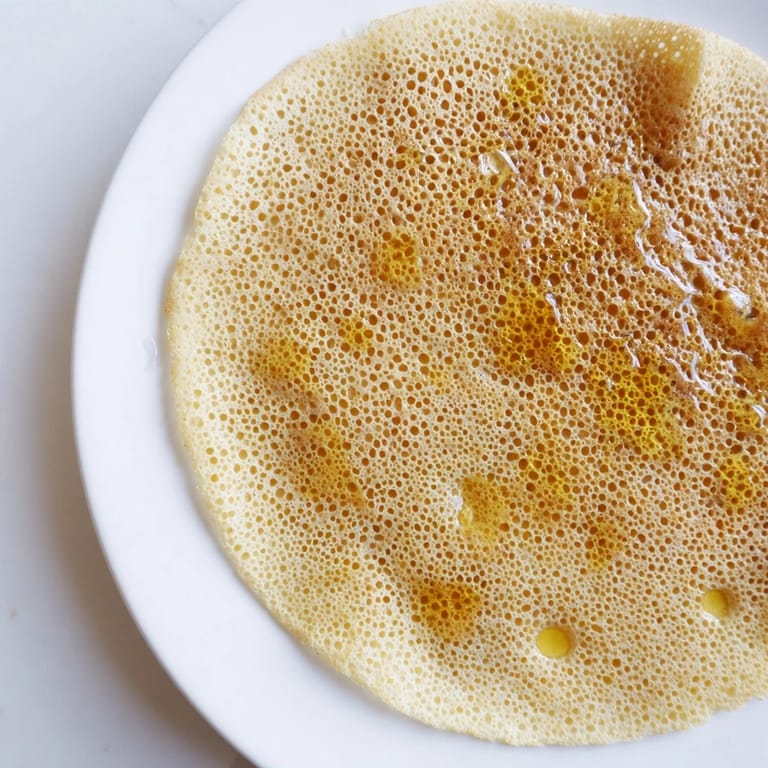
- Ladle about a quarter cup of batter into the center and tilt the pan slightly to spread it into a round shape. Watch as holes begin to appear all over the surface, and cook until the top looks completely dry, about 2 to 3 minutes.
- Remove and repeat:
- Lift the baghrir out gently, cooked side up, and set it aside. Stir the batter lightly between each crepe to keep the yeast active, then continue with the remaining batter.
- Make the honey butter:
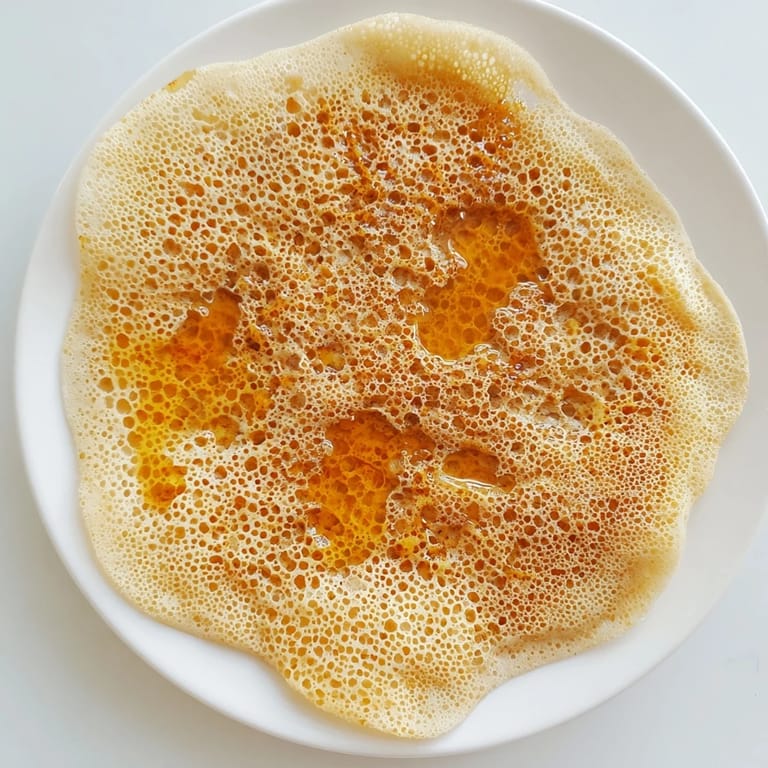
- Melt butter and honey together in a small saucepan over low heat, stirring until smooth and glossy. Pour it warm over the stack of baghrir just before serving.
 Save to Pinterest
 One morning I made a double batch and froze half, thinking I'd save time later. When I reheated them in a dry skillet, they tasted just as good, maybe even better because I wasn't rushing. My neighbor smelled them through the window and knocked on my door asking what I was cooking. I handed her two with a jar of honey, and she's been asking for the recipe ever since.
Serving Suggestions
I love piling baghrir on a wide plate and letting everyone tear off pieces with their hands, soaking up the honey butter as they go. Some people sprinkle chopped almonds or pistachios on top for crunch, and I've seen others serve them with fresh berries or a dusting of cinnamon. They're just as good for dessert as they are for breakfast, especially with mint tea on the side.
Storage and Reheating
Baghrir keeps well in the fridge for up to three days, stacked between sheets of parchment paper to prevent sticking. To reheat, warm them gently in a dry skillet over low heat for about a minute on each side, or wrap them in foil and place in a low oven. I've even microwaved them for 20 seconds in a pinch, though they lose a bit of their crisp edge that way.
Common Mistakes to Avoid
The biggest mistake is using a greased pan, which seals the surface and stops the bubbles from breaking through. Another is cooking over high heat, which browns the bottom too fast before the top can dry. If your baghrir turns out flat and dense, it usually means the yeast wasn't active, so check the expiration date and make sure your water is warm, not hot.
- Don't skip the resting time, the batter needs it to develop those signature holes.
- Stir the batter gently between crepes to keep the texture consistent throughout the batch.
- Resist the urge to press down on the crepe while it cooks, let it breathe and do its thing.
 Save to Pinterest
 Every time I make baghrir now, I think about that first morning in my friend's kitchen, how simple it all seemed once I tried it myself. There's something deeply satisfying about watching those bubbles rise, knowing you've made something light and lovely with your own hands.
Recipe FAQ
- → What gives baghrir its honeycomb texture?
The texture comes from the combination of semolina, yeast, and the resting period, which creates bubbles that form holes during cooking.
- → Do you flip baghrir while cooking?
No, it’s cooked on one side only until holes form and the surface dries, producing its distinctive texture.
- → How do you serve baghrir traditionally?
It’s typically served warm with melted butter mixed with honey drizzled over the top.
- → Can the batter be adjusted if too thick?
Yes, add a tablespoon or two of warm water to reach a smooth and pourable consistency after resting.
- → What equipment do I need to make baghrir?
A large mixing bowl, whisk, nonstick skillet or crepe pan, ladle, and a small saucepan for the butter-honey mixture.