 Save to Pinterest
 I discovered this platter concept while wandering through a small village in Tuscany, where the uneven cobblestones beneath my feet were almost as appetizing as the food I was seeking. There's something about arranging simple ingredients to tell a visual story that transforms a cheese board from practical to memorable. When I brought this idea home and started layering crackers and olives, my dining table became a tiny European square, and suddenly our casual appetizer hour felt like something from a postcard. The beauty is that it takes mere minutes to assemble, yet your guests will spend the first few moments just admiring it before digging in.
I remember setting this out at a small dinner party last autumn, and a friend who normally rushed through appetizers actually slowed down, studying the arrangement before reaching for anything. She started pointing out which crackers looked like different shaped stones, how the darker Kalamatas filled in like shadow, and the whole table ended up playing along. It was one of those moments where I realized that food doesn't have to be complicated to spark joy and conversation.
Ingredients
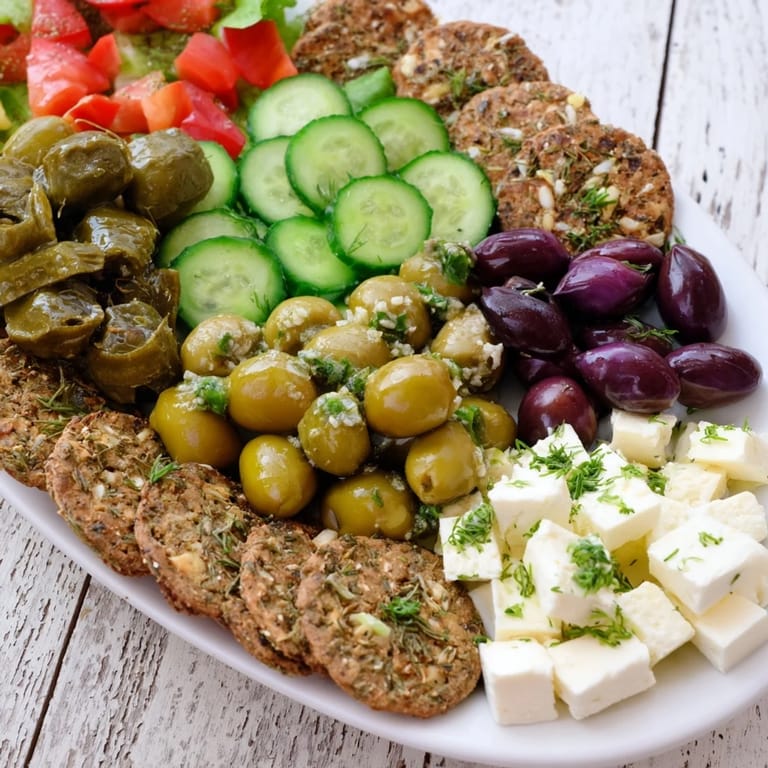
- Round crackers (36–40): The foundation of your edible courtyard—choose a mix of water crackers, multigrain, and rice varieties for natural color variation and authentic cobblestone texture. Different sizes and thicknesses make the arrangement feel more organic.
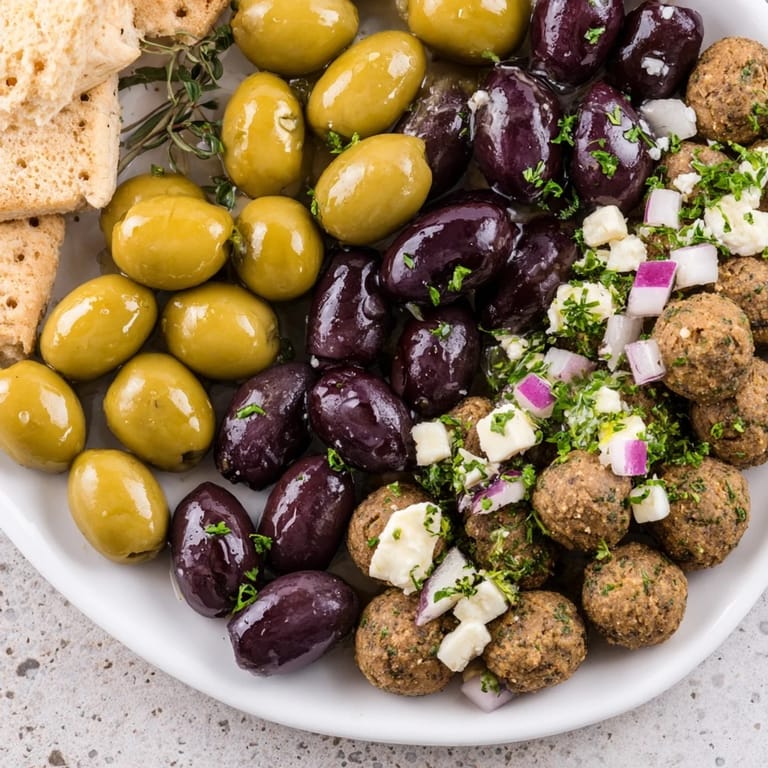
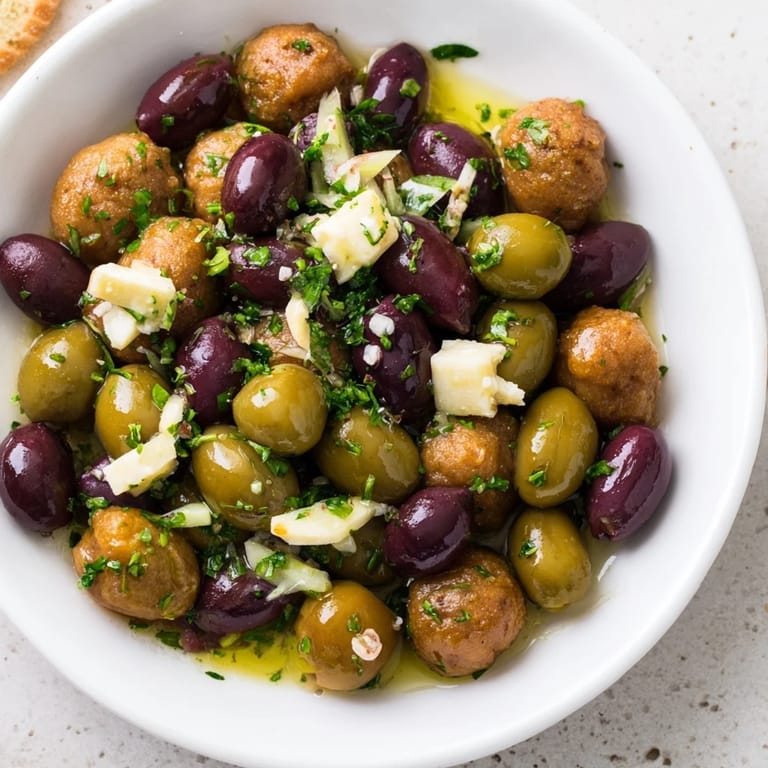
- Assorted olives (1 cup): Seek out Castelvetrano for those buttery green stones, Kalamata for deep shadows, and true black olives to complete the palette. Pitting them yourself ensures they nestle perfectly into the gaps without split edges.
- Fresh herbs (2 tbsp): A light scatter of parsley, thyme, or rosemary adds fragrant detail—think of it as delicate moss between the stones.
- Crumbled feta or goat cheese (1/4 cup): This is optional but transforms the platter from visual to utterly craveable, adding a creamy contrast to the briny olives.
- Extra virgin olive oil (1 tbsp): A final drizzle catches the light and enhances every flavor, making the whole arrangement glisten like a wet courtyard after rain.
Tired of Takeout? 🥡
Get 10 meals you can make faster than delivery arrives. Seriously.
One email. No spam. Unsubscribe anytime.
Instructions
- Choose Your Canvas:
- Find a large platter or wooden board that will serve as your courtyard stage. The surface matters—wood adds warmth, marble adds elegance, and ceramic lets your arrangement do all the talking.
- Lay the Foundation:
- Begin arranging crackers in a random, overlapping pattern across the entire surface, leaving small intentional gaps where olives will tuck in. Work as if you're setting down actual stones, thinking about balance and natural flow rather than perfect symmetry.
- Fill the Gaps:
- Press assorted olives snugly into the spaces between crackers, alternating colors and sizes to mimic how mortar and shadow would settle between real cobblestones. The tighter the fit, the more cohesive and intentional your arrangement will appear.
- Dress It Up:
- If using cheese and herbs, sprinkle them across the top in a light, scattered way—as if they've been casually distributed by time rather than precision. This step adds both visual interest and an aromatic welcome.
- Final Shine:
- Drizzle extra virgin olive oil over the platter with a gentle hand, allowing it to pool slightly in low spots and coat the crackers with a subtle sheen. Serve right away while everything is fresh and the visual impact is maximum.
 Save to Pinterest
 I've learned that the true magic of this dish happens in those first quiet moments when someone notices the intentionality behind it. It stops being just appetizers and becomes an edible centerpiece that invites play, conversation, and appreciation. That shift from utility to delight is what keeps me coming back to this simple arrangement.
The Art of Arrangement
The cobblestone effect isn't about perfection—it's about creating the illusion of randomness through thoughtful placement. Step back from your platter a few times as you build it, adjusting the distribution of colors and sizes so no area feels too crowded or sparse. What looks like effortless charm is usually the result of one small adjustment here, a rotation there. The best arrangements almost always come from playing with the components rather than rigidly following a plan.
Flavor Pairings and Variations
This platter is a wonderful blank canvas for seasonal additions and personal taste. Roasted nuts like almonds or marcona varieties add crunch and richness, while marinated artichokes and cherry tomatoes introduce fresh acidity and color. Some guests love the addition of small cubes of manchego or aged cheddar tucked among the olives, creating warm pockets of flavor. The beauty is that you can adapt based on what you have on hand or what your guests prefer, making each version feel slightly different.
Pairing and Presentation Tips
Serve this alongside crisp white wines like Sauvignon Blanc or a chilled rosé—the bright acidity cuts through the richness of the olives and cheese perfectly. The platter works equally well as an elegant prelude to dinner or as a casual grazing option at a gathering. Position it where it can be admired before being dismantled, perhaps leaving small appetizer plates or napkins nearby so guests can enjoy it without the platter becoming chaotic.
- If you're preparing this ahead, assemble the crackers first, cover loosely with plastic wrap, then add olives and garnishes just before guests arrive.
- Keep any extra olives in their brine on the side in case you need to refresh the platter if guests return for seconds.
- Leftover crackers pair beautifully with cheeses or spreads the next day if they haven't absorbed too much olive oil.
 Save to Pinterest
 This simple platter reminds me that the most memorable appetizers aren't always the most complicated ones—sometimes they're just about seeing ordinary ingredients through a new lens. It's a quiet way to turn a gathering into something a little more thoughtful.
Recipe FAQ
- → What types of crackers work best for this platter?
Round crackers such as water crackers, multigrain, or rice crackers provide a sturdy yet crisp texture that mimics cobblestones well.
- → Which olives add the most flavor variety?
Combining green Castelvetrano, Kalamata, and black olives offers a balanced mix of briny, fruity, and slightly bitter flavors.
- → Can I customize the garnishes?
Yes, fresh herbs like parsley or thyme and crumbled feta or goat cheese add aromatic and creamy accents to enrich the platter.
- → How can I enhance the visual appeal of the arrangement?
Using crackers and olives of different sizes and colors, plus optional toppings like nuts or cherry tomatoes, creates a more lifelike cobblestone effect.
- → What beverages pair well with this platter?
Light white wines such as Sauvignon Blanc or crisp rosé complement the savory and fresh flavors beautifully.