 Save to Pinterest
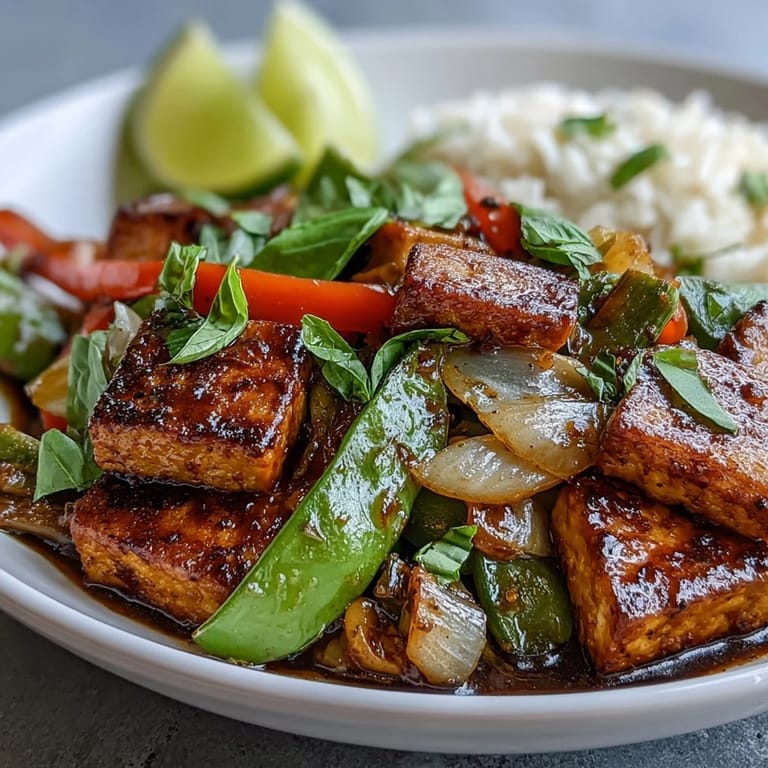
 There's something about the smell of Thai basil hitting a hot wok that makes everything feel possible in the kitchen. I discovered this stir-fry on a Tuesday evening when I had half a block of tofu and a CSA box full of colorful peppers staring at me, and somehow it turned into the kind of meal that made my partner ask for seconds without hesitation. The magic isn't in fancy technique or obscure ingredients—it's in the balance of that savory-sweet sauce clinging to crispy-edged tofu while fresh basil wilts into pockets of warmth. This dish proved to me that plant-based cooking doesn't mean sacrificing the complexity and soul of real Thai food.
I made this for my friend who had just gone vegan and was worried she'd miss all the depth of her old favorite Thai restaurant meals. Watching her face light up when she tasted it—that moment when she realized this wasn't a compromise version of anything—that's when I knew this recipe belonged in regular rotation. We ate it straight from the wok with jasmine rice, talking until the food got cold, which is the highest compliment a dish can get in my book.
Ingredients
- Firm tofu, 400g (14 oz), pressed and cut into 2 cm cubes: Pressing the tofu beforehand is non-negotiable if you want that golden, crispy exterior—wrap it in a clean kitchen towel and let it sit under a heavy plate for 10 minutes.
- Red bell pepper, 1, sliced: The sweetness balances the savory sauce, and red peppers have more sugar than green ones, which matters when you're building flavor layers.
- Yellow bell pepper, 1, sliced: This adds brightness and prevents the stir-fry from looking monochromatic on the plate, plus the flavor is subtly different and beautiful.
- Medium carrot, 1, julienned: Cut into matchsticks so they cook through in the short cooking window without turning mushy or raw.
- Red onion, 1 small, sliced: Red onion stays brighter and more textured than yellow onion when stir-fried quickly, and it brings a mild sharpness that cuts through richness.
- Snap peas, 100g (3.5 oz), trimmed: These cook almost instantly and keep their satisfying crunch, which provides textural contrast against the softer vegetables.
- Garlic, 2 cloves, minced: Mince it finely so it distributes evenly and doesn't scorch—burnt garlic tastes bitter and ruins the whole thing.
- Red chili, 1 small, finely sliced (optional): If you want heat, add it early so the flavor integrates; if you're unsure, slice it and let people adjust their own bowls at the table.
- Soy sauce, 3 tbsp: Use tamari if you need gluten-free, and don't cheap out on the quality—it's 30% of your sauce flavor profile.
- Dark soy sauce, 1 tbsp: This adds depth and color; regular soy sauce alone tastes a bit flat and one-dimensional by comparison.
- Maple syrup or coconut sugar, 1½ tbsp: Maple syrup dissolves more smoothly into the sauce, but coconut sugar works if that's what you have on hand.
- Rice vinegar, 1 tbsp: The acidity brightens everything and prevents the sauce from tasting cloying despite the sweetener.
- Black pepper, ½ tsp, freshly ground: Grinding it fresh means the aromatics are still alive; pre-ground pepper tastes dusty by comparison.
- Water, 1 tbsp: This thins the sauce slightly so it coats rather than pools, creating better distribution across all the ingredients.
- Vegetable oil, 2 tbsp: High smoke point is crucial here—use neutral oil like canola or avocado oil, not olive oil which will smoke and taste acrid.
- Fresh Thai basil, 1 cup, loosely packed: Add this at the very end off heat so it stays fragrant and textured instead of becoming a dark, wilted garnish.
- Lime wedges, for serving: Fresh lime juice at the table lets people adjust the brightness to their taste without making the whole batch too acidic.
- Cooked jasmine rice, to serve: The subtle floral notes in jasmine rice complement Thai basil in a way that plain white rice doesn't quite achieve.
Tired of Takeout? 🥡
Get 10 meals you can make faster than delivery arrives. Seriously.
One email. No spam. Unsubscribe anytime.
Instructions
- Make your sauce first:
- Whisk together soy sauce, dark soy sauce, maple syrup, rice vinegar, black pepper, and water in a small bowl—you want everything dissolved and homogenized before the pan gets hot, so you're not fumbling with liquid ingredients while things are already cooking.
- Get your tofu golden and crispy:
- Heat one tablespoon of oil in your wok or large skillet over medium-high heat until it shimmers, then add the pressed tofu cubes and leave them alone for a couple minutes so they can develop that caramelized edge—turn them occasionally but don't flip constantly, as that interrupts the browning process.
- Build the aromatic base:
- Add the remaining tablespoon of oil, then immediately add minced garlic, red onion, and chili if using, stirring constantly for just 30 seconds—you want the kitchen to smell incredible but you don't want the garlic to burn, which happens faster than you'd think in a hot pan.
- Add your vegetables with intention:
- Toss in the bell peppers, julienned carrot, and snap peas, then stir-fry for 3 to 4 minutes, moving everything constantly so the vegetables cook evenly and stay crisp-tender rather than steamed soft.
- Reunite tofu with vegetables:
- Return the golden tofu to the pan, pour in your sauce, and toss everything together gently so the sauce coats everything without breaking apart the tofu cubes—this should take 2 to 3 minutes until the sauce thickens slightly and clings to each ingredient.
- Finish with fresh basil off the heat:
- Remove the pan from heat, then fold in the fresh Thai basil gently so it just begins to wilt from residual heat—this preserves its perfumy, peppery character that makes the whole dish feel Thai rather than generic stir-fry.
- Serve with purpose:
- Spoon the stir-fry over jasmine rice and finish each bowl with a squeeze of fresh lime juice, letting the citrus brightness tie everything together just before you eat.
 Save to Pinterest
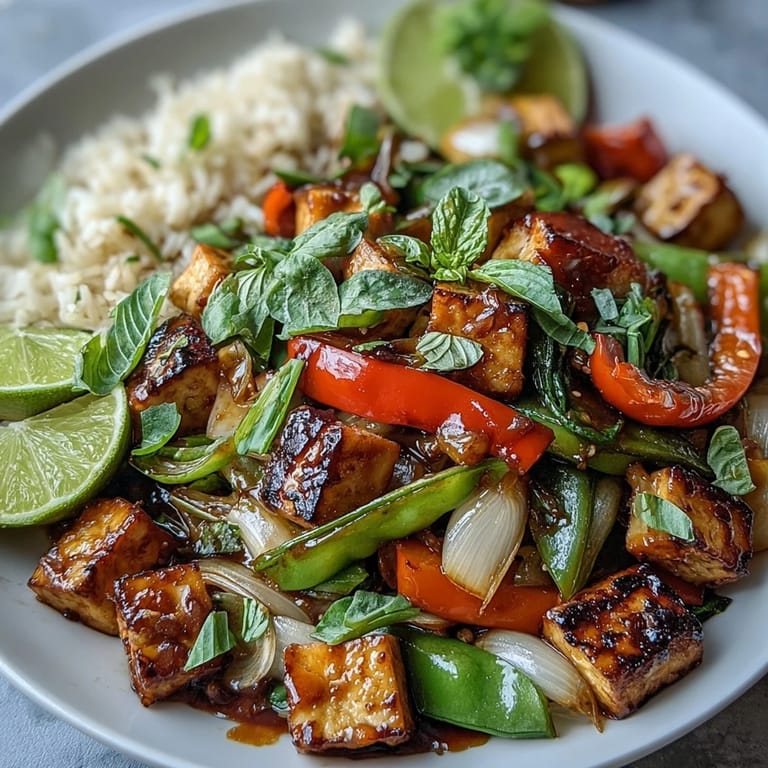
 My favorite version of this dish happened on a rainy Saturday when I roasted some extra snap peas in the oven to add crunch after plating, which transformed it from good weeknight dinner into something I'd genuinely crave. That small addition—something I stumbled into by accident—reminded me that the best recipes aren't locked formulas, they're starting points for your own kitchen discoveries.
The Secret to Crispy Tofu Every Time
The difference between tofu that tastes like pressed rubber and tofu that's genuinely crave-worthy comes down to two non-negotiable steps: pressing and not moving it too much in the pan. I learned this the hard way after years of pushing golden cubes around constantly, thinking I was preventing sticking when I was actually preventing browning. Pat your pressed tofu completely dry, cube it, and then give each piece real estate in the hot oil without crowding—if they're touching each other, they steam instead of fry. The goal is a thin, crispy crust that contrasts with the creamy interior, and that only happens when you're patient enough to let heat do its work.
Why the Sauce Balance Matters
Thai cuisine is built on balancing four flavors simultaneously: salty, sweet, sour, and spicy, and getting that ratio right is what makes Thai food taste like Thai food instead of just a generic soy-sauce-soaked stir-fry. The soy sauces provide salt and umami, the maple syrup brings sweetness and body, the rice vinegar adds sharpness, and the chili (optional as it is) introduces heat without being aggressive. When you taste the finished dish, you shouldn't be able to identify a single dominant flavor—instead, they should play off each other in a way that makes your mouth interested in the next bite. If something tastes off, it's usually the balance that needs adjusting rather than the base components themselves.
Building Flavor and Texture Through Timing
This dish works because everything arrives at the table at slightly different texture states—the tofu is crispy-edged but creamy inside, the peppers are tender but still have slight resistance when you bite, the snap peas are almost raw-crisp, and the basil is barely wilted. If you cooked everything together in one big pot, you'd lose that complexity and end up with a homogeneous pile of soft vegetables with soggy herbs. The choreography of adding ingredients in sequence, finishing with the basil off the heat, and serving immediately while the wok is still warm—that's what separates this from mediocre stir-fry.
- Keep your mise en place (all ingredients prepped and ready) before you start cooking, because once the wok gets hot, there's no time to chop anything.
- Invest in a good wok or large skillet with high sides so you can toss and stir without flinging food across your stovetop.
- Have your lime wedges and extra fresh basil leaves at the table so people can adjust to their exact taste preference.
 Save to Pinterest
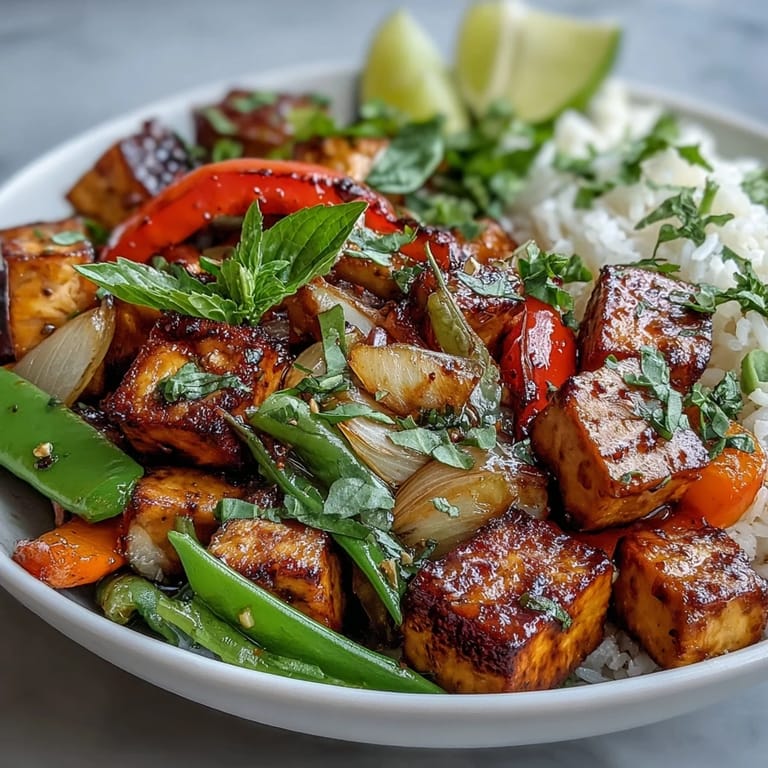
 This stir-fry is the meal I return to when I want to cook something that actually nourishes me while feeling indulgent, and every time it reminds me that plant-based cooking is about abundance, not limitation. Make it once, taste how good it is, and then make it yours by swapping vegetables with whatever's in season.
Recipe FAQ
- → What type of tofu works best for stir-frying?
Firm or extra-firm tofu holds its shape best during stir-frying. Press the tofu for 15-20 minutes to remove excess moisture, ensuring it develops a golden, crispy exterior when cooked.
- → Can I substitute regular basil for Thai basil?
While regular basil can work, Thai basil has a distinct anise-like flavor that's essential for authentic taste. If substituting, add a pinch of fennel seeds to mimic the licorice notes.
- → How do I keep vegetables crisp in a stir-fry?
Cook vegetables over high heat and avoid overcrowding the pan. Add harder vegetables like carrots first, followed by quicker-cooking ones like snap peas and bell peppers.
- → Is this dish suitable for meal prep?
Yes, this stir-fry reheats well and can be stored in the refrigerator for up to 4 days. Add fresh Thai basil just before serving for the best flavor and aroma.
- → What can I serve with Thai basil tofu?
Jasmine rice is traditional, but brown rice, quinoa, or rice noodles also work well. A side of cucumber salad or steamed bok choy complements the flavors beautifully.