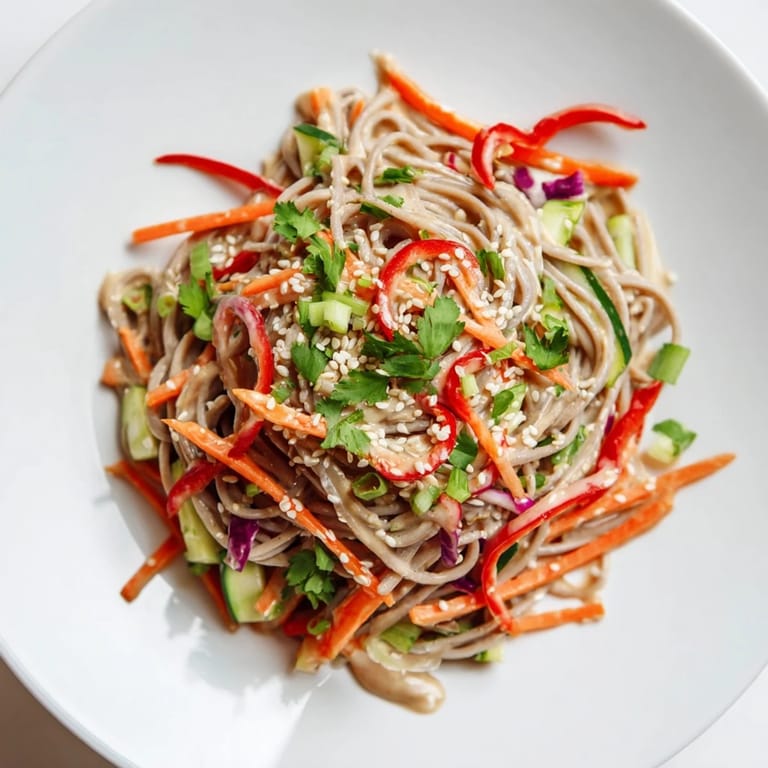
 Save to Pinterest
 I first made soba noodles on a sweltering July afternoon when my air conditioning broke and the thought of turning on the oven seemed criminal. A friend had just brought back a container of leftover cold noodle salad from a Japanese restaurant, and I remember thinking there had to be a way to recreate that magic in my own kitchen without much fuss. That evening, as the kitchen finally cooled down, I tossed together buckwheat noodles with whatever vegetables I had on hand and improvised a dressing that balanced nutty peanut butter with bright soy and vinegar. What started as a heat-wave survival meal became my go-to recipe for warm days, late lunches, and any time I wanted something that felt both satisfying and effortless.
I made this for a potluck dinner where everyone else brought hot casseroles and complicated salads, and somehow my simple cold noodle dish disappeared first. One guest asked if I'd been to culinary school, and I had to laugh—I was just tired and hungry on a hot day. That moment taught me that unpretentious food, made with real ingredients and a bit of intention, often speaks louder than anything fussy ever could.
Ingredients
- Soba noodles (250 g): These buckwheat noodles have a nutty flavor and tender chew that's completely different from regular pasta; look for 100% buckwheat if you're gluten-free.
- Carrot (1 medium, julienned): The slight sweetness and satisfying crunch keep the salad from feeling flat.
- Cucumber (1 small): Sliced thin so it stays crisp and refreshing, it's the cooling element that makes this feel light even though the dressing is rich.
- Red bell pepper (1, thinly sliced): This adds color and a subtle sweetness that rounds out the savory dressing.
- Spring onions (2, finely sliced): Don't skip these—they bring an allium punch that wakes up every bite.
- Red cabbage (1 cup shredded): It stays crunchy longer than regular cabbage and its deep color makes the whole dish more visually appealing.
- Peanut butter (3 tbsp smooth): The foundation of the dressing; smooth peanut butter dissolves cleanly, while tahini works beautifully if you want to skip nuts.
- Soy sauce (2 tbsp): This is where most of the salinity comes from, so use good quality soy sauce if you can.
- Rice vinegar (1 tbsp): The acidity cuts through richness and keeps everything feeling fresh.
- Toasted sesame oil (1 tbsp): Just a small amount goes a long way—it's potent and deeply aromatic, the secret that makes people ask what's in your dressing.
- Maple syrup or honey (1 tbsp): A touch of sweetness balances the salt and acid; maple syrup keeps it vegan.
- Fresh ginger (1 tsp grated): Adds warmth and subtle heat that lingers on your palate.
- Garlic (1 small clove, minced): One clove is enough—you want to taste the garlic, not be knocked over by it.
- Water (1–2 tbsp): This thins the dressing to the right consistency so it coats the noodles instead of clumping.
- Toasted sesame seeds (2 tbsp): Sprinkle these on just before serving so they stay crispy and their toastiness shines.
- Fresh cilantro (2 tbsp chopped): Herbaceous and bright, it's the final flourish that makes everything taste finished.
- Red chili (1 small, optional): For anyone who likes a gentle heat that builds as they eat.
- Lime wedges (for serving): A squeeze of fresh lime at the table lets everyone adjust the acidity to their taste.
Tired of Takeout? 🥡
Get 10 meals you can make faster than delivery arrives. Seriously.
One email. No spam. Unsubscribe anytime.
Instructions
- Boil the noodles:
- Bring a large pot of water to a rolling boil and add the soba noodles, stirring gently so they don't stick together. They'll cook in about 5–7 minutes—you're looking for tender but still slightly firm, not mushy. The moment they're done, drain them into a colander and rinse thoroughly under cold running water, which stops the cooking and washes away the excess starch that makes them gluey.
- Make the dressing:
- In a large mixing bowl, whisk together the peanut butter, soy sauce, rice vinegar, sesame oil, maple syrup, ginger, and garlic until it starts to come together. Add water one tablespoon at a time, whisking after each addition, until you have something smooth and pourable—thick enough to coat the noodles but not so thick it clumps.
- Combine everything:
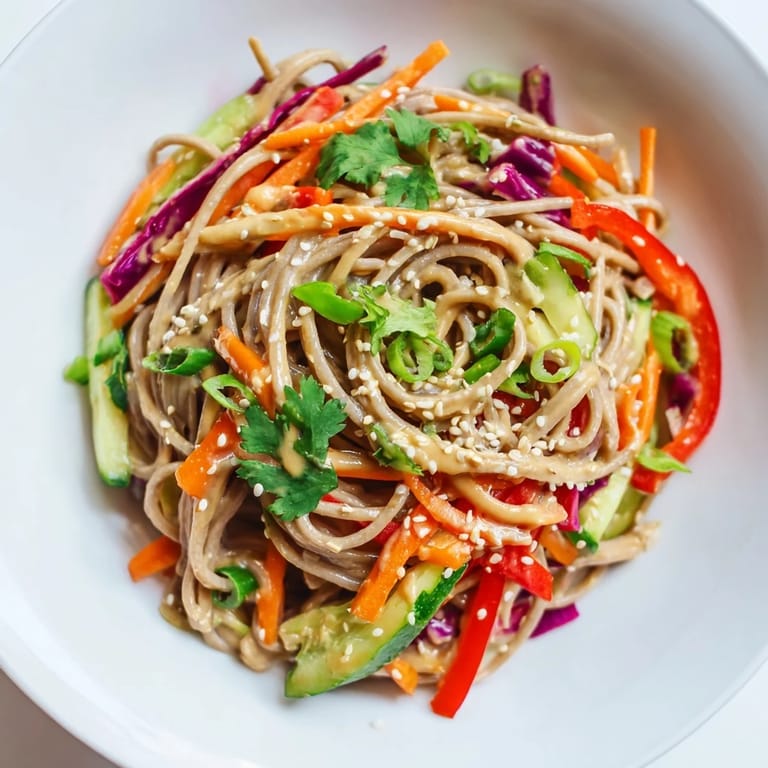
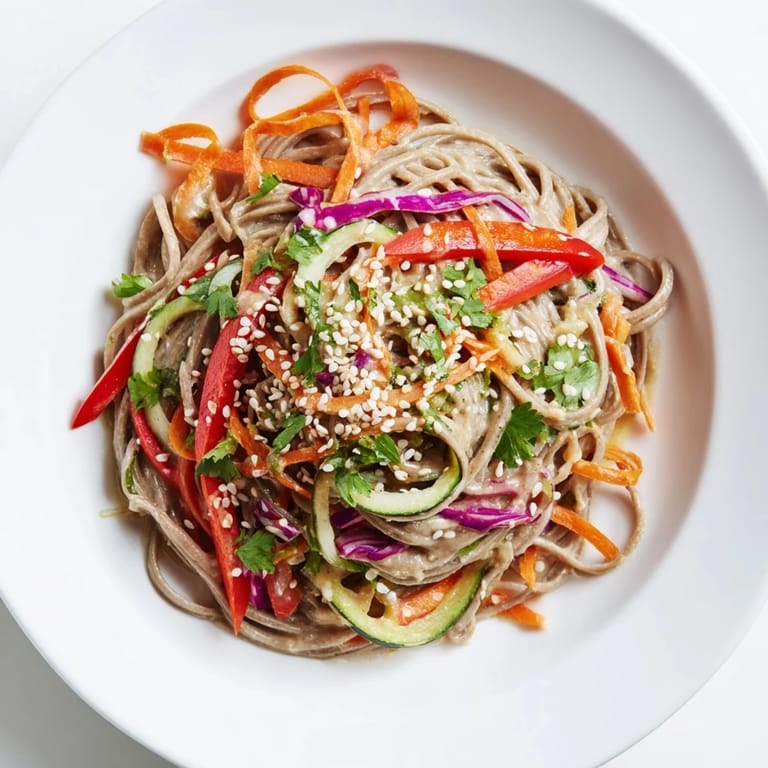
- Add the cooled noodles to the dressing, then layer in the carrot, cucumber, bell pepper, spring onions, and red cabbage. Toss everything together gently but thoroughly, making sure every noodle and vegetable gets coated in that creamy, savory dressing. If it sits for a few minutes and the noodles absorb liquid, add a splash more water to loosen it up.
- Plate and garnish:
- Divide the salad among bowls, then top each portion with a generous sprinkle of sesame seeds, a small handful of cilantro, and a few slices of chili if you like heat. Serve with lime wedges on the side so people can squeeze them over whenever they want a bright, citrusy kick.
 Save to Pinterest
 There's something about eating cold noodles in a bowl that feels like taking care of yourself, especially on days when the world feels too warm or too much. I've learned that food doesn't have to be complicated to feel nourishing, and this salad—with its simple vegetables, creamy dressing, and satisfying noodles—reminds me of that every single time I make it.
The Art of the Perfect Dressing
The dressing is where this dish lives or dies, and it's worth taking a moment to get it right. I used to just dump everything in and stir, wondering why it never tasted quite like what I'd had at restaurants, until I realized that whisking the peanut butter smooth first—before adding the liquids—makes all the difference. It emulsifies properly, creates a silky texture, and distributes the flavors evenly instead of leaving pockets of concentrated peanut butter or sesame oil. If you're using tahini instead of peanut butter, the same principle applies: smooth paste first, then build in the other ingredients gradually.
Making It Your Own
This recipe is endlessly flexible, which is part of why I love it so much. Some mornings I make it with just the vegetables and noodles I have on hand, and it still tastes intentional and complete. Add a handful of edamame for protein and a pop of color, or toss in some grilled tofu if you want something more substantial—it picks up the dressing beautifully. Even leftover shredded rotisserie chicken works, and it transforms the whole dish into something heartier that keeps you satisfied through the afternoon.
Storage and Make-Ahead Tips
This salad is one of those rare recipes that tastes just as good on day two, which makes it perfect for meal prep or for bringing to work in a container. The noodles continue to absorb the dressing as they sit, which some people love and others find too intense, so keep a little extra water nearby to loosen it up if needed. The vegetables stay surprisingly crisp for about two days, though the cilantro will fade a bit, so I usually keep that separate and add it fresh right before eating.
- Keep the dressing separate from the noodles and vegetables if you're packing this to go, then toss everything together just before you eat it.
- A squeeze of fresh lime juice right before serving brings everything back to life, even if it's been in the fridge for a couple of days.
- Don't skip toasting your sesame seeds just before serving—they lose their crunch in the fridge, so that final garnish is what keeps the texture interesting.
 Save to Pinterest
 Every time I make this salad, I'm reminded that the best meals are the ones that feel easy to put together but taste like you put thought and care into them. This is the kind of recipe that becomes a reliable friend in your kitchen—something you can make without a second thought, that always tastes good, and that never lets you down.
Recipe FAQ
- → How should soba noodles be cooked for the salad?
Boil soba noodles for 5–7 minutes, then drain and rinse under cold water to stop cooking and remove excess starch, ensuring a firm, non-sticky texture.
- → Can the dressing be adjusted for nut allergies?
Yes, replace peanut butter with tahini to maintain the creamy texture without nuts.
- → What garnishes enhance the flavor of the salad?
Toasted sesame seeds, fresh cilantro, and thinly sliced red chili provide additional aroma, texture, and a subtle heat layer.
- → Is this salad suitable for a gluten-free diet?
Yes, use 100% buckwheat soba noodles and tamari in place of soy sauce to avoid gluten.
- → How can protein content be increased in this dish?
Adding edamame, grilled tofu, or shredded chicken boosts protein while complementing the existing flavors.