 Save to Pinterest
 There's something almost meditative about the sizzle of shrimp hitting a hot wok at dusk, when the kitchen fills with the smell of garlic and ginger before anything else is done. I discovered this stir-fry on a Tuesday when I was tired of the usual weeknight routine and wanted something that tasted like effort without actually requiring it. The cauliflower rice base came later, a practical addition that made the whole dish feel lighter somehow, less like I was choosing restriction and more like I was choosing vitality. Twenty minutes from hungry to satisfied became my favorite kind of cooking math.
I made this for my sister on a Sunday afternoon, and she ate it straight from the wok while we talked about nothing important. That's when I knew it had crossed from recipe to ritual—when someone's willing to burn their mouth slightly just to keep eating while the conversation's still good. She asked for it again the next week, then taught her partner how to make it, and now apparently it's their thing. Food has a way of becoming smaller and bigger at the same time.
Ingredients
- Large shrimp, peeled and deveined (1 lb): The backbone of this dish—buy them fresh if you can, or thawed from frozen, and pat them completely dry before cooking so they get a golden exterior instead of steaming themselves.
- Red and yellow bell peppers, thinly sliced: The sweetness matters here; together they create layers of flavor that feel more intentional than using just one color.
- Sugar snap peas, trimmed (1 cup): These stay crisp if you don't crowd the pan, so give them room to breathe and don't walk away checking your phone.
- Broccoli florets (1 cup): Keep them bite-sized so they cook evenly and maintain that satisfying crunch.
- Carrots, julienned (2 medium): The thin cuts aren't just for show—they actually cook in the time everything else does, which is rare and wonderful.
- Green onions, sliced (3, plus extra for garnish): Save some raw for the top; it adds a sharp, fresh note that ties the whole dish together.
- Garlic and ginger (2 cloves and 1-inch piece): Mince and grate just before cooking so the aromatics hit their peak when they meet the heat.
- Low-sodium soy sauce (3 tbsp): Use tamari if you need gluten-free, and don't skip the low-sodium version—the sauce builds its own richness without needing salt's bullying.
- Toasted sesame oil (1 tbsp): This is non-negotiable flavor; regular sesame oil is too aggressive, so hunt down the toasted variety.
- Rice vinegar (1 tbsp): The acidity brightens everything; skip it and the sauce feels flat.
- Honey or maple syrup (1 tbsp): A touch of sweetness that doesn't announce itself but makes you wonder why store-bought stir-fries always taste one-note.
- Cornstarch, optional (1 tsp): Useful for thickening if your sauce runs thin, but honestly the vegetables release enough moisture that you might not need it.
- Cauliflower rice (1 large head or 4 cups pre-riced): Fresh is fresher, but pre-riced saves you the food processor cleanup, and both work equally well.
- Olive or avocado oil (1 tbsp plus splash): Use what doesn't smoke too easily; you want flavor, not carbonized regret.
- Sesame seeds, optional (1 tbsp): Toast them in a dry pan for thirty seconds if you have the time; it transforms them from garnish to actual texture.
Tired of Takeout? 🥡
Get 10 meals you can make faster than delivery arrives. Seriously.
One email. No spam. Unsubscribe anytime.
Instructions
- Pulse your cauliflower into submission:
- Cut the head into florets, work in batches through the food processor, and pulse until the pieces resemble grains of rice—not flour, not chunks, somewhere in that middle ground. This takes maybe three minutes and feels oddly satisfying.
- Sauté the cauliflower rice until it surrenders:
- Heat oil in a large skillet over medium heat, add the riced cauliflower with salt and pepper, and let it soften for four to five minutes, stirring occasionally. You're looking for tender but still with some personality, not a mushy pile of regret.
- Build your sauce in advance:
- Whisk soy sauce, sesame oil, rice vinegar, honey, cornstarch (if using), and water in a small bowl and set it aside. This calm moment of preparation is what keeps the cooking from turning into chaos.
- Get the shrimp golden:
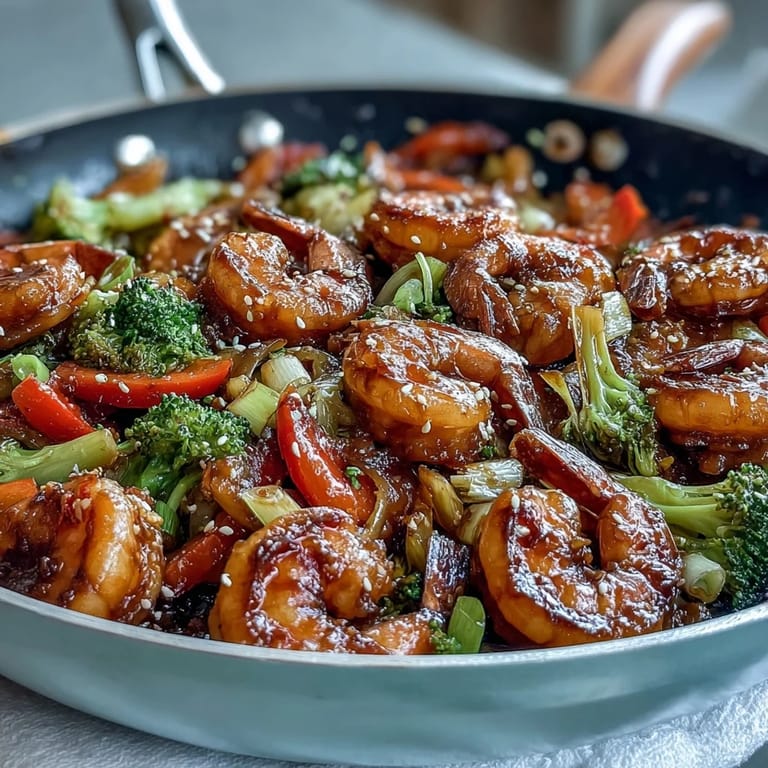
- Heat your wok or large skillet over medium-high heat until it's genuinely hot, then add the shrimp in a single layer and leave them alone for two to three minutes per side. They'll go from gray to pink and opaque, which is your signal they're done—overcook them by even a minute and they turn rubbery.
- Stir-fry the vegetables until they're charred at the edges:
- Add a splash more oil if the pan looks dry, then toss in garlic and ginger for thirty seconds until the smell makes you close your eyes. Add peppers, carrots, broccoli, and snap peas and keep everything moving for three to four minutes—you want crisp edges and a slight char, not a blanched sadness.
- Bring it all back together:
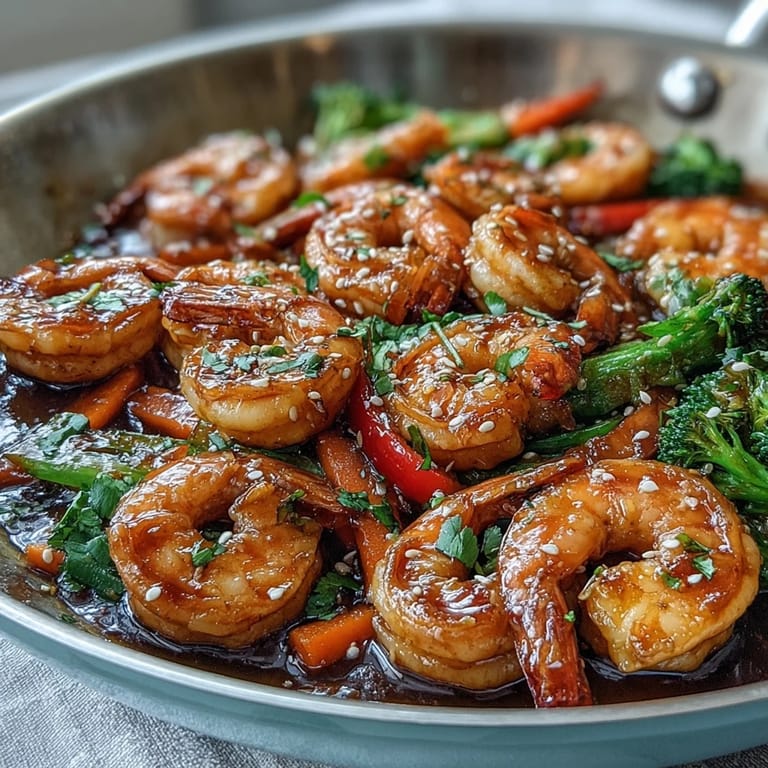
- Return the shrimp to the pan, pour in your sauce, and toss constantly for one to two minutes until everything's coated and the sauce thickens slightly. The heat does most of the work; you just keep things moving.
- Compose your bowls with intention:
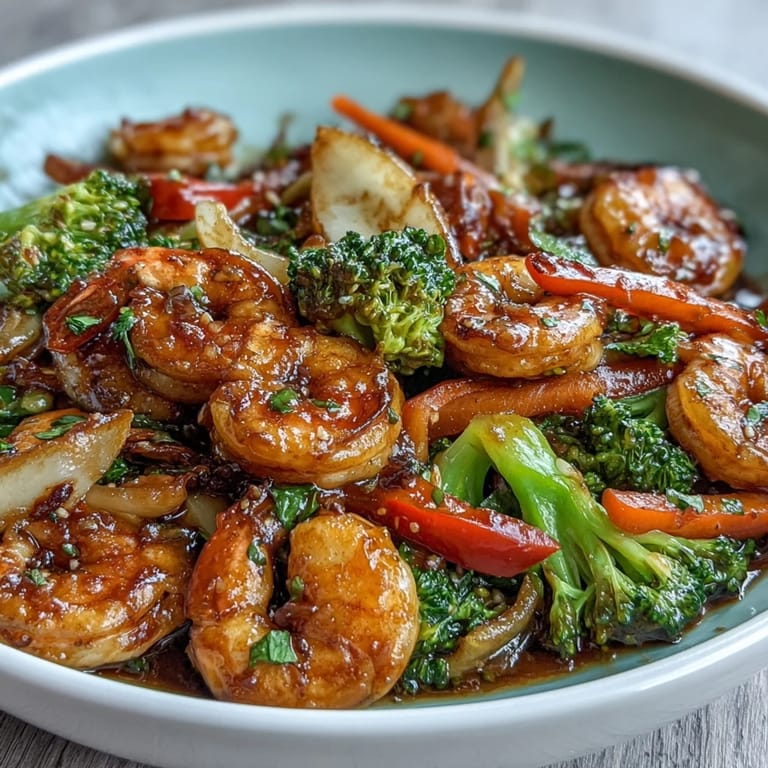
- Spoon the cauliflower rice into serving bowls, top with the stir-fry mixture, scatter green onions and sesame seeds across the top, and serve immediately while it's still hot enough to steam your face a little.
 Save to Pinterest
 What surprised me most was how this became a meal I made for myself on ordinary nights, not just for impressing people. There's something grounding about cooking with shrimp and real vegetables when the world feels overwhelming—it's a small act of self-care that doesn't require explaining or apologizing.
The Beauty of Cauliflower Rice
Cauliflower rice gets a lot of hype as a substitute, like it's trying to trick you into thinking it's the real thing, and honestly that used to bother me. But somewhere along the way I stopped thinking of it as inferior and started appreciating it for being lighter, faster, and genuinely delicious when cooked properly. The key is treating it like its own ingredient, not like rice's awkward cousin—sauté it until it's golden and tender, season it generously, and it becomes something worth eating on its own terms.
Why the Sauce Matters So Much
I once made this without whisking the sauce ahead of time, thought I'd wing it, and ended up adding ingredients one at a time while the vegetables got cold. The dish still tasted fine, but it lacked that cohesion, that moment where every element understands it's part of something larger. That's what pre-mixing does—it lets the flavors get to know each other before they meet the heat, so when they hit your mouth they arrive as a complete thought instead of a series of competing flavors.
Timing, Customization, and Grace
The real magic of this recipe is that it doesn't depend on you having shrimp or even being awake enough to understand what you're doing. Swap the shrimp for thinly sliced chicken and adjust cooking time slightly, or use pressed tofu and skip the shrimp sear entirely. The vegetables do most of the work, and the sauce ties everything together regardless of what protein you chose.
- Add heat: Red chili flakes or a splash of sriracha mixed into the sauce transforms this from vibrant to dangerous, and some nights you need that.
- Serve with lime wedges: A squeeze of fresh lime across the top adds brightness that feels almost elegant, like you're finishing a dish instead of just finishing dinner.
- Make it twice: Cook this once to learn it, cook it twice to love it, and by the third time it becomes something you do without thinking.
 Save to Pinterest
 This is the kind of meal that proves weeknight cooking doesn't require choosing between fast and good—you can have both, and you can have them in twenty minutes. Make it tonight, or make it tomorrow; either way, it'll be there waiting to remind you that real food doesn't have to be complicated.
Recipe FAQ
- → Can I substitute shrimp with other proteins?
Yes, chicken breast, tofu, or tempeh work well as alternatives, maintaining the dish’s balance of flavors and textures.
- → How do I prepare cauliflower rice at home?
Remove cauliflower leaves and core, then pulse florets in a food processor until the size resembles rice grains.
- → What sauce ingredients create the stir-fry flavor?
A mix of low-sodium soy sauce, toasted sesame oil, rice vinegar, honey or maple syrup, and optional cornstarch forms a savory and slightly sweet sauce.
- → How long should vegetables be cooked to stay crisp?
Stir-fry the bell peppers, carrots, broccoli, and snap peas for 3–4 minutes to keep them crisp-tender.
- → What garnishes enhance this dish?
Chopped green onions and toasted sesame seeds add color and texture when sprinkled on top.
- → Can I add heat to the stir-fry?
Yes, adding chili flakes or a dash of sriracha provides a pleasant spicy kick.