 Save to Pinterest
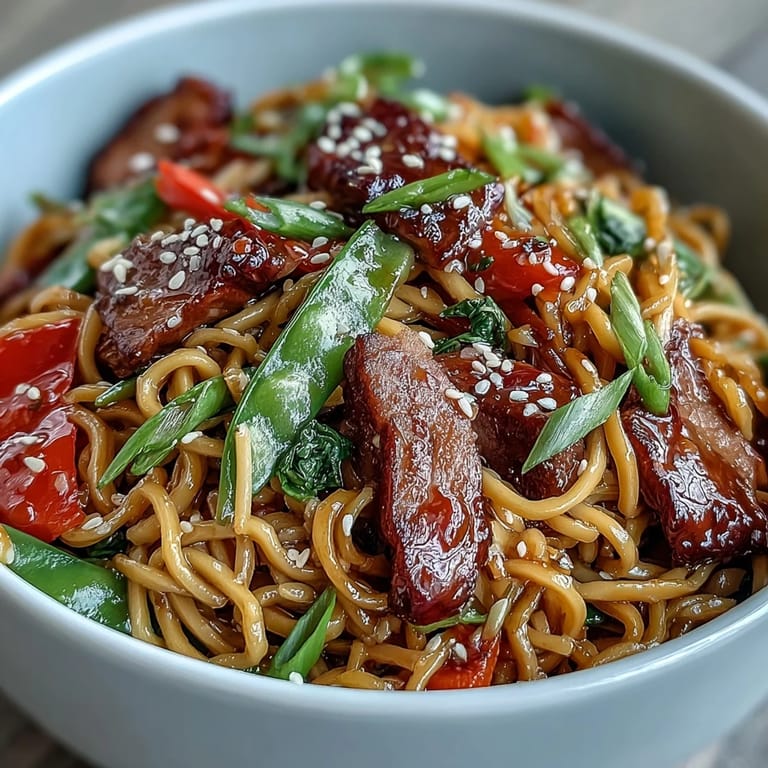
 The sizzle of pork hitting a screaming hot wok still makes me jump a little, even after years of weeknight stir-fries. I picked up this habit during a particularly hectic month when takeout was breaking the bank and my kitchen felt like the only place I had any control. This noodle stir-fry became my reset button: fast, forgiving, and always better than anything I could order. The smell of ginger and garlic frying together is enough to pull anyone out of a long day.
I made this for a friend who swore she did not like cooking, and she stood at my counter watching the whole thing come together in real time. She kept saying she did not realize stir-fry could be this simple. By the time we sat down to eat, she had already texted herself the ingredient list. That is when I knew this recipe was a keeper: it gives you confidence without asking for much in return.
Ingredients
- Pork loin or tenderloin: Slice it thin against the grain so it stays tender and cooks quickly, the marinade helps it brown beautifully without drying out.
- Soy sauce and cornstarch: This quick marinade not only seasons the pork but also creates a light coating that helps it sear and stay juicy in the high heat.
- Egg noodles or rice noodles: Either works, but I lean toward egg noodles for their chew and the way they soak up sauce without falling apart.
- Red bell pepper and carrot: Julienne them so they cook evenly and quickly, their sweetness balances the salty, savory sauce.
- Sugar snap peas: They add a crisp, fresh bite that keeps the dish from feeling heavy, halve them so they integrate better.
- Spring onions, garlic, and ginger: The aromatics are the backbone of the stir-fry, do not skip the fresh ginger, it makes all the difference.
- Oyster sauce, hoisin sauce, and sesame oil: These three bring depth, sweetness, and a nutty finish that makes the sauce taste restaurant quality.
- Vegetable oil: You need a high smoke point oil for stir-frying, so the wok stays hot and everything gets that slight char.
- Sesame seeds and fresh coriander: Optional, but they add texture and a bright, herbal finish that elevates the whole plate.
Tired of Takeout? 🥡
Get 10 meals you can make faster than delivery arrives. Seriously.
One email. No spam. Unsubscribe anytime.
Instructions
- Marinate the pork:
- Toss the sliced pork with soy sauce and cornstarch, then let it sit for 10 minutes while you prep everything else. This step tenderizes the meat and helps it develop a golden crust when it hits the heat.
- Cook the noodles:
- Boil them according to the package directions, then drain and set aside. Slightly undercook them if you are worried about them getting mushy later, they will finish cooking in the wok.
- Mix the stir-fry sauce:
- Whisk together soy sauce, oyster sauce, hoisin sauce, sesame oil, brown sugar, and water in a small bowl. Having this ready means you can move fast once the wok is hot.
- Sear the pork:
- Heat a tablespoon of oil in your wok over high heat until it shimmers, then add the pork in a single layer. Let it sit for a moment to get a good sear, then stir-fry for 2 to 3 minutes until browned and just cooked through, then remove and set aside.
- Stir-fry the vegetables:
- Add the remaining oil, then toss in the garlic, ginger, bell pepper, carrot, and snap peas. Stir-fry for 3 to 4 minutes, keeping everything moving so it cooks evenly and stays crisp.
- Combine everything:
- Return the pork to the wok, add the cooked noodles and the sauce, then toss everything together for 2 to 3 minutes. Make sure every noodle is coated and heated through.
- Finish and serve:
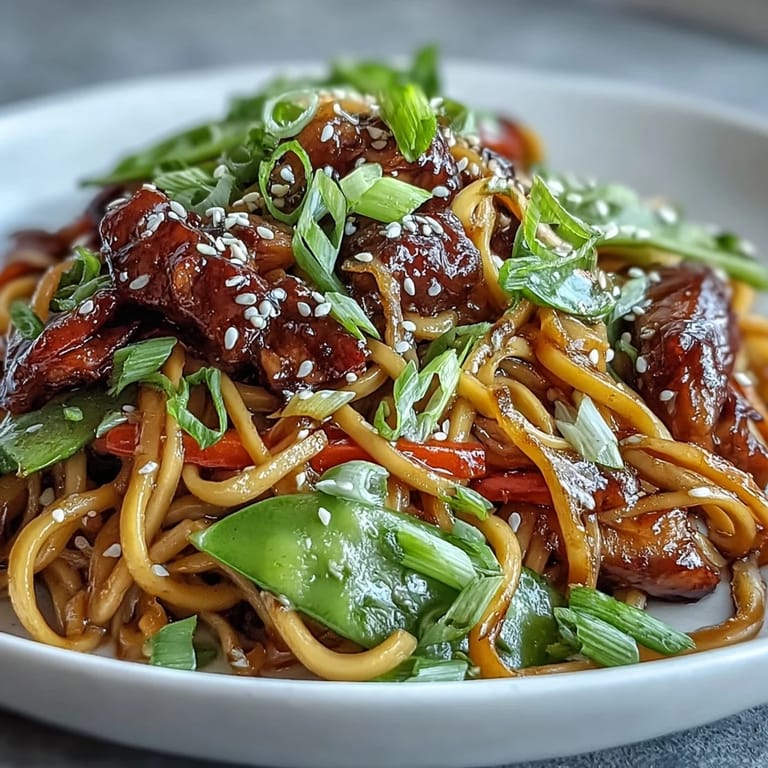
- Toss in the spring onions for a final burst of freshness, then remove from heat. Serve immediately, topped with sesame seeds and coriander if you like.
 Save to Pinterest
 One evening, I made this for my nephew who claimed he only ate chicken nuggets. He watched me toss everything in the wok, mesmerized by the steam and the noise. When I plated it, he picked out a noodle, then another, and before I knew it, his bowl was empty. He did not say much, but he asked if we could make it again next week, and that felt like the highest compliment.
Choosing Your Protein
Pork works beautifully here because it cooks quickly and stays tender, but this dish is a blank canvas. I have swapped in chicken thighs, shrimp, and even firm tofu, and each version has its own charm. If you go with tofu, press it well and let it get crispy in the wok before adding the vegetables. Shrimp cooks even faster than pork, so pull it out as soon as it turns pink to avoid rubberiness.
Getting the Wok Hot Enough
A truly hot wok is the secret to stir-fry that tastes like it came from a restaurant. If your wok is not hot enough, everything will steam and turn soggy instead of developing those crispy, caramelized edges. I learned this the hard way after making a few batches that tasted fine but lacked that smoky depth. Now, I heat the wok until a drop of water evaporates instantly, and I never look back.
Making It Your Own
This stir-fry loves improvisation. I have thrown in mushrooms, baby corn, and bok choy depending on what is in the crisper drawer. Sometimes I add a splash of rice vinegar for brightness or a spoonful of chili paste for heat. The sauce is the anchor, so as long as you keep that consistent, you can play with the rest. If you want it gluten-free, swap in tamari and use rice noodles, and double-check your oyster sauce label.
- Add a handful of cashews or peanuts for crunch and richness.
- Toss in a few ribbons of scrambled egg at the end for extra protein and texture.
- Serve it with a wedge of lime to squeeze over the top for a bright, acidic finish.
 Save to Pinterest
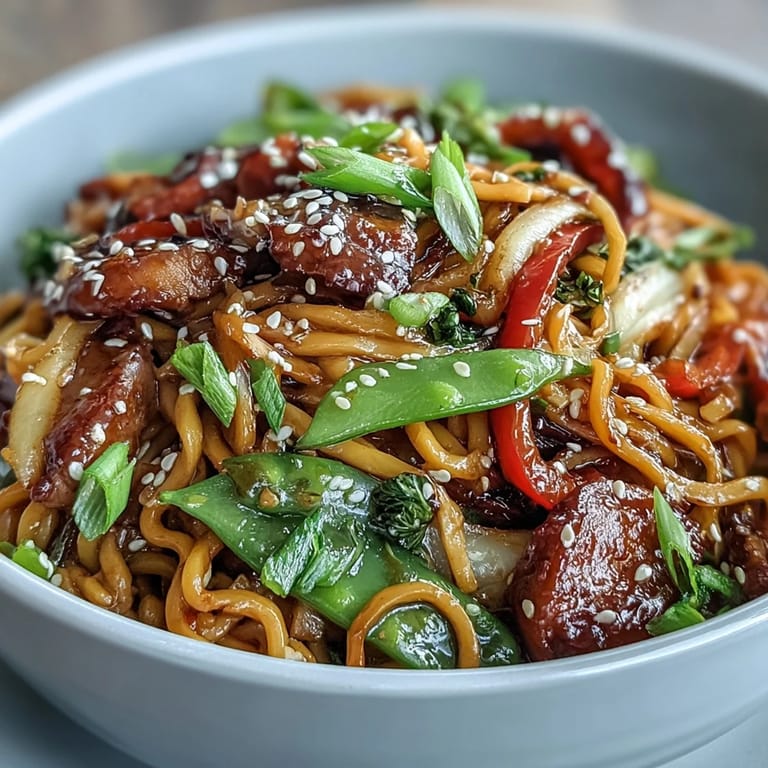
 This dish has become my go-to when I need something reliable and fast, but it never feels boring. Every time I make it, I am reminded that good food does not have to be complicated, it just has to be made with a little attention and a hot wok.
Recipe FAQ
- → Can I use different types of noodles?
Yes, both egg noodles and rice noodles work perfectly. You can also use udon, lo mein, or even soba noodles. Just cook them according to package directions before adding to the stir-fry.
- → What cut of pork works best for stir-frying?
Pork loin or tenderloin are ideal because they're lean and tender. Slice them thinly against the grain for the most tender results. Pork shoulder can also work but may require slightly longer cooking.
- → How do I prevent the stir-fry from becoming soggy?
Use high heat and don't overcrowd the wok. Cook the pork in batches if needed, and ensure vegetables are just tender-crisp, not overcooked. Drain noodles well before adding them to prevent excess moisture.
- → Can I make this ahead of time?
Stir-fry is best enjoyed fresh, but you can prep ingredients in advance. Marinate the pork, chop vegetables, and mix the sauce up to 24 hours ahead. Cook everything just before serving for optimal texture.
- → What vegetables can I substitute or add?
Feel free to add mushrooms, baby corn, bok choy, broccoli, or snow peas. Cabbage and bean sprouts also work well. Use whatever fresh vegetables you have on hand for a flexible, customizable dish.
- → How can I make this gluten-free?
Use tamari instead of soy sauce, rice noodles, and a gluten-free oyster sauce alternative. Check all sauce labels carefully as some brands contain wheat-based ingredients.