 Save to Pinterest
 The first time I made paella, I was standing in a borrowed kitchen in Barcelona, with a pan I'd never seen before and a saffron pouch that cost more than I expected. My friend Maria watched from the doorway, occasionally calling out corrections, while the aroma of chorizo and saffron filled the apartment in a way that made everything feel suddenly possible. That dish taught me that paella isn't really about perfection—it's about building layers of flavor and trusting the process, even when you're nervous about burning the bottom.
I made this for my parents' anniversary dinner, and my dad kept saying the saffron was too expensive until he tasted it. Watching someone's face change when they realize a single spice can transform an entire dish is worth every penny. That night, paella went from being "something fancy from Spain" to being "that thing our daughter makes."
Ingredients
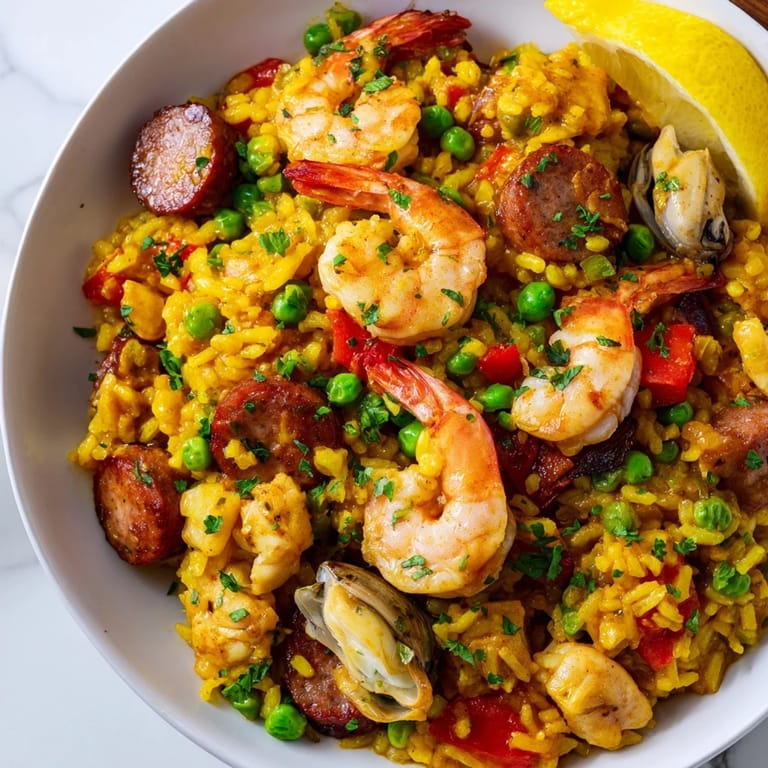
- Chorizo sausage (200 g): The smoky backbone of the dish—slice it thick enough to develop a crispy edge in the oil, which releases its paprika-red fat into everything around it.
- Chicken thighs (250 g): Thighs stay juicier than breast meat and won't dry out during the longer cooking time.
- Shrimp (250 g): Go for large ones so they don't disappear into the rice, and peel them yourself if you can—the shells make the broth taste better.
- Mussels (250 g): Buy them the day you plan to cook and keep them cold; discard any that don't open because they're telling you something.
- Calamari rings (200 g, optional): They add a chewy texture contrast and look impressive, but honestly, paella is already stunning without them.
- Short-grain paella or Arborio rice (400 g): These varieties absorb liquid without falling apart, which is the whole point of paella.
- Saffron threads (1/2 tsp): Steep them in hot stock first—this is non-negotiable if you want the flavor to actually exist in your dish.
- Stock (1 L, heated): Keep it warm so the rice cooks evenly, and use seafood stock if you want the ocean flavor to sing.
- Olive oil (2 tbsp): Use a good one; it's not hiding behind anything here.
- Onion and bell peppers: They soften into sweetness and form the flavor base that everything else builds on.
- Tomatoes (2 medium, diced): Fresh tomatoes add brightness; canned work too if you're honest about what you have.
- Peas (150 g): Frozen peas are perfectly fine—better, actually, than overcooked fresh ones.
- Garlic (3 cloves, minced): Add it late so it doesn't burn and turn bitter.
- Smoked paprika (1 tsp): This is what gives paella its soul; regular paprika feels like it's missing something.
- Bay leaf, salt, and pepper: Bay leaf simmers in the background and keeps the flavors tasting complex rather than one-note.
- Fresh parsley and lemon wedges: These finish the dish with brightness and acid that cuts through the richness.
Tired of Takeout? 🥡
Get 10 meals you can make faster than delivery arrives. Seriously.
One email. No spam. Unsubscribe anytime.
Instructions
- Wake up the saffron:
- Pour 3 tablespoons of hot stock over the saffron threads in a small bowl and let them steep while you prep everything else. This is when the saffron blooms and releases its golden color and subtle, almost floral flavor into the liquid.
- Brown the meat:
- Heat oil in your paella pan over medium heat, then add chorizo and chicken pieces. Listen for the sizzle and watch for the chorizo to release its red oil into the pan—this is flavor building. Cook for 5–7 minutes until the chicken develops color on the edges.
- Soften the base:
- Remove the meat, then add onion and bell peppers to the same pan where all the good bits are stuck to the bottom. Stir often for 4–5 minutes until they're soft and slightly translucent, then add garlic and tomatoes for 2 more minutes.
- Toast the rice:
- Stir in the rice and smoked paprika, stirring constantly for about 1 minute so each grain gets coated in the oil and spices. This is what prevents the rice from becoming mushy later.
- Build the liquid:
- Return the browned chicken and chorizo to the pan, pour in the saffron-infused stock along with the remaining stock, add the bay leaf, and season with salt and pepper. Stir gently to combine, then bring to a boil.
- Let it simmer without stirring:
- Reduce heat to low and simmer uncovered for 15 minutes without touching it—this is hard, but this is when the rice absorbs the liquid evenly and develops that crispy golden bottom layer.
- Nestle in the seafood:
- When the liquid has mostly been absorbed, arrange shrimp, mussels, and calamari into the rice in little pockets, scatter peas on top, cover loosely with foil, and cook for another 10–12 minutes until the shrimp are pink and the mussel shells open.
- Rest and finish:
- Remove from heat, keep it covered, and let it rest for 5 minutes so everything settles. Discard any mussels that stubbornly refused to open, then scatter parsley over the top and serve with lemon wedges.
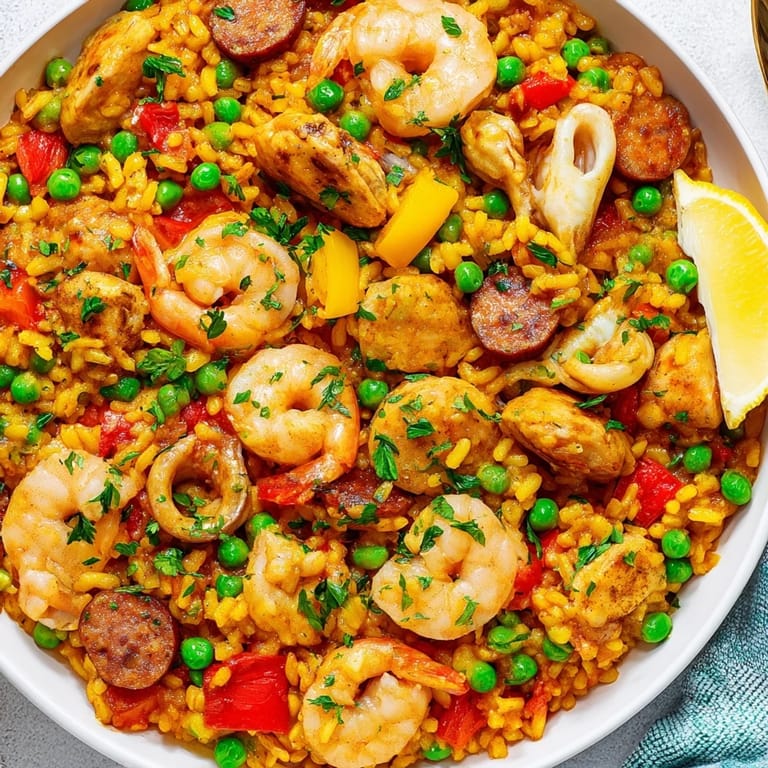 Save to Pinterest
 The moment someone first tasted the socarrat—that crispy, almost burnt rice layer at the bottom—they actually scraped their spoon across the pan to get more. That's when I realized paella wasn't about being delicate or perfect; it was about being bold and letting things get a little dark and crispy.
The Saffron Question
I spent years avoiding saffron because of the price, then I finally used it and understood why people have such strong opinions about it. It's expensive because a tiny amount goes a long way, and the flavor is nothing like anything else—subtle, slightly sweet, and somehow both floral and earthy. If budget is tight, you can make paella without saffron and it's still delicious, but once you try it with saffron, you'll understand why it's worth saving for special occasions.
Seafood Flexibility
The beautiful thing about paella is that it's forgiving with seafood swaps. Don't have mussels? Use clams, scallops, or even canned seafood if that's what you have. The structure of the dish is strong enough that it holds together no matter what you put in it, which is probably why paella has been a Spanish staple for so long—it works with whatever the day brings.
Wine Pairing and Serving
A crisp Spanish white wine like Albariño or Verdejo is the obvious choice because it complements the saffron and seafood without overpowering them. Paella is meant to be eaten straight from the pan if you're eating casually, or you can transfer it to a large serving platter if you're trying to look fancy. The leftovers are surprisingly good cold the next day, like a warm-weather dinner leftover that works both ways.
- Serve paella family-style from the center so everyone gets a mix of rice, seafood, and meat.
- Squeeze fresh lemon over your portion right before eating—it brightens everything.
- Make extra so you have an excuse to eat it again tomorrow.
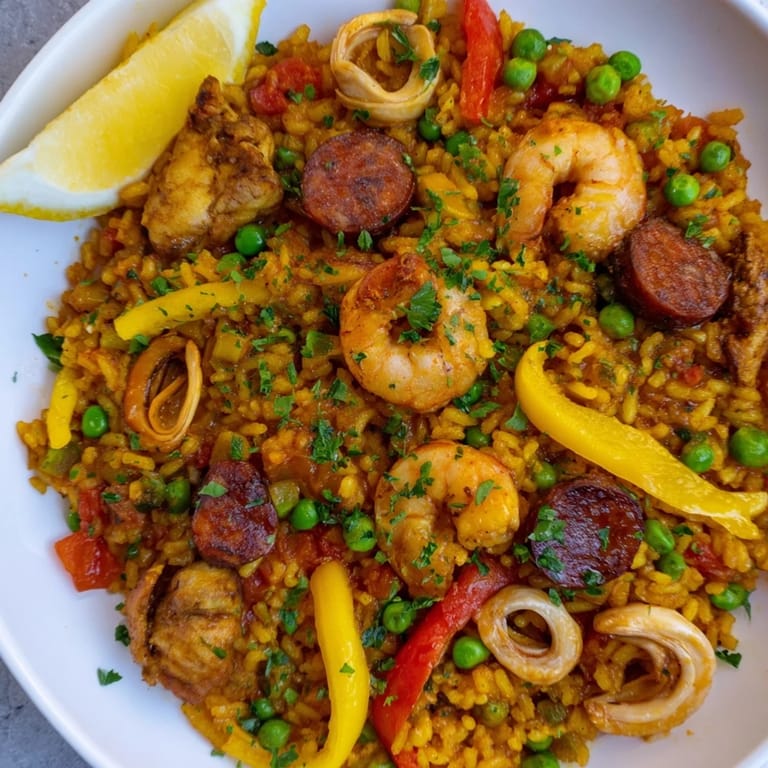 Save to Pinterest
 Paella is one of those dishes that looks complicated but teaches you something simple: good food comes from layers of flavor, patience, and not being afraid to let things get a little crispy. Make it once and you'll understand why people gather around it.
Recipe FAQ
- → What type of rice is best for this dish?
Short-grain rice such as paella or Arborio rice is ideal, as it absorbs flavors well while maintaining texture.
- → Can I substitute the seafood with other proteins?
Yes, chicken or chorizo are great alternatives, and shellfish can be varied with clams or scallops.
- → How do I achieve the signature saffron flavor?
Steep saffron threads in warm stock before adding to the dish to release their vibrant color and aroma.
- → What cooking vessel is recommended?
A wide, shallow pan like a paella pan or large skillet allows even cooking and proper evaporation.
- → Can this dish be prepared vegetarian-friendly?
Omit all meats and seafood, and add vegetables like artichokes, green beans, or chickpeas for a hearty option.