 Save to Pinterest
 I first tasted a proper Moroccan lamb tagine at a small riad in Marrakech, where the cook invited me into her kitchen and let me watch as she layered spices into a clay pot with such intention that I understood this wasn't just cooking, it was ritual. Years later, I recreated that moment at home, and the smell of cinnamon meeting browned lamb transported me right back to that humid kitchen with its blue-tiled walls. This recipe has become my way of bringing that North African warmth into winter dinners, filling the house with the kind of aroma that makes people pause the moment they walk through the door.
I made this for my brother's birthday last spring when he was going through a rough patch, and I watched him taste it and just go quiet for a moment, fork hovering over the plate. He asked for the recipe that night, and now he texts me photos of his tagine attempts. That's when I knew this dish had become something bigger than lamb and spices to me.
Ingredients
- Lamb shoulder, 1.5 kg cut into 2-inch cubes: Use shoulder rather than leg because the fat and connective tissue break down beautifully during the long braise, creating an almost silky texture.
- Olive oil, 2 tbsp: This is your fat for browning and sautéing—don't skimp, it builds flavor.
- Onions, 2 large finely chopped: They dissolve into the sauce and create a subtle sweetness that anchors the spices.
- Garlic, 4 cloves minced: Fresh garlic is non-negotiable here; it becomes mellow and sweet as it cooks down.
- Fresh ginger, 1-inch piece grated: This adds brightness and warmth that complements the warming spices beautifully.
- Ground cinnamon, 1½ tsp: Cinnamon is the backbone of tagine spicing, lending that distinctive sweet-savory depth.
- Ground cumin, 1 tsp: Earthy and warm, it grounds the spice blend without overpowering the other flavors.
- Ground coriander, 1 tsp: Adds a subtle citrus note that lifts the heavier spices.
- Ground turmeric, 1 tsp: Brings color and a gentle warmth that ties everything together.
- Ground black pepper, ½ tsp: Just enough heat to keep things interesting without stealing the show.
- Ground allspice, ½ tsp: A whisper of complexity that most people won't identify but will definitely taste.
- Ground ginger, ½ tsp: Complements the fresh ginger and deepens that warm spice profile.
- Saffron threads, 1 pinch optional: If you have it, it transforms the dish into something genuinely special, though the tagine works beautifully without.
- Beef or lamb broth, 400 ml: The braising liquid that coaxes all those flavors together.
- Canned chopped tomatoes, 400 g: They add acidity and body to the sauce, balancing the sweetness of the fruit.
- Honey, 2 tbsp: A touch of sweetness that bridges the savory and the fruit.
- Prunes, 200 g pitted: These become jammy and tender, their sweetness melting into the sauce.
- Whole blanched almonds, 80 g: Toasted just before adding, they give you a gentle crunch and nuttiness in every spoonful.
- Toasted sesame seeds, 2 tbsp: A finish that adds texture and a subtle nutty flavor.
- Fresh cilantro or parsley, chopped: A bright, herbaceous finish that cuts through the richness.
- Salt: Taste and adjust throughout cooking; it's the final voice that brings everything into focus.
Tired of Takeout? 🥡
Get 10 meals you can make faster than delivery arrives. Seriously.
One email. No spam. Unsubscribe anytime.
Instructions
- Set your oven to 160°C (325°F):
- This low, gentle temperature is the secret to tagine cooking, allowing the meat to braise slowly without toughening. If using stovetop, you'll simply keep the heat low, but the oven creates more even, consistent cooking.
- Brown the lamb in batches:
- Heat 1 tbsp olive oil in your large pot over medium-high heat until it shimmers, then add lamb in a single layer and leave it alone for a few minutes—resist the urge to stir. You want a deep golden crust on each piece, which means flavor and richness in your final dish. Transfer to a plate and repeat with remaining batches.
- Build the aromatics and spices:
- Add the remaining olive oil to the pot, then add your onions, garlic, and fresh ginger. Stir and listen for them to soften and begin to caramelize, about 5 minutes—you'll smell them transform from raw to sweet. Then sprinkle in all your spices including the saffron if using, and stir for exactly 1 minute; that's enough time for them to bloom and release their essential oils into the oil, turning the pot fragrant and dark.
- Return the lamb and add the braising liquid:
- Nestle the lamb back into the pot, pour in your tomatoes, broth, and honey, and stir everything together so the spices coat every piece of meat. Bring it to a gentle simmer on the stovetop first, then cover and slide it into the oven or reduce heat to low if cooking on stovetop.
- Let time do the work for 1 hour 30 minutes:
- The meat needs this time to become truly tender, breaking down and absorbing all those spice flavors. Give it a stir every 30 minutes or so, but mostly, let it be.
- Toast the almonds while you wait:
- In a dry skillet over medium heat, add your whole almonds and let them warm through until golden and fragrant, about 2-3 minutes. This awakens their flavor and gives them a slightly crisp exterior that contrasts beautifully with the tender meat.
- Add the prunes and almonds for the final stretch:
- After the 1 hour 30 minutes is up, open your pot and add the toasted almonds and prunes, stir gently, and return it to the oven for another 30-45 minutes. The prunes will plump up and become jammy, their sweetness melting into the sauce and helping to thicken it slightly.
- Taste and adjust:
- Before serving, taste the sauce and add salt until it tastes complete and balanced, with no single flavor dominating.
- Finish and serve:
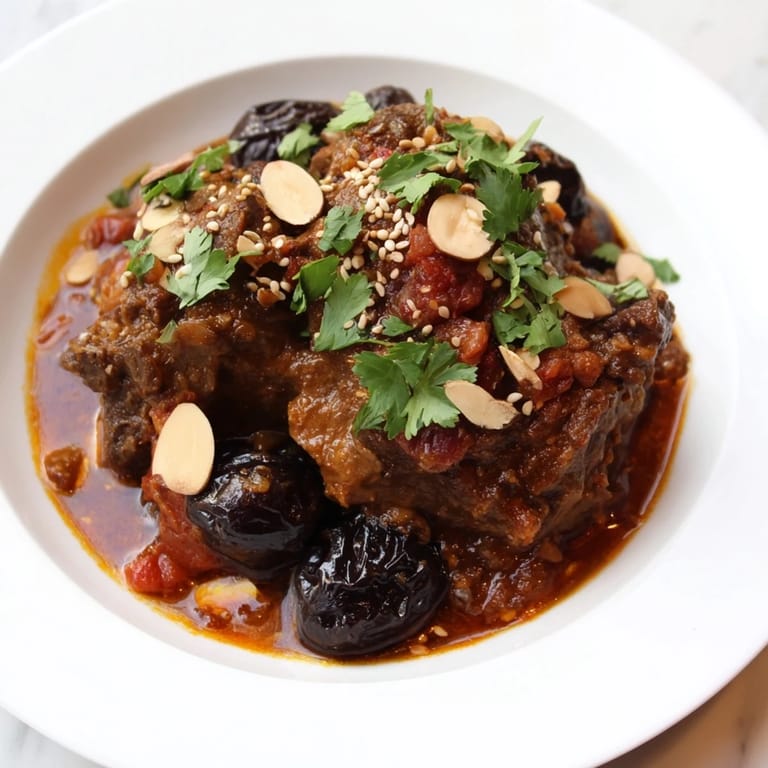
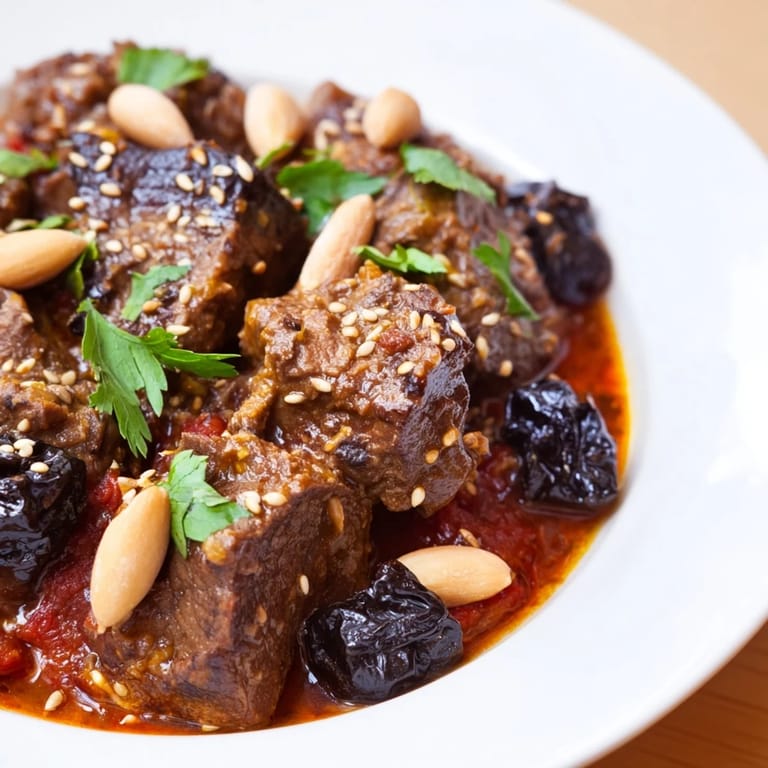
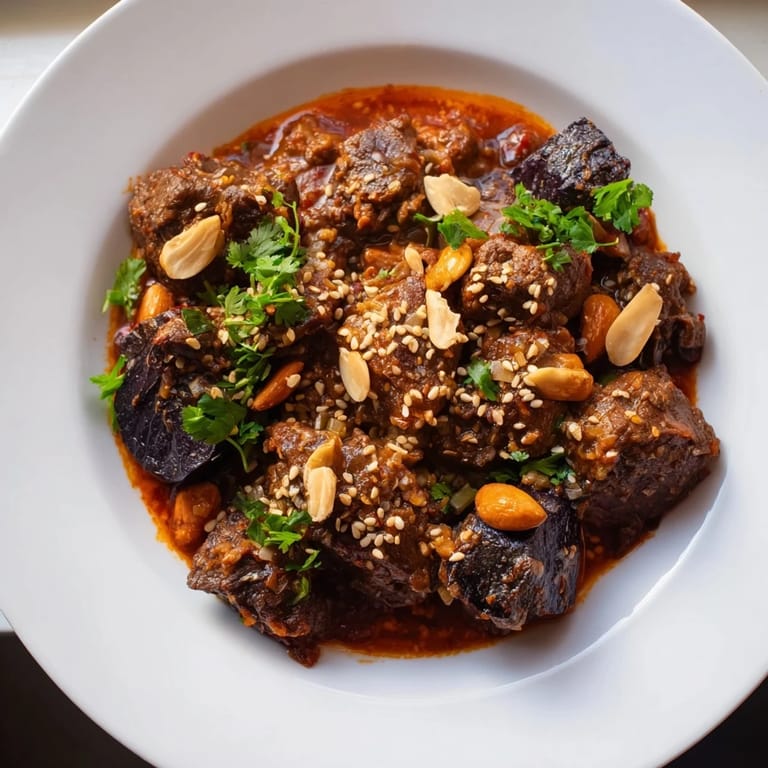
- Pour everything into your serving vessel and scatter sesame seeds and fresh cilantro or parsley over the top, which adds color and a bright herbaceous note that brightens all the warm spices.
 Save to Pinterest
 I remember my grandmother telling me that a good tagine is like a marriage—all the elements have to respect each other and move toward the same goal. Every time I make this, I understand what she meant a little more deeply.
Serving Suggestions That Make It Complete
This tagine truly sings alongside fluffy steamed couscous, where the grains soak up all that rich, spiced sauce like they were made for each other. Saffron rice works beautifully too, adding another layer of warmth and luxury. If you're in the mood for something simpler, thick slices of crusty bread are all you need to chase every last bit of sauce from your bowl.
A Word on Timing and Make-Ahead Magic
One of the greatest gifts this dish gives you is its patience with time. I often make it the morning of a dinner party, let it cool completely, and reheat it gently on low heat for 20-30 minutes while people arrive, which somehow allows all the flavors to settle and deepen even further. The tagine actually improves with a few hours of rest, as the spices continue their quiet work in the sauce.
Variations to Keep Things Interesting
Once you understand the logic of this dish—slow-cooked meat, warm spices, sweet fruit, toasted nuts—you can play with it gently. Some cooks swap the prunes for dried apricots or even a mix of both, which brings a brighter, more tart sweetness. A pinch of ground clove or a tiny bit of grated lemon zest added at the very end can shift the whole flavor profile in surprising ways. The recipe is flexible enough to welcome your preferences while still tasting unmistakably like Moroccan tagine.
- Try marinating the lamb overnight in half the spices and some olive oil for an even deeper flavor.
- Substitute apricots for prunes, or use a combination of both for complexity.
- Add a thin strip of preserved lemon rind if you can find it, which brings authentic North African brightness.
 Save to Pinterest
 There's something about bringing this dish to the table that turns an ordinary Tuesday night into something worth remembering. I hope it does the same for your kitchen.
Recipe FAQ
- → What cut of lamb works best for this dish?
Lamb shoulder cut into cubes is ideal due to its tenderness and flavor richness when slow-cooked.
- → Can I prepare this dish without a tagine?
Yes, a heavy Dutch oven or an oven-safe pot works perfectly for slow cooking this dish.
- → How do the prunes affect the flavor?
Prunes add a subtle sweetness that balances the savory spices and tender lamb beautifully.
- → Is toasting the almonds necessary?
Toasting almonds enhances their nutty flavor and adds a pleasant crunch to the dish.
- → What are good side dishes to accompany this?
Serve with steamed couscous, saffron rice, or crusty bread to complement the rich flavors.
- → Can the spices be adjusted?
Yes, you can modify spice quantities to suit your taste, keeping the core blend for authenticity.