 Save to Pinterest
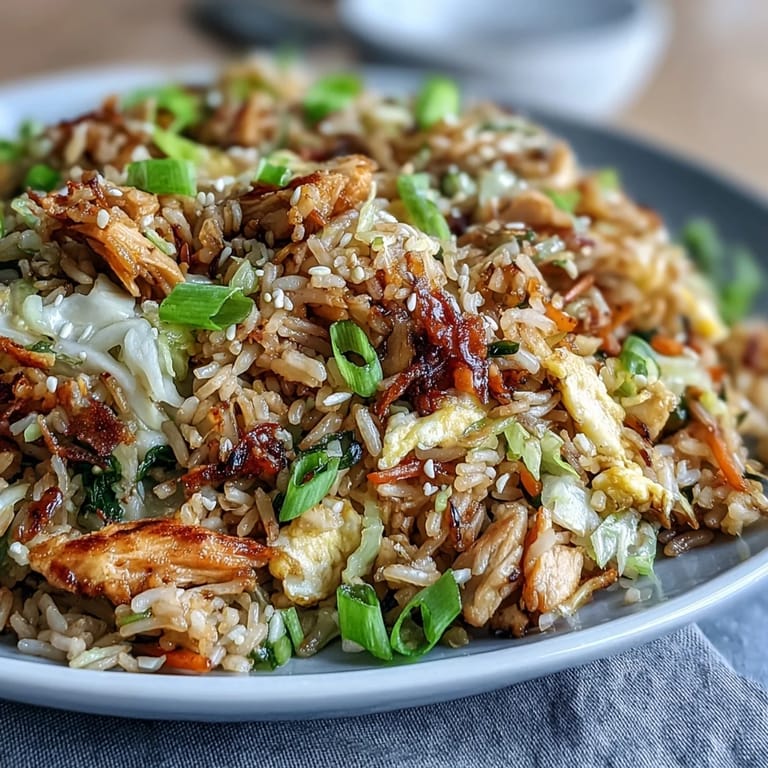
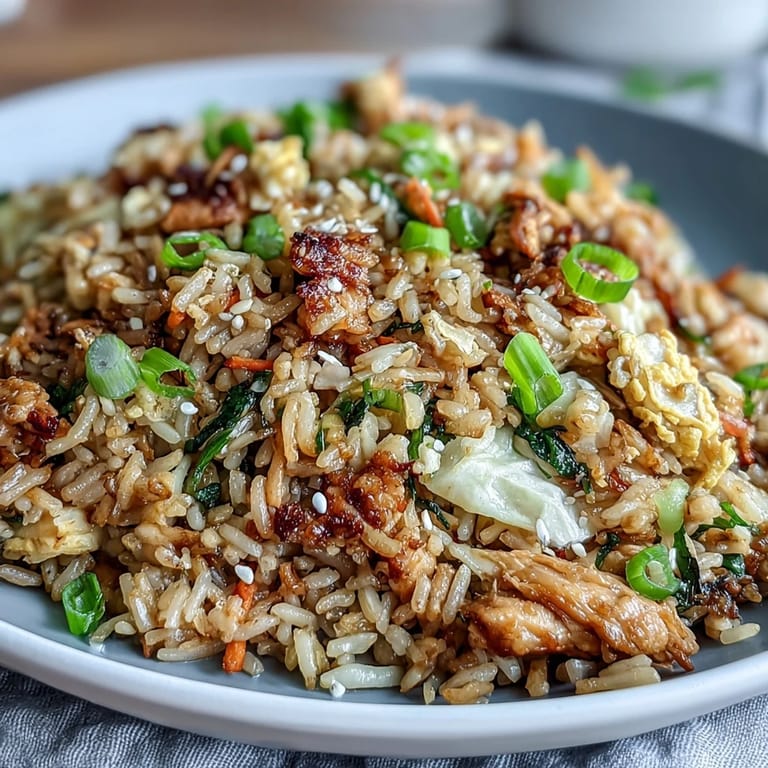
 My neighbor brought over containers of leftover egg rolls one Friday night, and I stood in my kitchen wondering how to stretch them into something new. Instead of reheating them plain, I thought: what if I deconstructed them? That's when egg roll fried rice was born—all the crispy, savory, slightly sweet flavors you crave from the real thing, but tossed together in one skillet without the frying oil. It's become my go-to when I need dinner that tastes like I spent hours cooking but really took twenty minutes.
I made this for my kids on a busy Tuesday when someone had soccer practice and someone else had homework due. They sat at the counter watching the vegetables change color in the wok, asking why it smelled like the Asian restaurant we love. When I plated it up with extra green onions on top, they actually asked for seconds—which never happens with rice dishes.
Ingredients
- Cooked chicken breast, shredded or diced (2 cups): Pre-cooked chicken speeds everything up; rotisserie chicken works beautifully here and adds a subtle depth you won't get from plain boiled chicken.
- Large eggs (2): These scramble right into the rice and act like a binder, making every bite feel connected and creamy without any dairy.
- Green cabbage, thinly sliced (2 cups): The star vegetable that gives you that authentic egg roll texture; it wilts just enough to soften but keeps a slight chew.
- Carrots, julienned or shredded (1 cup): Cut them thin so they cook through in minutes; I learned the hard way that thick chunks stay crunchy and raw.
- Green onions, sliced (1/2 cup plus extra for garnish): Save some raw for garnish because the cooked ones disappear into the rice and you lose that bright, oniony pop at the end.
- Bean sprouts, optional (1/2 cup): They add freshness and a delicate crunch that reminds you this came from an egg roll; leave them out if you can't find good ones.
- Cooked jasmine or long-grain rice, chilled (3 cups): Cold rice is crucial—warm rice clumps together and never separates properly, trust me on this one.
- Garlic, minced (3 cloves): Mince it yourself if you can; jarred garlic tastes metallic after it hits the hot oil.
- Fresh ginger, minced (1 tablespoon): This is what separates this from ordinary fried rice; don't skimp or substitute ground ginger.
- Low-sodium soy sauce (3 tablespoons): Low-sodium lets you control the salt and taste the actual flavor of everything else in the pan.
- Oyster sauce, optional (1 tablespoon): It adds a subtle sweetness that echoes the flavors trapped inside a real egg roll; omit it and add an extra teaspoon of soy sauce if you prefer.
- Toasted sesame oil (1 teaspoon): Just a touch—this stuff is intense and a little goes a long way, finishing the dish with something you can't quite name but definitely taste.
- White pepper (1/4 teaspoon): Milder and more delicate than black pepper; it blends into the rice rather than sitting on top like little specks.
- Vegetable oil (2 tablespoons): Use something neutral like canola so the garlic and ginger shine without competing flavors.
Tired of Takeout? 🥡
Get 10 meals you can make faster than delivery arrives. Seriously.
One email. No spam. Unsubscribe anytime.
Instructions
- Wake up the aromatics:
- Heat half your oil in the wok or skillet over medium-high heat until it shimmers, then add garlic and ginger. You'll smell it immediately—that's your signal to stir for about thirty seconds so it doesn't burn.
- Soften the vegetables:
- Toss in the cabbage and carrots, stirring constantly for three to four minutes. Watch for the cabbage to turn a brighter green and become slightly translucent at the edges; that's when you know it's ready.
- Scramble the eggs:
- Push everything to the side, add the remaining oil, and pour beaten eggs into the empty space. Let them set for a moment, then scramble with your spatula, breaking them into small, tender pieces before mixing everything together.
- Bring in the protein and crunch:
- Add your chicken and bean sprouts if using them, stirring for a minute or two just to heat the chicken through; it's already cooked, so you're just warming it, not cooking it.
- Introduce the rice carefully:
- Add the cold rice in batches, breaking up clumps with the back of your spatula as you go. This takes patience, but loose rice coats better and heats more evenly than one big chunk.
- Season and shine:
- Drizzle in soy sauce, oyster sauce, and sesame oil, stirring constantly so every grain gets touched by the flavorful liquid. Sprinkle white pepper over the top and taste as you go.
- Finish with brightness:
- Fold in most of the sliced green onions, leaving some for garnish. Taste one more time and adjust salt or sesame oil if your instinct tells you to.
 Save to Pinterest
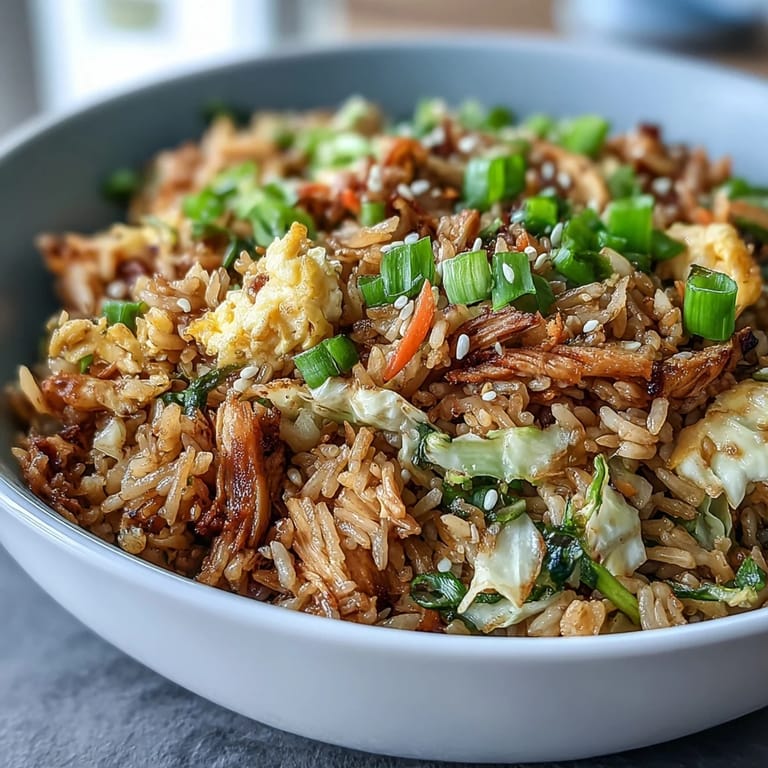
 One evening, my partner came home as I was finishing this and just stopped in the kitchen doorway, breathing in. They said it smelled exactly like the place we got takeout from on our first date, and suddenly this quick weeknight dinner felt like something we were sharing instead of something I was just making. That's when I knew this recipe had become more than just food.
Why Cold Rice Changes Everything
The first time I made fried rice with warm rice from the rice cooker, I understood why restaurants always seem to have yesterday's rice waiting. Cold rice has a firm structure that lets each grain stay separate and distinct in the pan, while warm rice is still releasing steam and moisture, turning clingy and clumpy the moment oil touches it. If you don't have leftover rice in the fridge, cook it ahead and let it chill for at least an hour, or spread it on a sheet pan and refrigerate it while you prep your vegetables.
Making It Your Own
This recipe is honestly a canvas. I've added diced water chestnuts for extra crunch, swapped in snap peas when I had them, and once threw in some diced pineapple because someone suggested it and I was curious. The bones of egg roll filling—that mix of cabbage, carrot, and aromatics—stay the same, but what you build around it depends on what's in your fridge and what you're craving that particular night.
Serving Suggestions and Pairings
Serve this straight from the wok to the bowl, while everything's still hot and steaming. It stands beautifully on its own, but a cold glass of something crisp—Sauvignon Blanc if you drink white wine, or a light lager if you prefer beer—cuts through the richness and makes the whole meal feel less heavy than you'd expect from something this satisfying.
- Pile extra raw green onions on top right before eating for a sharp, fresh bite that contrasts with the warm, savory rice.
- If you have sriracha or chili oil on hand, set it out on the table so people can add heat to their own bowl.
- Leftover fried rice stays good in the fridge for three days and tastes even better cold straight from the container the next day.
 Save to Pinterest
 This is the kind of recipe that tastes like you know what you're doing even if you're just throwing things together on a Tuesday night. Make it once, and it becomes the meal you reach for when you need something fast but refuse to feel like you're eating fast food.
Recipe FAQ
- → Can I use day-old rice for this dish?
Yes, day-old rice works perfectly. The grains have dried slightly, which prevents clumping and ensures better texture during stir-frying. Freshly cooked rice should be chilled for at least 2 hours before use.
- → What other proteins can I substitute?
Shrimp, pork, or beef work beautifully. For a vegetarian version, use firm tofu cubes or increase the eggs. Each protein brings its own character while maintaining the dish's overall appeal.
- → How do I prevent the rice from becoming mushy?
Use cold, cooked rice and avoid overcrowding the pan. Stir-fry over medium-high heat and toss frequently. This technique keeps grains separate and creates that desirable slightly crispy texture.
- → Can I make this gluten-free?
Absolutely. Substitute regular soy sauce with tamari and either use gluten-free oyster sauce or omit it entirely. The remaining ingredients are naturally gluten-free, making adaptation straightforward.
- → What vegetables work well in this dish?
Beyond cabbage and carrots, try sliced bell peppers, snap peas, broccoli florets, or water chestnuts for extra crunch. The versatile base accommodates whatever crisp vegetables you have on hand.
- → How long will leftovers keep?
Store in an airtight container in the refrigerator for up to 3 days. Reheat gently in a skillet or microwave, adding a splash of water if needed to refresh the rice. The flavors often develop further overnight.