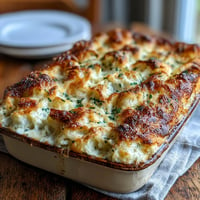
 Save to Pinterest
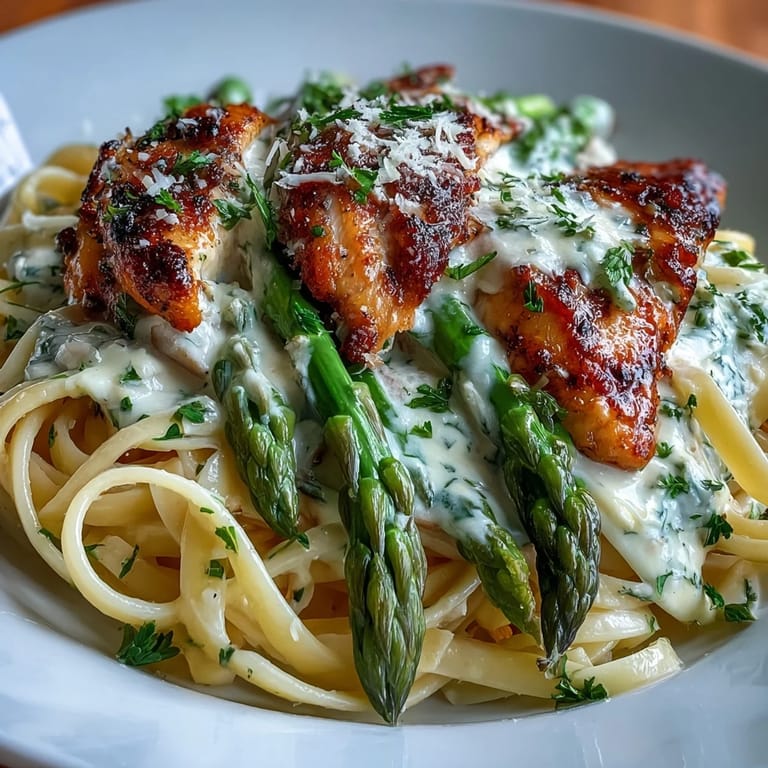
 There's something about the smell of Asiago crisping in the oven that makes you stop whatever you're doing and just breathe it in. I discovered this dish on a Wednesday evening when I had linguine, chicken, and a wedge of Asiago sitting on my counter, each ingredient begging to be used before the week ended. What started as a quick dinner became something I found myself craving weeks later, and now it's the pasta I make when I want to feel like I've done something a little bit special without spending hours in the kitchen.
I made this for my partner on a spring evening when the asparagus at the farmer's market finally looked like it was worth buying, and the way he kept twirling his fork into the pasta without saying much told me I'd gotten it right. There's a quiet satisfaction in watching someone you care about just eat, content and unhurried, which is probably why I've made this at least a dozen times since then.
Ingredients
- Chicken breasts: Cut them into bite-sized pieces so they cook quickly and mingle evenly through the pasta—no dry chunks, just tender morsels that soak up the cream sauce.
- Asparagus: The 2-inch pieces roast faster than whole spears and get crispy edges that stay interesting even after tossing with the warm pasta.
- Garlic and onion: Minced fine so they dissolve into the sauce and flavor everything rather than sitting as distinct pieces.
- Linguine: Thinner than fettuccine, it catches the cream sauce better and feels elegant without being fussy.
- Asiago cheese: Use freshly grated—the pre-shredded stuff won't melt as smoothly or taste as sharp and alive on your palate.
- Heavy cream: The backbone of the sauce; don't skimp on quality here because it's doing the heavy lifting.
- Butter: A tablespoon might seem small, but it rounds out the flavors and helps emulsify the cream sauce.
- Parmesan cheese: Optional for finishing, but a small handful scattered over each plate adds another layer of nuttiness.
- Olive oil: Use good oil you actually like tasting because it coats the asparagus and seasons the chicken.
- Salt, pepper, and lemon zest: The lemon zest is optional but transforms the dish from rich to bright if you remember to add it at the end.
Tired of Takeout? 🥡
Get 10 meals you can make faster than delivery arrives. Seriously.
One email. No spam. Unsubscribe anytime.
Instructions
- Heat your oven and prep:
- Get the oven to 220°C and line a baking sheet while you're thinking about it—this takes thirty seconds but makes the next step infinitely smoother.
- Roast the asparagus until golden:
- Toss the asparagus pieces with olive oil, salt, pepper, and half the Asiago cheese, then spread them out on the sheet so they're not crowded. They'll need 12 to 15 minutes in a hot oven until the cheese browns and crisps and the asparagus turns tender; you'll know it's done when it smells nutty and looks golden at the edges.
- Start the pasta water:
- While asparagus roasts, get a large pot of salted water boiling—it should taste like the sea. The pasta needs about 8 to 10 minutes depending on your brand, and you'll want to reserve a mugful of that starchy water before draining because it's liquid gold for loosening the sauce later.
- Cook the chicken until it's golden and done:
- Season chicken pieces simply with salt and pepper, then sear them in a large skillet with olive oil over medium-high heat for about 5 to 6 minutes, stirring occasionally until they're golden on the outside and cooked through inside. Move them to a plate once they're ready so they don't overcrowd the pan.
- Build the sauce base with aromatics:
- In the same skillet, melt butter over medium heat and add the chopped onion, stirring until it's soft and turning translucent, which takes about 2 to 3 minutes. Add the minced garlic and cook for just 30 seconds more until the kitchen fills with that warm, garlicky smell.
- Create the creamy Asiago sauce:
- Pour in the heavy cream and stir in the remaining Asiago cheese, letting it simmer gently for 2 to 3 minutes until the cheese melts completely and the sauce thickens slightly. If it gets too thick, thin it with a splash of that reserved pasta water until it's the consistency of loose gravy.
- Bring everything together:
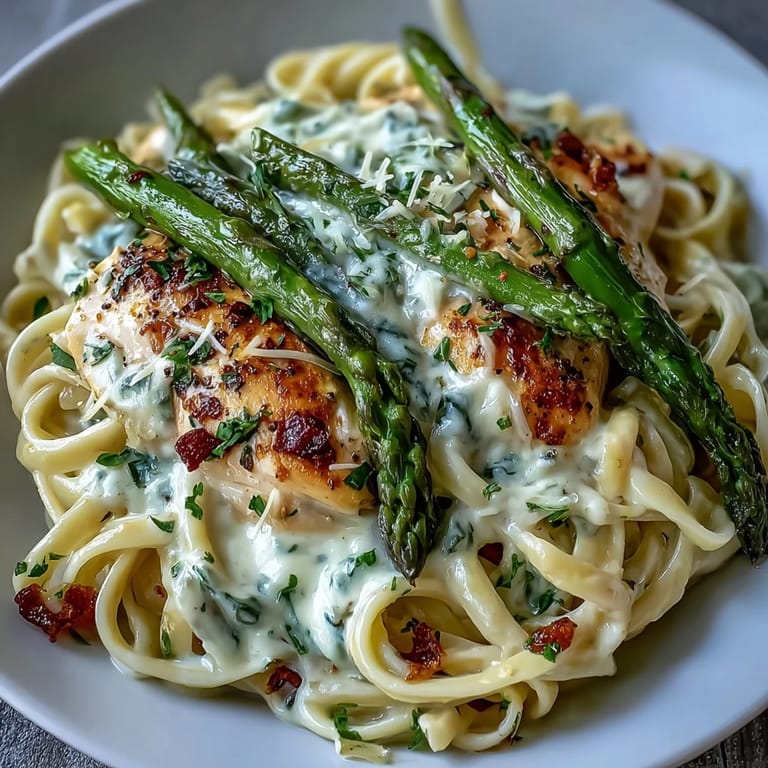
- Add the cooked linguine, seared chicken, and roughly chopped roasted asparagus to the skillet and toss everything together gently, letting it warm through for a minute. Taste it and adjust the seasoning with salt, pepper, and lemon zest if you're using it, or a pinch of red pepper flakes for a subtle heat.
- Serve right away:
- Plate it immediately while the pasta is warm and the sauce is glossy, finishing with a small handful of grated Asiago or Parmesan if you feel like it.
 Save to Pinterest
 There was a moment during one of my early attempts when I overcooked the cream sauce and it broke, and I nearly threw the whole thing away until I remembered to add that reserved pasta water and give everything a gentle stir. The starch brought it right back together, and that's when I understood this dish isn't just about following steps—it's about trusting that a few good ingredients and a little patience will work out.
The Magic of Roasted Asiago
Most people don't roast cheese with their vegetables, which is why their asparagus just tastes like asparagus. When Asiago hits the heat, it browns and crisps and turns into something almost caramelized, something that tastes more alive and complex than melted cheese in a sauce could ever be. It's the difference between a good pasta and one that makes you sit up and take notice.
Timing is Everything Here
The beauty of this dish is that every component comes together at almost the same moment—the pasta finishes, the asparagus is done roasting, the sauce is ready—so you're not juggling cold elements or reheating anything. Start your water first, get the asparagus in the oven, then begin your chicken and sauce work. Everything flows if you move with intention and don't rush between steps.
Making It Your Own
This recipe is sturdy enough to take direction from what you have on hand, and flexible enough that it'll work beautifully no matter what you choose. I've added baby spinach when I had it, scattered peas across the top, swapped in half-and-half when I wanted something lighter, and even finished a batch with freshly torn basil on a whim. The core of Asiago, cream, and pasta stayed the same, but each version felt personal and intentional.
- If you want to lighten it, use half-and-half instead of heavy cream and don't feel guilty about it—the dish will taste different but no less good.
- Lemon zest scattered over the top at the very end is optional but worth remembering because it cuts through the richness with a brightness that feels like spring.
- Serve it with a crisp white wine if you can—Sauvignon Blanc or Pinot Grigio would be my choice, something that tastes clean and won't compete with the cheese.
 Save to Pinterest
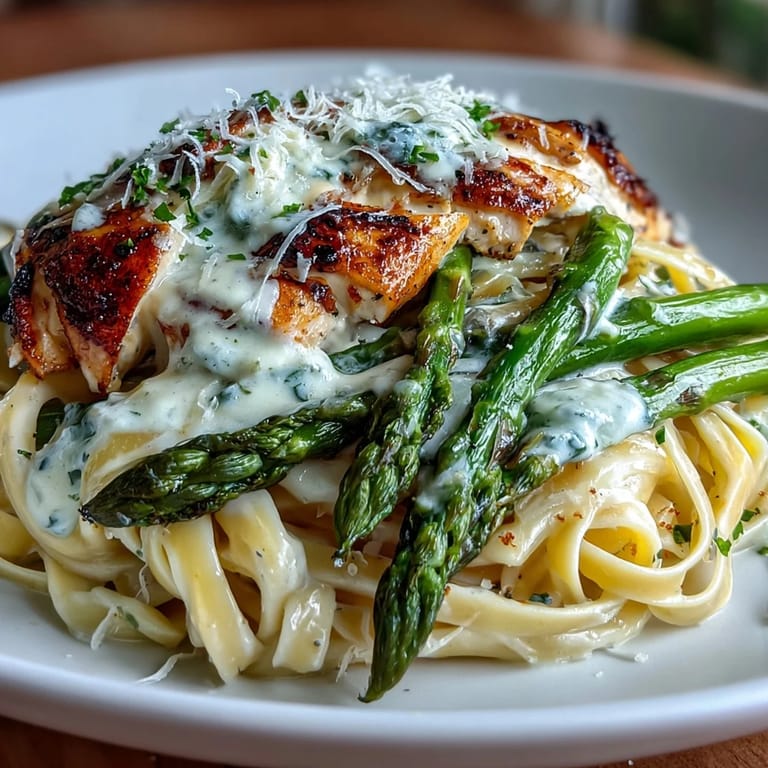
 Every time I make this, I'm reminded that the best meals are the ones that feel effortless but taste like you cared, and this pasta delivers exactly that. It's the kind of dinner that makes an ordinary Wednesday feel a little bit special.
Recipe FAQ
- → Can I use a different type of pasta?
Fettuccine, tagliatelle, or penne work well as alternatives. Thinner pasta may cook faster, so adjust timing accordingly.
- → What can I substitute for Asiago cheese?
Parmesan, Romano, or aged Gouda make suitable replacements. Keep in mind flavors will vary slightly from the original profile.
- → How do I store leftovers?
Store in an airtight container in the refrigerator for up to three days. Reheat gently with a splash of cream or pasta water to restore sauce consistency.
- → Can I make this dairy-free?
Use coconut cream or cashew cream in place of heavy cream. Substitute nutritional yeast or dairy-free cheese shreds for the Asiago, though flavor profile will change.
- → Can I add other vegetables?
Peas, baby spinach, or roasted bell peppers complement the dish nicely. Add delicate greens like spinach at the end to avoid wilting.