 Save to Pinterest
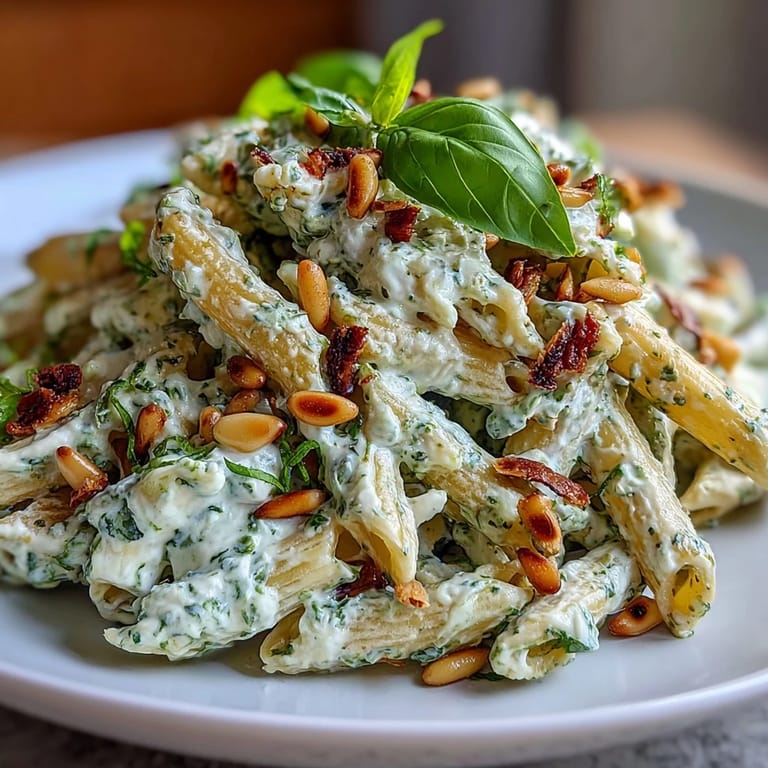
 There's something about standing in a kitchen with afternoon light streaming through the window when you realize cream cheese doesn't have to mean heavy or indulgent. I discovered this dish almost by accident, stirring together what I thought would be a quick fix for dinner and finding instead this silky, herbaceous sauce that felt both comforting and impossibly light. The basil practically glowed against the pale cream, and suddenly I understood why sometimes the simplest combinations are the ones worth coming back to.
I made this for my neighbor Sarah on a Tuesday when she'd helped me move a bookcase and we ended up talking for hours. She took one bite and went quiet in that way people do when they're surprised by how good something tastes, then asked if I'd be willing to make it again next week. That's when I knew this recipe had staying power, the kind that builds friendships one dinner at a time.
Ingredients
- Penne or fusilli pasta, 350 g: The ridges and curves catch the sauce beautifully, though any short pasta works if that's what you have.
- Light cream cheese, 120 g (softened): Softening it first makes the difference between a silky sauce and one with stubborn little lumps, so take it out early.
- Freshly grated Parmesan cheese, 40 g: Pre-grated versions feel like shortcuts until you taste them next to the real thing, so this is where a microplane actually matters.
- Fresh basil leaves, 40 g loosely packed: Use the tender leaves and avoid the food processor until they're in there with other ingredients, or they'll bruise and turn dark.
- Pine nuts, 2 tablespoons plus extra: Toast them yourself in a dry skillet until they smell like the most expensive thing in your pantry, about 2 to 3 minutes.
- Garlic cloves, 2: Fresh and peeled, though if you use a microplane your knuckles will thank you.
- Extra-virgin olive oil, 3 tablespoons: This is your fat base, so don't reach for the grocery store generic here.
- Lemon juice from half a lemon: Fresh squeezed, always, because bottled tastes like it's been waiting too long for its moment.
- Salt and freshly ground black pepper: Add these carefully at the end, tasting as you go.
Tired of Takeout? 🥡
Get 10 meals you can make faster than delivery arrives. Seriously.
One email. No spam. Unsubscribe anytime.
Instructions
- Get the water boiling first:
- Fill a large pot about three-quarters full with cold water, add a generous handful of salt (it should taste like the sea), and bring it to a rolling boil. This takes longer than you think, so don't stand there watching it.
- Cook the pasta right:
- Drop the pasta in and follow the package timing, though subtract a minute because you want it with just the slightest resistance when you bite it. Fish out a piece with a fork to test, don't rely on memory.
- Save the starchy water:
- Before draining, grab a measuring cup and reserve about half a cup of that cloudy, salt-infused water. This is your secret weapon for making the sauce cling to the pasta instead of sliding off.
- Build the pesto:
- While the pasta's cooking, add basil, pine nuts, garlic, and Parmesan to a food processor and pulse until everything's finely chopped but still recognizable. You want texture here, not a paste.
- Make it creamy:
- Add the softened cream cheese, olive oil, lemon juice, and a small pinch of salt and pepper, then process until smooth and pale green. If it seems tight and thick, add a splash of that reserved pasta water and pulse again.
- Bring it together:
- Return the drained pasta to the pot off the heat, add the cream cheese pesto sauce, and toss gently, adding pasta water a little at a time. You're aiming for something that clings to each piece like it was meant to be there.
- Plate and finish:
- Divide among bowls or plates, top with toasted pine nuts, a few fresh basil leaves, and maybe a small shower of Parmesan. Don't be shy with the garnish.
 Save to Pinterest
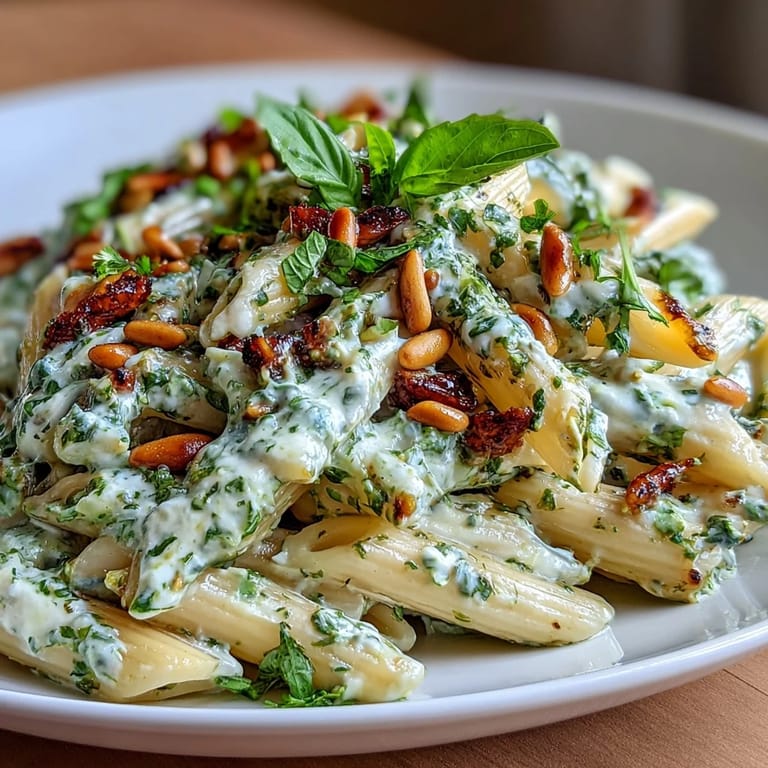
 There's a specific moment when you toss the pasta with that pale green sauce and everything suddenly turns into something greater than its parts. The kitchen fills with the smell of basil and lemon and toasted nuts, and you understand why people get sentimental about food.
Toasting the Pine Nuts
This step feels optional until you taste the difference between raw and toasted. A dry skillet over medium heat for 2 to 3 minutes transforms them from mild and buttery to deep and almost nutty, with a scent that fills your whole kitchen. Stir them constantly because they go from perfect to burnt in the time it takes to answer a text message.
Why Cream Cheese Works Here
Cream cheese sounds heavy until it's mixed into a sauce where it becomes almost silky, smoother than ricotta and less tangy than mascarpone. It holds the basil and lemon and garlic in suspension, creating something that tastes luxurious without feeling like it's sitting in your stomach. The trick is not overthinking it—just let the food processor do the work.
Making It Your Own
This dish is surprisingly flexible, which is part of what makes it so useful. You can add sun-dried tomatoes, roasted cherry tomatoes, or even grilled chicken if you want something more substantial. Some nights I'll add a handful of arugula at the end, and other times I'll double the basil because I'm feeling generous.
- Try swapping in walnuts or almonds if pine nuts aren't in your budget or your pantry.
- A splash of white wine stirred in before the cream cheese adds depth if you're feeling experimental.
- Make it vegetarian, or don't—crispy bacon crumbles on top change the entire story.
 Save to Pinterest
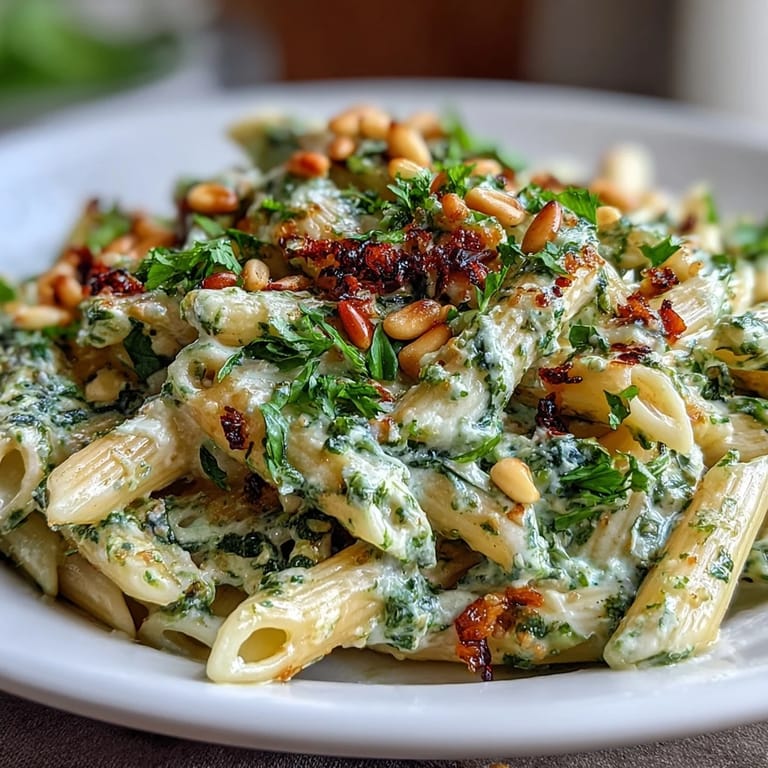
 This pasta has become my go-to when I need to feel like I've cooked something special without actually spending hours at the stove. It's the kind of dish that tastes like you tried much harder than you actually did.
Recipe FAQ
- → What type of pasta works best with this creamy pesto?
Penne or fusilli are ideal as their shapes hold the creamy pesto sauce well, ensuring each bite is flavorful.
- → Can I toast the pine nuts for better flavor?
Yes, toasting pine nuts in a dry skillet for 2–3 minutes until golden enhances their nutty aroma and adds depth to the dish.
- → How do I achieve a smooth, silky pesto sauce?
Blend basil, pine nuts, garlic, Parmesan, cream cheese, olive oil, and lemon juice until creamy, then add reserved pasta water gradually to loosen the sauce.
- → Are there suitable alternatives to pine nuts?
Walnuts or almonds can be used as substitutions, offering a different but pleasant texture and flavor profile.
- → Is this dish suitable for vegetarian diets?
Yes, it contains no meat and features fresh ingredients like basil and cheese, aligning well with vegetarian preferences.
- → Can this be made gluten-free?
Using certified gluten-free pasta allows you to enjoy the flavors without gluten concerns.