 Save to Pinterest
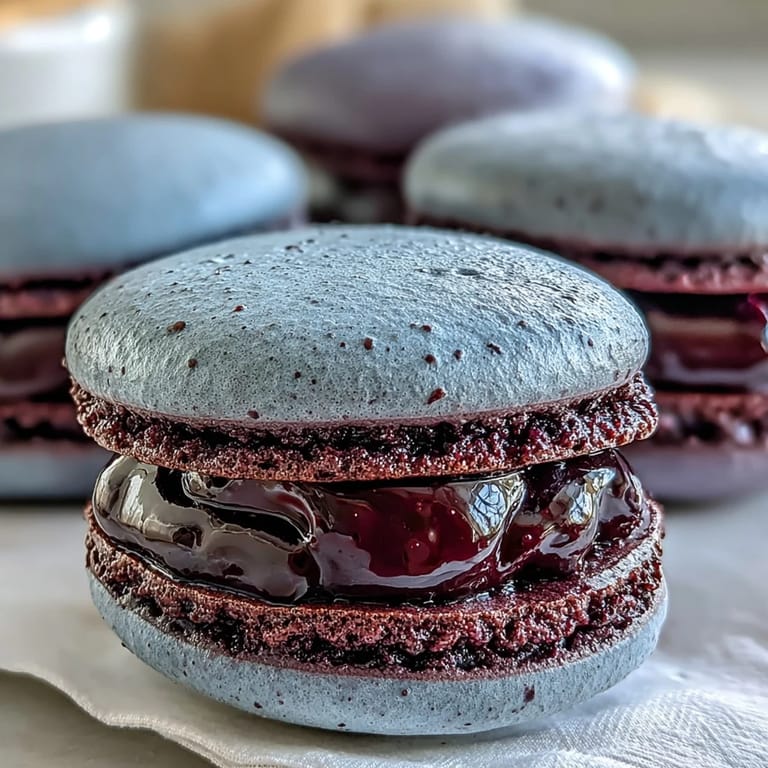
 The first time I attempted macarons, I stood in my kitchen at midnight on a Tuesday, surrounded by failed shells and a pile of egg whites, wondering why the internet made this look so effortless. Years later, I've learned that black currant macarons are less about perfection and more about patience, timing, and trusting your instincts when the batter starts to flow like lava. There's something almost meditative about folding that delicate meringue, watching it transform from stiff peaks into glossy ribbons, knowing that one wrong move changes everything. The reward—those jewel-toned shells with their tangy-sweet ganache filling—makes every trembling moment worth it. Now these are my favorite gift to bring when I want to impress someone without saying a word.
I remember bringing these to my sister's bridal shower, watching three different guests ask for the recipe in hushed tones like I'd just revealed a family secret. One woman told me later that she'd been served macarons at fancy patisseries for years, but never tasted one that actually had flavor—most felt like sweetened air with no soul. Those black currant shells, with their subtle tang and the way the ganache softened on your tongue, somehow made sense in a way that pretty pastel shells never had.
Ingredients
- Egg whites (120 g, aged): Room temperature egg whites foam better, but aging them in the fridge for a day or two actually stabilizes the meringue structure—this is the trick that changed my success rate entirely.
- Granulated sugar (100 g): This sweetens the meringue and helps create that glossy, stiff peak texture you need for proper volume.
- Powdered sugar (200 g): Combined with almond flour, this becomes your base; sifting removes clumps that would deflate your shells mid-fold.
- Almond flour (120 g, finely ground): The texture has to be almost flour-like, not gritty, so buy the finest you can find or pulse it yourself in a food processor.
- Salt (pinch): A small amount helps stabilize the meringue without making them taste salty.
- Blackcurrant purée (100 g, strained): Fresh or frozen blackcurrants blended smooth and pressed through a fine sieve give you the truest flavor; cassis works in a pinch but tastes slightly more boozy.
- White chocolate (120 g, finely chopped): The small pieces melt more evenly when the hot purée hits them, creating a silky ganache rather than lumpy disaster.
- Unsalted butter (30 g, softened): This adds richness and helps the ganache set to the perfect pipeable consistency.
- Lemon juice (1 tsp): A small squeeze brightens the ganache and prevents it from feeling cloying.
- Gel food coloring (optional): Gel doesn't add extra moisture like liquid food coloring does, which is why it won't ruin your meringue.
Tired of Takeout? 🥡
Get 10 meals you can make faster than delivery arrives. Seriously.
One email. No spam. Unsubscribe anytime.
Instructions
- Prep your workspace:
- Line your baking sheets with parchment paper or silicone mats and set them aside; this is not the moment to scramble for supplies once your batter is ready to pipe.
- Process the dry ingredients:
- Pulse almond flour and powdered sugar in a food processor until they combine into something almost flour-like, then sift everything into a large bowl to catch any remaining lumps that will ruin your shell texture.
- Build the meringue:
- In a spotlessly clean bowl, beat egg whites and salt until foamy, then gradually add granulated sugar while continuing to beat until the peaks are stiff, glossy, and don't slide around when you tilt the bowl.
- Color your meringue:
- If using gel coloring, add it now and fold gently until the purple or blackcurrant tint is even throughout.
- Make the macaron batter:
- This is the critical fold—add the dry ingredients in three additions, using a rubber spatula to fold gently until the batter flows in thick ribbons and you can draw a figure-8 in it without the mixture breaking into pieces, which means it's ready to pipe. Overmixing creates thin shells that won't develop feet.
- Pipe the shells:
- Transfer batter to a piping bag with a 1 cm round tip and pipe small circles about 3.5 cm in diameter, spacing them slightly apart so they have room to spread without touching.
- Remove air bubbles:
- Tap each tray firmly on the counter several times to release trapped air, then use a toothpick to pop any bubbles you can see on the surface.
- Rest the shells:
- Leave them at room temperature for 30 to 45 minutes until a slight skin forms on top and they're no longer tacky when you touch them gently—this resting period is what creates those signature ruffled feet.
- Preheat and bake:
- Heat your oven to 150°C (300°F) and bake one tray at a time for 13 to 15 minutes, rotating halfway through, until the shells are set and lift cleanly from the parchment.
- Cool completely:
- Let the shells cool on the trays before removing them; trying to move them while warm will crack them instantly.
- Make the ganache:
- Place chopped white chocolate in a heatproof bowl, heat the blackcurrant purée until it just simmers, then pour it over the chocolate and let it sit for a minute before stirring gently until smooth and melted.
- Finish the ganache:
- Stir in softened butter and lemon juice until fully incorporated, then let it cool until it's thickened but still pipeable.
- Assemble your macarons:
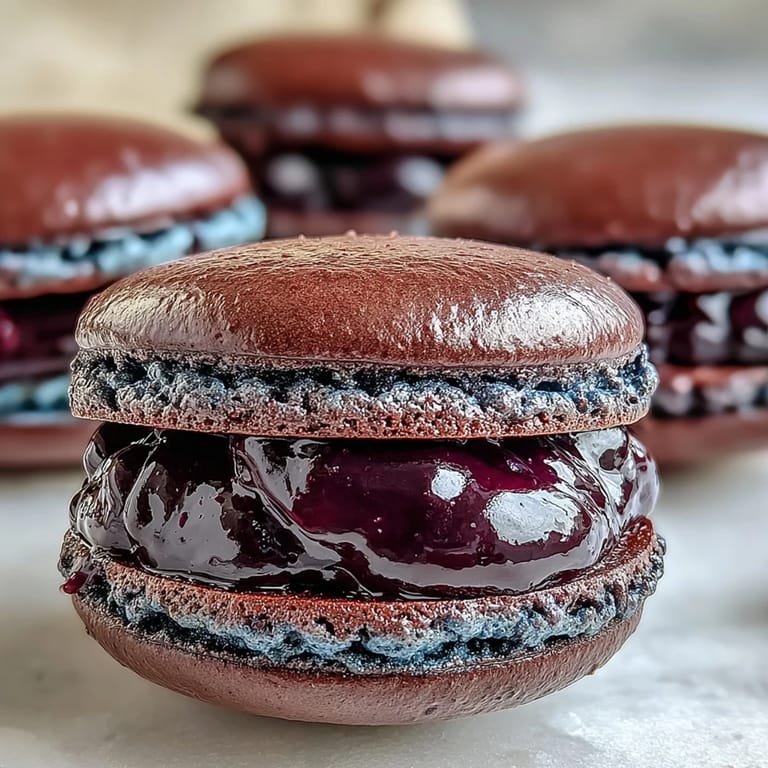
- Pair up the cooled shells by size, pipe a small amount of ganache onto one shell, and sandwich it gently with its partner, then place them in an airtight container and refrigerate for at least 24 hours so the flavors can mature and marry together.
 Save to Pinterest
 I brought a batch of these to a cooking class I was taking, and the instructor pulled me aside afterward to ask if I'd learned macarons professionally, which sent me floating for a week. It wasn't about proving I could make them perfectly—it was about realizing that all those midnight kitchen experiments, all those shells that came out flat or hollow, had actually taught me something real.
The Secret of the Ruffled Feet
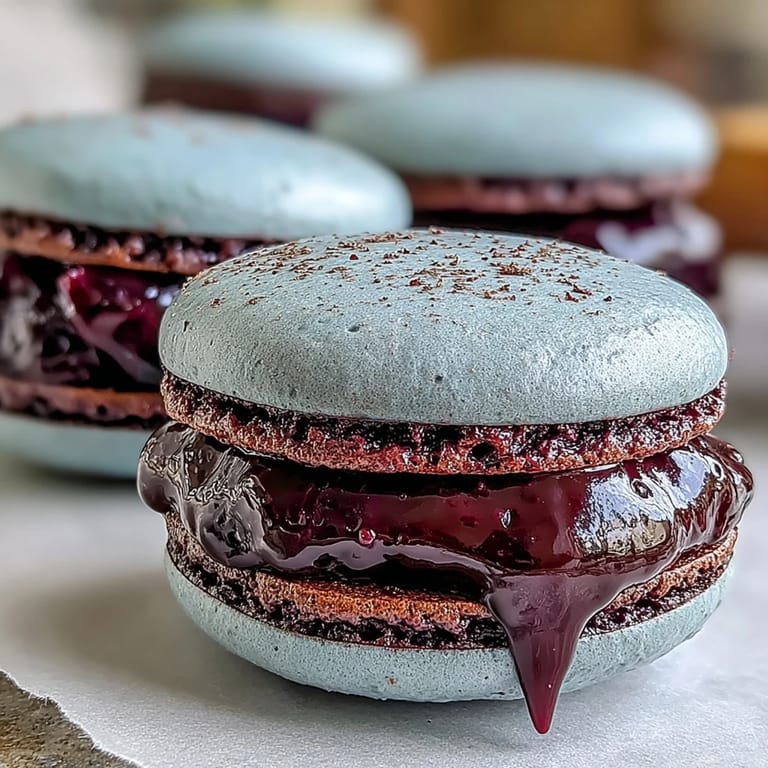
Those little ruffles around the bottom of a macaron shell—they're called feet, and they're the sign that you've done something right. They happen because the heat causes a thin layer near the bottom to set first while the inside is still expanding, which creates that distinctive frill. I learned this by accident after my twentieth failed batch, when I finally paid attention to what was actually happening in the oven instead of just pulling them out and cursing. The feet are the macaron's way of saying hello; without them, you've got a cake pretending to be a macaron.
Why Blackcurrant Matters
Most people reach for raspberry or vanilla fillings because they're familiar, but blackcurrant is the flavor that makes you pause mid-conversation and actually think about what you're eating. It's tart without being sour, floral without being perfumy, and it cuts through white chocolate in a way that creates actual contrast instead of just sweetness on sweetness. The first time I tasted a proper blackcurrant macaron was at a tiny shop in Paris, and I remember being shocked that something so small could taste so intentional and complex.
From Kitchen to Table
The best time to serve these is right at room temperature after they've spent a night in the fridge, when the shell has softened slightly and the ganache is set but still gives when you bite through it. They keep for about two days in an airtight container, though honestly, I've never had them last that long once I've made them. If you want to add extra drama, try brushing the cooled shells lightly with a mixture of blackcurrant liqueur and edible glitter—it catches the light like tiny dark jewels.
- Always pair shells by size before filling so your macarons look intentional rather than haphazard.
- If your ganache is too thick to pipe, let it warm up slightly; if it's too thin, pop the bowl in the fridge for a few minutes.
- These freeze beautifully unfilled for up to three months, so you can make shells ahead and assemble them whenever you need an impressive dessert.
 Save to Pinterest
 These black currant macarons remind me that some of the best things in life require patience, precision, and a willingness to fail a few times before you succeed. Once you taste one that you've made yourself, shell by careful shell, you'll never think of macarons quite the same way again.
Recipe FAQ
- → Why must egg whites be aged?
Aging egg whites for 24-48 hours in the refrigerator evaporates excess moisture, creating a more stable meringue with better volume. This helps achieve smooth, crack-free shells with proper feet formation during baking.
- → How do I know when macaronage is complete?
The batter is ready when it flows in thick ribbons off your spatula and you can draw a figure-8 without the stream breaking. Overmixing produces flat shells while undermixing causes lumpy tops. This stage typically takes 30-50 folds.
- → Why do my shells crack during baking?
Cracks typically form from insufficient resting time, undermixed batter, or oven temperature fluctuations. Let shells rest until they form a dry skin (30-45 minutes), use an oven thermometer, and avoid opening the oven door during baking.
- → Can I substitute blackcurrant purée?
Cassis purée works as an excellent alternative with similar tartness. Raspberry or blackberry purée can substitute, though the flavor profile changes. Ensure any substitute is strained thoroughly to avoid seeds disrupting the smooth ganache texture.
- → Why must macarons refrigerate before serving?
The 24-hour resting period allows moisture from the ganache to soften the interior shells, creating the characteristic chewy texture. This time also lets flavors meld and mature, resulting in a more balanced, sophisticated taste experience.
- → What causes hollow macaron shells?
Hollow shells often result from oven temperature too low, undermixed meringue, or rapid temperature changes. Ensure your oven reaches 150°C before baking, beat whites to stiff glossy peaks, and let shells rest properly before entering the oven.