 Save to Pinterest
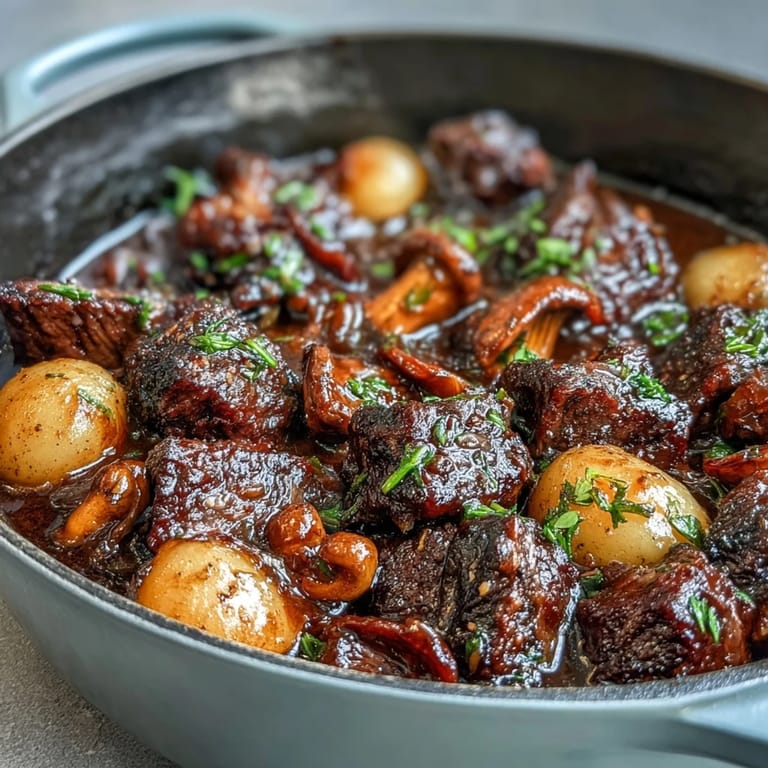
 There's a particular kind of quiet that fills the kitchen when you're building something slow and intentional, and that's what drew me to this wild mushroom beef bourguignon. I was flipping through an old cookbook one rainy afternoon, looking for something that felt both comforting and a little bit grand, when this recipe caught my eye. The combination of earthy mushrooms, tender beef, and that deep wine-dark sauce seemed to promise something worth the three hours of attention it would demand. I'd made simpler braises before, but this one felt different somehow, like the kind of dish that transforms an ordinary evening into something memorable.
I made this for friends who were going through a rough stretch, and I watched their faces change the moment they took that first bite. There was something about sitting around the table with the steam rising from the bowls, talking and eating something that required real effort and care, that seemed to matter more than the usual small talk. That night taught me that this isn't just a fancy dinner dish, it's the kind of food that marks a moment worth remembering.
Ingredients
- Beef chuck, 1.5 kg cut into 2-inch cubes: This cut has just enough marbling to stay juicy through the long braise, and the collagen breaks down into gelatin that gives the sauce its silky finish.
- Wild mushrooms, 250 g, cleaned and sliced: Chanterelles, porcini, or cremini all work beautifully, each bringing their own subtle earthiness that regular button mushrooms simply can't match.
- Pearl onions, 200 g, peeled: Their natural sweetness caramelizes into little pockets of flavor throughout the dish.
- Carrots and celery: These build the aromatic base that gives the braise its foundation of depth.
- Dry red wine, 750 ml: Choose something you'd actually drink, like a Burgundy or Pinot Noir, because the wine flavors concentrate as it reduces.
- Beef stock, 500 ml: Homemade is ideal, but good quality store-bought works when that's what you have available.
- Tomato paste, 2 tbsp: This adds umami sweetness and helps build body in the sauce as everything braises down.
- Olive oil and unsalted butter: The oil sears the meat, while butter adds richness to the mushroom and onion sauté.
- Fresh thyme and bay leaves: These gentle herbs perfume the whole pot without overpowering the beef.
- All-purpose flour, 2 tbsp: Dusted over the vegetables, it thickens the sauce as everything comes together.
- Smoked bacon or pancetta, 100 g, optional: If you use it, the smokiness weaves through every bite, adding complexity that seems to deepen the wine flavors.
Tired of Takeout? 🥡
Get 10 meals you can make faster than delivery arrives. Seriously.
One email. No spam. Unsubscribe anytime.
Instructions
- Set your oven and prepare the beef:
- Preheat to 160°C (325°F) so it's ready when you are. Pat the beef completely dry with paper towels, which sounds fussy but makes all the difference for browning, then season generously with salt and pepper on all sides.
- Sear the beef in batches:
- Heat 1 tbsp olive oil in your Dutch oven over medium-high heat until it shimmers, then add the beef in a single layer without crowding. You're looking for a deep brown crust on each piece, which takes about 3 to 4 minutes per side, so don't rush it. Work in batches to avoid steaming the meat, setting each batch aside as it finishes.
- Render the bacon if using:
- Add the diced bacon to the now-empty pot and cook until it's crisp and the fat has rendered out, then remove it and set aside with the beef. This step is optional, but it adds a layer of savory depth you'll taste in every spoonful.
- Build the aromatic base:
- Pour in another 1 tbsp olive oil, then add your chopped onion, carrots, and celery, stirring often for about 5 minutes until they soften and begin to release their sweetness. Add the minced garlic and cook for one more minute until fragrant.
- Create the flour slurry:
- Sprinkle the flour over the softened vegetables and stir everything together, cooking for 2 minutes so the flour loses its raw taste and begins to incorporate into the oil and vegetable juices.
- Deglaze with wine and tomato:
- Stir in the tomato paste first so it caramelizes slightly, then pour in the red wine slowly, scraping the bottom of the pot with your wooden spoon to lift up all those browned bits that hold so much flavor. They dissolve into the wine and enrich the whole sauce.
- Assemble the braise:
- Pour in the beef stock, tuck in the thyme sprigs and bay leaves, then return the beef and bacon to the pot, nestling everything into the liquid. The meat should be mostly submerged, and the smell at this point is already intoxicating.
- Braise low and slow in the oven:
- Cover the Dutch oven and slide it into the 160°C oven for 2 hours, which is when the beef should be fork-tender and the liquid will have reduced slightly. The low heat ensures the meat stays moist while the tough connective tissue transforms into something luxurious.
- Prepare the mushrooms and pearl onions:
- While the beef braises, heat 1 tbsp olive oil and 2 tbsp butter in a large skillet over medium-high heat. Add the sliced wild mushrooms and cook without stirring too much at first, letting them develop a golden crust, then stir and continue cooking until any released liquid has evaporated and they're deeply golden.
- Caramelize the pearl onions:
- In the same skillet, add the pearl onions and let them cook undisturbed for about 4 minutes, then stir and continue for another 4 minutes until they're lightly caramelized on the outside and tender within.
- Finish the braise:
- After the initial 2 hours, remove the Dutch oven from the oven and add the sautéed mushrooms and caramelized onions, scattering them throughout. Return it to the oven, uncovered this time, for 30 more minutes so the sauce reduces further and becomes glossy and thick.
- Final seasoning and garnish:
- Remove the thyme sprigs and bay leaves, then taste the braise and adjust the salt and pepper as needed. Ladle into bowls and finish each serving with a scattered handful of fresh chopped parsley.
 Save to Pinterest
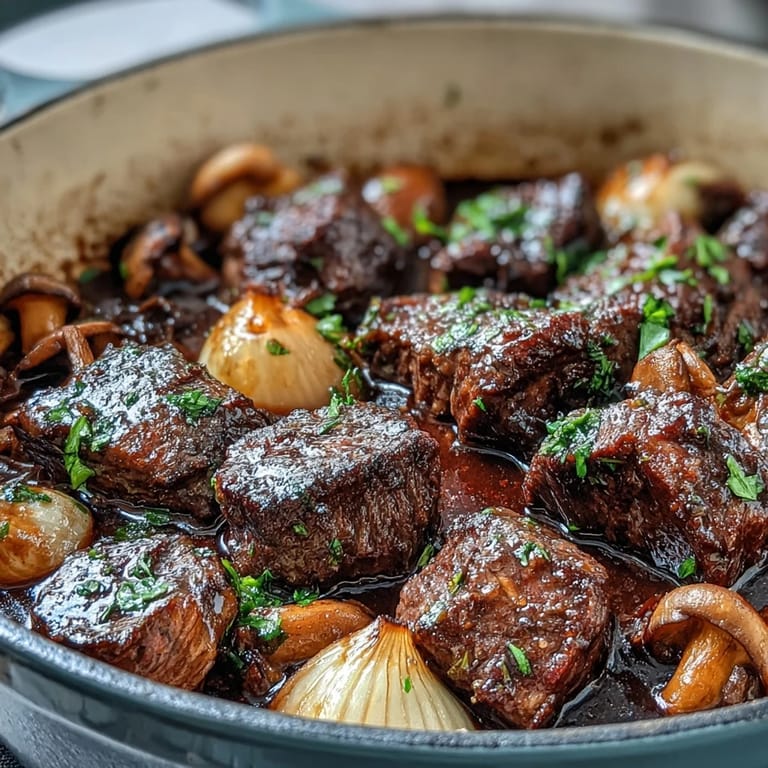
 My sister came home from a difficult job interview and found the house filled with the smell of this braise simmering away, and the first thing she said was that the aroma alone had changed her entire day. We sat together and ate straight from the pot, passing the spoon back and forth, and I realized that sometimes the most important meals are the ones that acknowledge when someone needs a little extra care.
Why This French Approach Works
There's a reason the French perfected braising centuries ago, and it comes down to patience and respect for your ingredients. The long, slow cooking at a low temperature means the beef stays incredibly moist while the wine and stock reduce into something rich and concentrated, and the connective tissues in the chuck become gelatin that coats your mouth with silken comfort. Every element serves a purpose, from the flour that thickens without ever becoming gummy, to the combination of aromatics that build complexity without any single flavor shouting louder than the others.
Serving and Pairing Possibilities
I've served this over creamy mashed potatoes, buttered egg noodles, and crusty French bread, and each pairing shifts the mood slightly. With mashed potatoes, it feels like pure comfort, the kind of dinner you want when the weather turns cold and you need something grounding. Egg noodles have an elegance to them, making the dish feel a bit more refined, while French bread is perfect for soaking up every last drop of that gorgeous sauce.
Make Ahead and Storage Wisdom
This is genuinely one of those dishes that improves dramatically after a day or two in the refrigerator, as the flavors deepen and meld together in ways that taste like even more effort than you actually put in. You can refrigerate it for up to four days, or freeze it for several months, which makes it perfect for planning ahead when you know a busy week is coming. Just reheat gently on the stovetop, adding a splash of wine or stock if it seems to have thickened too much, and the whole house will smell like a French bistro again.
- If marinating the beef overnight in wine, cover and refrigerate it separately, then add the marinating wine to your cooking liquid and reduce the stock slightly to keep flavors balanced.
- Substitute button mushrooms if wild ones aren't available, though you'll lose some of the earthy sophistication that makes this dish feel special.
- Always remove the bay leaves and thyme sprigs before serving, as accidentally biting into a bay leaf is one of those kitchen moments that disrupts the whole experience.
 Save to Pinterest
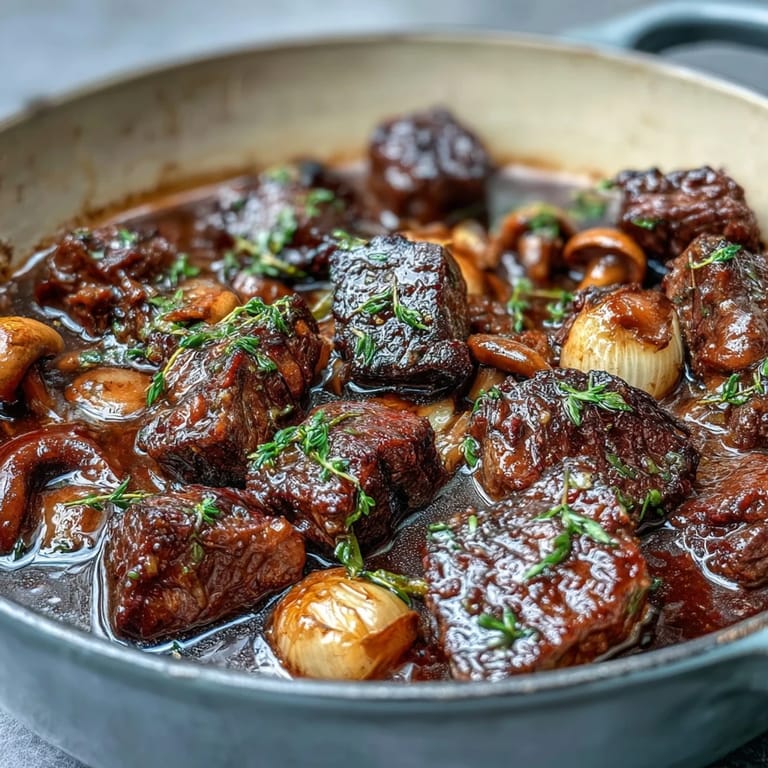
 Every time I make this, I'm reminded that the best meals aren't the ones that look the most impressive on a plate, but the ones that fill the kitchen with warmth and bring people back to the table again and again. This beef bourguignon does exactly that.
Recipe FAQ
- → What type of beef is best for this dish?
Beef chuck cut into cubes is ideal due to its balance of fat and connective tissue, which breaks down during slow braising to create tender, flavorful meat.
- → Can different mushrooms be used?
Yes, chanterelles, porcini, cremini, or even button mushrooms can be substituted to suit availability while maintaining earthiness.
- → How does red wine affect the flavor?
Dry red wine adds acidity and depth, tenderizing the meat and enriching the sauce with robust, fruity undertones.
- → Why are the wild mushrooms sautéed separately?
Sautéing mushrooms beforehand enhances their texture and intensifies their earthy flavor before they are folded into the braise.
- → What side dishes pair well with this entrée?
Creamy mashed potatoes, buttered noodles, or crusty bread complement the rich sauce and tender meat perfectly.