 Save to Pinterest
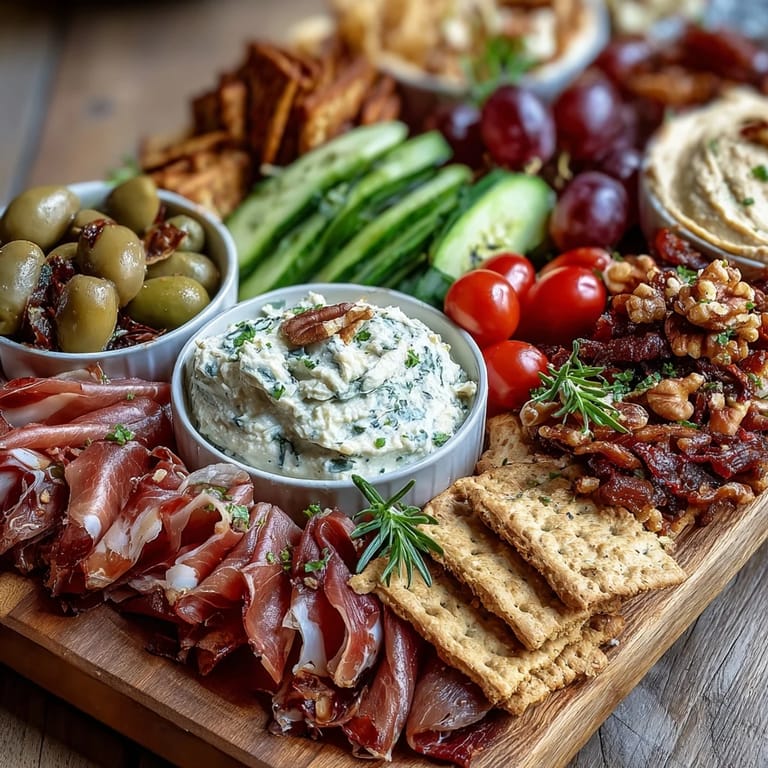
 My neighbor knocked on my door with a housewarming gift and a sheepish smile—she'd forgotten to ask what I needed. What arrived the next evening was a charcuterie board so beautiful I almost didn't want to eat it. Watching guests gather around it at my first party in the new place, I realized this wasn't just about the food; it was about creating a moment where everyone could graze, chat, and feel welcome without me being stuck in the kitchen. Now whenever I need to impress without stress, I build one of these boards and let the colors and flavors do the talking.
I'll never forget setting this up for the first time in my new kitchen—my hands were shaking a little because I wanted it to look Instagram-worthy but also genuinely delicious. My partner walked in, saw the spread, and didn't say anything for a moment, which told me everything. By the time guests arrived, the board had become the conversation starter, and people lingered around it far longer than expected, which honestly made me happier than a perfectly plated main course ever could.
Ingredients
- Prosciutto, 120 g: The delicate, paper-thin slices add elegance—buy it sliced from the deli counter and drape it in loose folds rather than stacking it flat.
- Salami, 120 g: Choose a good quality variety with visible marbling; it adds a sophisticated bite and beautiful color contrast.
- Smoked Ham, 120 g: This is your crowd-pleaser; it's familiar and works with almost every other element on the board.
- Chorizo Slices, 100 g: The spice factor that keeps things interesting and adds warmth to the overall flavor profile.
- Brie, 150 g sliced: Soft cheese that melts slightly at room temperature, creating a creamy anchor for crackers.
- Aged Cheddar, 150 g cubed: The sharpness cuts through rich meats and pairs beautifully with nuts and dried fruit.
- Gouda, 120 g sliced: Its subtle sweetness bridges the gap between savory and the dried fruits scattered around.
- Blue Cheese, 100 g crumbled: A bold flavor statement that makes guests slow down and appreciate the complexity on their plate.
- Hummus, 100 g: The vegetarian-friendly dip that appeals to health-conscious guests and adds earthiness.
- Tzatziki, 100 g: Cool, refreshing, and cuts through the richness of cured meats beautifully.
- Roasted Red Pepper Dip, 100 g: Sweet and slightly smoky, this brings comfort-food vibes to an otherwise sophisticated spread.
- Assorted Crackers, 150 g: Mix textures—water crackers for elegance, multigrain for heartiness, seeded for visual interest.
- Baguette, 100 g sliced: Slice it fresh or lightly toast it an hour before serving to prevent sogginess.
- Breadsticks, 100 g: They stand up nicely on the board and create vertical interest visually.
- Red and Green Grapes, 2 cups combined: Their natural sweetness provides palate relief and adds gorgeous color pops throughout.
- Cherry Tomatoes, 1 cup: Leave them whole for guests to pop in their mouths; they're nature's candy on a savory board.
- Cucumber Slices, 1 cup: Keep these crisp by slicing them no more than two hours before serving and storing them on damp paper towels.
- Red Bell Pepper, 1 sliced: The vibrant color is essential for visual appeal, and the sweetness complements sharp cheeses.
- Baby Carrots, 1 cup: They stay crunchy longer than other vegetables and appeal to guests who want something light.
- Mixed Nuts, ½ cup: I use a blend of almonds, cashews, and walnuts for textural variety and visual texture.
- Olives, ½ cup pitted: Choose a mix of green and black for color, and always pit them to avoid awkward moments.
- Dried Apricots, ¼ cup: Their tartness and chewiness create surprising pockets of flavor when paired with salty meats.
- Dried Figs, ¼ cup: These feel luxurious and pair elegantly with blue cheese and aged cheddar.
- Fresh Herbs, rosemary and thyme: A small sprinkle at the end adds aroma and signals that this isn't just thrown together.
Tired of Takeout? 🥡
Get 10 meals you can make faster than delivery arrives. Seriously.
One email. No spam. Unsubscribe anytime.
Instructions
- Choose Your Canvas:
- Start with a large wooden board or ceramic platter—the surface matters because it sets the tone. A wooden board feels warm and casual; white ceramic feels more modern. Pat it dry with a clean kitchen towel if it's been stored.
- Position the Protein:
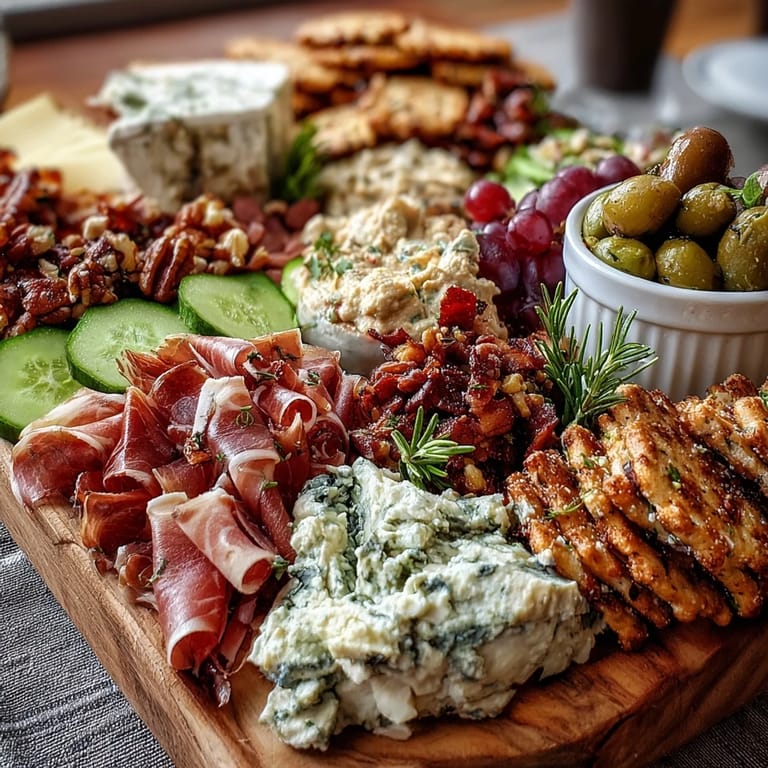
- Arrange cured meats in loose, artistic folds rather than laying them flat like cards. Let prosciutto drape naturally, roll some salami, and create height variation so the board has dimension and visual interest.
- Anchor with Cheese:
- Place soft cheeses like brie and crumbled blue cheese in small bowls or directly on the board in small piles. Space harder cheeses like cheddar and gouda in clusters around the board, creating pockets of flavor that guide the eye.
- Nestle the Dips:
- Pour each dip into small bowls and position them strategically so they're not all on one side. Leave a small spoon or spreader in each dip so guests know what they're getting.
- Fan Out Your Carbs:
- Create separate sections for crackers, baguette slices, and breadsticks so guests can see the variety. Stand some breadsticks upright in small clusters—it looks intentional and saves space.
- Fill the Gaps with Color:
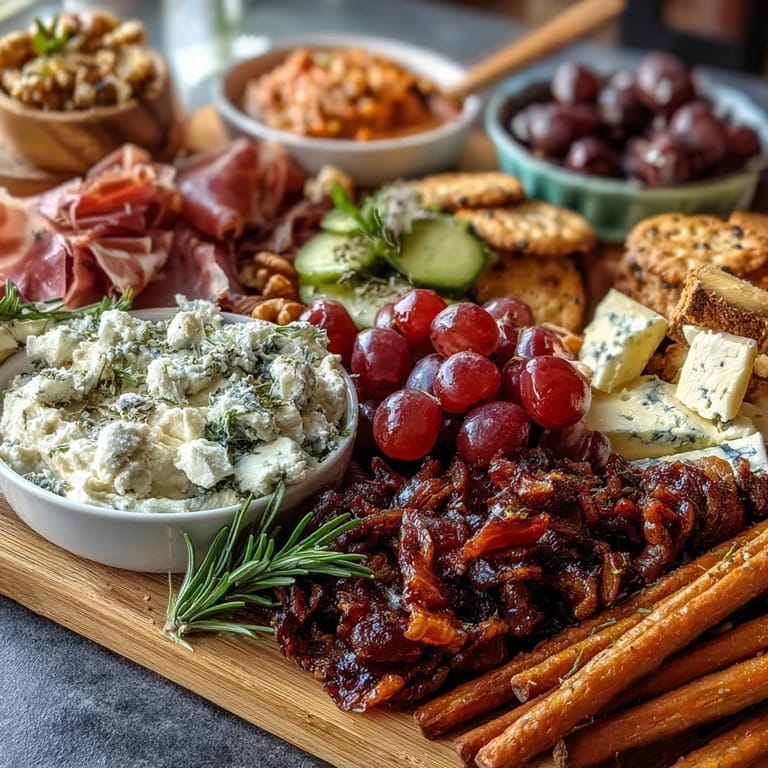
- Now comes the fun part—scatter grapes, cherry tomatoes, cucumber, and bell pepper slices into the empty spaces. Think of this like painting: you're looking for color balance and ensuring no two similar colors are touching.
- Add Texture and Surprise:
- Scatter nuts, olives, dried apricots, and figs in small clusters throughout the board. These unexpected pockets of flavor are what make guests keep coming back.
- Finish with Flourish:
- Sprinkle fresh herb sprigs (small rosemary and thyme branches) across the board just before guests arrive. This final touch signals care and adds an aroma that draws people to the table.
- Serve and Replenish:
- Place the board in a visible spot at roughly waist height so people can comfortably reach everything. Check it every 15 minutes and refill empty spots to keep it looking abundant and welcoming.
 Save to Pinterest
 There's something magical about watching a quiet living room transform the moment a beautiful charcuterie board appears. People who barely know each other suddenly have a reason to stand together, pick things up, and start conversations. I realized that night that this wasn't about being a perfect host—it was about creating a reason for people to linger and connect.
The Art of Visual Balance
The first board I made was technically correct, but it looked chaotic—cheeses bunched together, all the crackers in one corner, colors fighting for attention. I learned that the magic happens when you step back frequently and ask yourself if the eye knows where to go. Odd numbers work better than even ones; clusters of three look intentional while pairs feel accidental. A good board should have rhythm, with expensive-looking elements (like prosciutto) balanced by humble ones (like carrots) so it feels generous rather than pretentious.
Temperature and Timing Secrets
Serve everything at room temperature except the dips, which should be cool but not ice-cold—cold dips will congeal and taste muted. Take cheeses and cured meats out of the refrigerator about 30 minutes before guests arrive; they'll taste richer and more complex. Crackers are the only element that can be prepped the night before; everything else needs that just-assembled freshness or it looks tired and picked-over.
Making It Work for Any Crowd
I've learned to ask guests about dietary needs ahead of time, not because I need to remove everything, but because knowing helps me build a better board. For vegetarians, add extra cheese varieties, nuts, dried fruit, and hearty crackers so they feel the board was thoughtfully planned for them. For gluten-free guests, swap breadsticks and regular crackers for gluten-free options without making a big announcement—just slot them in naturally so everyone feels included.
- Keep raw vegetables crisp by storing them on damp paper towels in the fridge until the last moment, then pat them dry before arranging.
- Add honey or fig jam in small bowls near the blue cheese and brie—these sweet-savory combos often become the most-talked-about pairings.
- Include small serving utensils for items that need them, and always pit the olives because one bad surprise ruins the whole experience.
 Save to Pinterest
 A charcuterie board is proof that hospitality doesn't require complicated cooking. It's about understanding that guests remember how they felt, not whether you stressed in the kitchen.
Recipe FAQ
- → What meats are best for a charcuterie board?
Popular cured meats include prosciutto, salami, smoked ham, and chorizo slices, offering a variety of flavors and textures.
- → How should cheeses be arranged on the board?
Place sliced and cubed cheeses evenly around the board for easy access and visual appeal, mixing creamy and aged varieties.
- → What dips pair well with this spread?
Hummus, tzatziki, and roasted red pepper dip complement the savory meats and cheeses perfectly, adding moisture and zest.
- → Which fruits and vegetables add freshness?
Fresh grapes, cherry tomatoes, cucumber slices, bell pepper, and baby carrots provide vibrant colors and refreshing bites.
- → Can this board accommodate dietary restrictions?
Yes, meats and cheeses can be substituted, and gluten-free crackers can be included to cater to different diets.