 Save to Pinterest
 There's something about the sizzle of chicken hitting a hot pan that makes me feel like I'm cooking something special, even on a regular Tuesday night. My neighbor brought over a bottle of mirin one evening, insisting I try making teriyaki at home instead of ordering it for the third time that week. That first attempt was messier than it needed to be, but when I tasted that glossy, caramelized chicken over rice, I understood why she'd been so persistent. Now it's become my go-to when I want something that feels restaurant-quality but doesn't demand hours in the kitchen.
I made this for my sister's family on a Sunday when everyone was too tired to think about dinner plans, and watching her kids actually eat vegetables without complaints was worth every minute of prep work. They asked for it again the following week, which felt like the highest compliment a cook could receive.
Ingredients
- Boneless, skinless chicken thighs or breasts: Thighs stay juicier if you accidentally overcook them, which is why I prefer them for this dish; cut them into bite-sized pieces so they cook quickly and soak up the sauce evenly.
- Soy sauce: The backbone of the teriyaki glaze, bringing umami depth that no shortcut can replicate.
- Mirin: This Japanese sweet rice wine is worth seeking out because it dissolves into the sauce without the grainy texture of sugar alone.
- Brown sugar and honey: The combination creates a more complex sweetness than either ingredient alone; I learned this after a batch that was too one-dimensional.
- Rice vinegar: A splash of acidity keeps the sauce from becoming cloying and brightens the overall flavor.
- Garlic and ginger: Freshly minced and grated—not from a jar—they add a sharp clarity that grounds all the sweetness.
- Sesame oil: Just a teaspoon adds a toasty aroma that people always comment on.
- Cornstarch slurry: This is the secret to that glossy, restaurant-style finish that clings to the chicken beautifully.
- Jasmine or short-grain white rice: Jasmine rice has a subtle floral note that pairs surprisingly well with the teriyaki sauce.
- Fresh vegetables: Broccoli, carrots, bell pepper, and snap peas provide texture contrast; I sometimes add mushrooms if I have them.
- Fresh pineapple: The acidity and slight tartness prevent the dish from feeling too heavy and add a moment of brightness in each bite.
- Scallions and sesame seeds: These final garnishes make the bowl feel finished and intentional rather than thrown together.
Tired of Takeout? 🥡
Get 10 meals you can make faster than delivery arrives. Seriously.
One email. No spam. Unsubscribe anytime.
Instructions
- Rinse and start the rice:
- Run cold water over your rice in a fine-mesh strainer, stirring gently with your fingers until the water runs almost clear—this removes excess starch and prevents gumminess. Combine with fresh water and salt in a saucepan, bring to a boil, then reduce heat, cover tightly, and let it simmer undisturbed for 15 minutes.
- Build the teriyaki sauce:
- Whisk soy sauce, mirin, brown sugar, honey, rice vinegar, minced garlic, grated ginger, and sesame oil together in a small bowl, stirring until the sugar dissolves. The sauce should smell sweet and savory at once, with garlic and ginger notes cutting through.
- Get the chicken ready:
- Toss your cut chicken pieces with half the teriyaki sauce in a bowl, coating each piece evenly. Let it sit while you prep vegetables—this gives the flavors time to begin penetrating the meat.
- Stir-fry the vegetables:
- Heat oil in a large skillet or wok over medium-high heat until it shimmers slightly, then add broccoli, carrots, pepper, and snap peas in quick succession. Keep moving them around for 3 to 4 minutes until they're tender but still crisp, then transfer to a clean plate.
- Cook the chicken until golden:
- Add the marinated chicken to the same pan and let it sit undisturbed for a minute so it develops color, then stir occasionally for another 6 to 8 minutes total. The chicken is ready when it's cooked through and the edges are lightly caramelized.
- Create the glossy glaze:
- Pour the remaining teriyaki sauce into the pan with the chicken, then quickly mix your cornstarch with water to form a smooth slurry and stir it in. Simmer for 2 to 3 minutes, stirring gently, until the sauce thickens and becomes shiny and clings to each piece.
- Bring it all together:
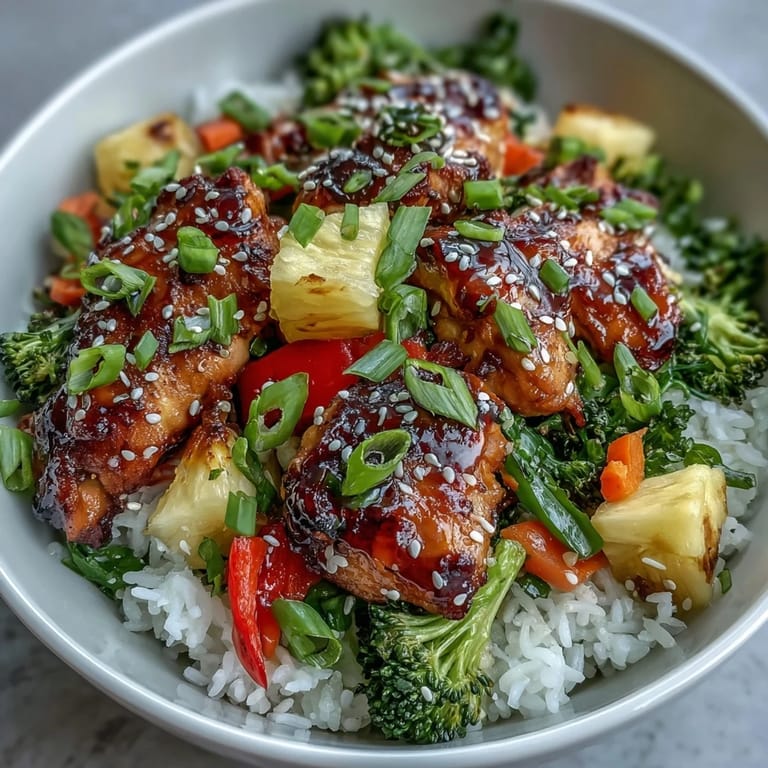
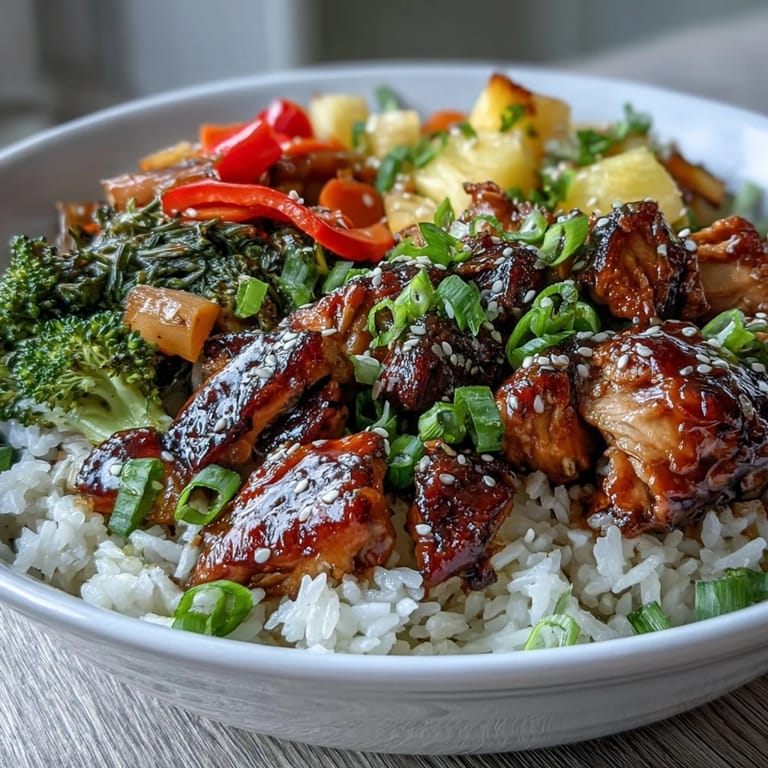
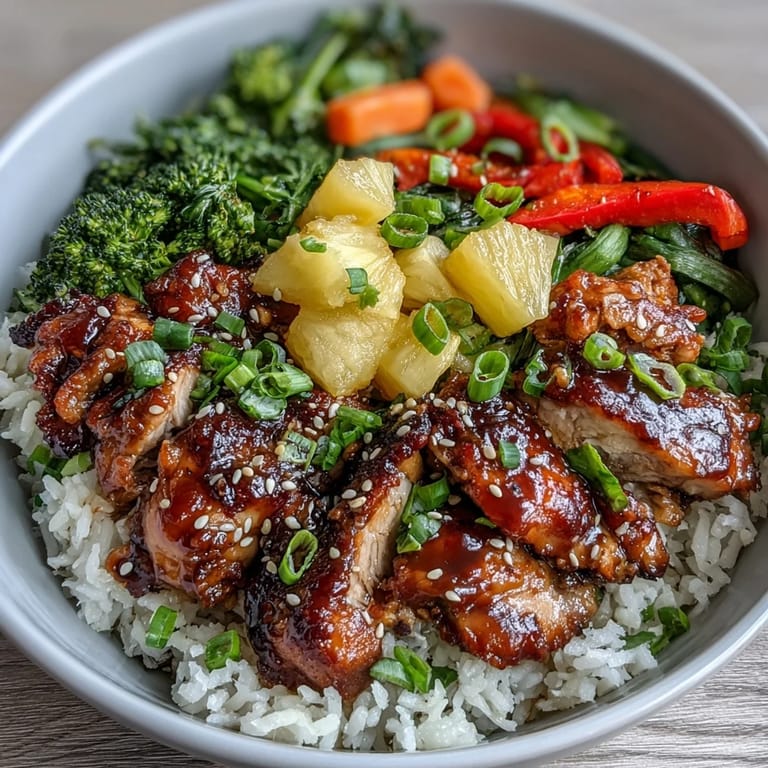
- Divide fluffy rice among four bowls, then top each with teriyaki chicken, the reserved stir-fried vegetables, and fresh pineapple chunks. Finish with a scatter of sliced scallions and a pinch of toasted sesame seeds.
 Save to Pinterest
 The moment when everything comes together in the bowl—the steam rising from hot rice, the chicken glistening with sauce, the fresh crunch of pineapple—feels like small magic. It's the kind of dish that makes people slow down and actually taste their dinner instead of rushing through.
Why This Becomes a Favorite
I think what makes this recipe stick in rotation is how forgiving it is without sacrificing quality. You can have the rice cooking while you marinate the chicken, then everything happens in parallel without a hectic finish. The balance of warm, sticky sauce against cool, crisp vegetables and bright fruit keeps your palate interested throughout the bowl.
Making It Your Own
Once you understand how the teriyaki sauce works, you can absolutely adapt the proteins and vegetables. I've made it with tofu for vegetarian friends, and it works beautifully because the sauce clings and caramelizes just as well. Mushrooms add earthiness, zucchini brings mild sweetness, and baby corn provides an interesting texture contrast that keeps things from feeling samey.
Serving and Storage Wisdom
This bowl is best eaten fresh, while the rice is still warm and the vegetables retain their snap, but I often make extra rice and chicken to eat as leftovers the next day. The flavors actually deepen and meld overnight, which is a pleasant surprise for a lunch that requires only a minute of reheating.
- Store cooked chicken and sauce separately from rice and vegetables in the refrigerator so nothing gets soggy.
- A drizzle of sriracha or chili oil transforms the bowl if you're craving heat, and it takes two seconds to add at the table.
- Pair with a crisp white wine like Sauvignon Blanc if you're making this for guests—the acidity cuts through the richness beautifully.
 Save to Pinterest
 This is the kind of recipe that reminds you why cooking at home matters—it's faster than delivery, tastes better, and costs a fraction of the price. Once you make it once, it becomes part of your regular rhythm.
Recipe FAQ
- → What cut of chicken works best?
Boneless skinless chicken thighs stay juicier during cooking, but breasts work perfectly if you prefer leaner meat. Just be careful not to overcook them.
- → Can I make the teriyaki sauce ahead?
Absolutely. Prepare the sauce up to 5 days in advance and store it refrigerated in an airtight container. The cornstarch slurry should be added fresh when cooking.
- → What vegetables can I substitute?
Mushrooms, zucchini, baby corn, snow peas, or bok choy all work beautifully. Use whatever looks fresh at your market or what you have on hand.
- → Is there a vegetarian version?
Replace the chicken with firm tofu or tempeh. Press the tofu first to remove excess moisture, then marinate and cook exactly as you would the chicken.
- → How do I store leftovers?
Keep components separate in airtight containers for up to 4 days. Reheat the chicken and vegetables gently, adding a splash of water to loosen the sauce.
- → Can I use brown rice instead?
Certainly. Brown rice adds nutty flavor and extra fiber, though it requires about 45 minutes to cook compared to 15 for white rice.