 Save to Pinterest
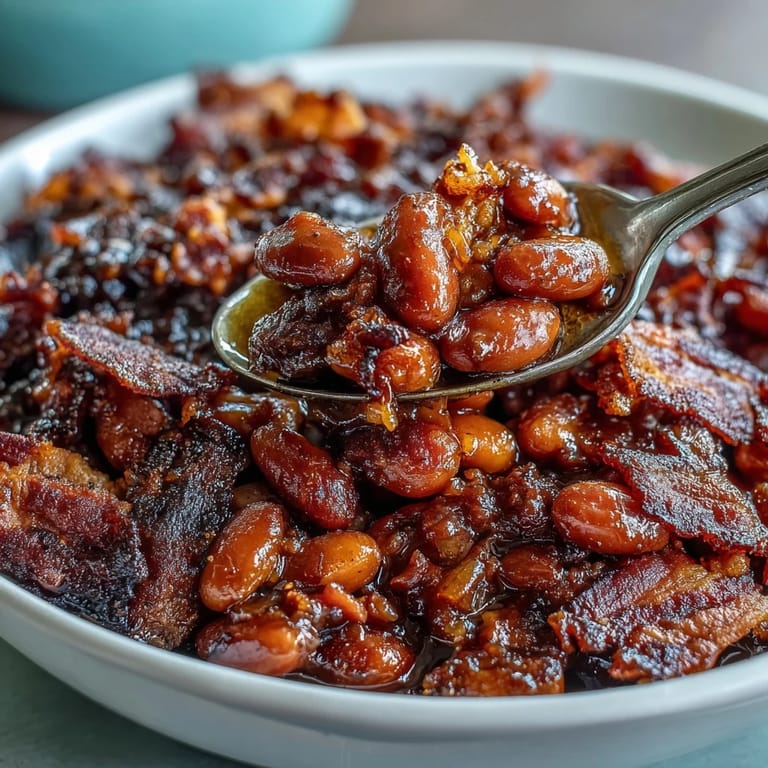
 My uncle's Fourth of July barbecue wouldn't be complete without a massive pot of baked beans sitting at the edge of the grill, the smell of bacon and molasses mixing with charcoal smoke in a way that made everyone's stomach growl before the burgers even came off the heat. I watched him make these beans one summer afternoon, and what struck me most wasn't the recipe itself—it was how he'd sneak tastes between guests, adjusting the brown sugar with the confidence of someone who'd made the same dish a hundred times. That day, I realized baked beans weren't just a side dish; they were the quiet favorite that people actually fought over at the picnic table.
I brought a batch of these to a potluck at work once, and within twenty minutes the dish was nearly empty while the fancy salad next to it barely got touched—that's when I knew this recipe had staying power. Even people who claim they don't like beans come back for seconds because the sauce is that good, and there's something about the combination of sweet, smoky, and slightly tangy that just works.
Ingredients
- Canned navy beans (4 cups, about 2 cans): Rinsing them removes excess sodium and starch, which helps the sauce cling better instead of sliding around the beans.
- Thick-cut bacon (8 slices, chopped): Thick bacon renders more slowly and stays crispier than thin-cut, and that rendered fat is liquid gold for sautéing your vegetables.
- Yellow onion and green bell pepper (1 medium and 1, finely diced): These soften into the sauce and add sweetness and depth without tasting like vegetables—they're the secret to making the dish feel more complete.
- Ketchup (3/4 cup): This is your umami anchor; it brings acidity and prevents the beans from tasting overly sweet.
- Dark brown sugar (1/2 cup, packed): Packed brown sugar dissolves more evenly and gives you deeper caramel notes than light brown sugar.
- Molasses (1/4 cup): This is what separates good baked beans from forgettable ones—it adds richness and a subtle bitterness that balances the sweetness.
- Dijon mustard (2 tablespoons): Sharp and slightly spicy, it cuts through the sweetness and adds sophistication without anyone realizing mustard is there.
- Worcestershire sauce (2 tablespoons): This fermented ingredient delivers a savory complexity that makes people wonder what your secret ingredient is.
- Apple cider vinegar (1 tablespoon): A splash of acid brightens everything and keeps the sauce from feeling heavy or cloying.
- Smoked paprika (1 teaspoon): Even if you're not grilling outside, this spice brings that barbecue smoke flavor directly into the pot.
- Garlic powder, black pepper, salt, and cayenne (1/2 teaspoon each, adjusted): These season the sauce so every spoonful tastes intentional, and the cayenne is there if you want heat—don't feel obligated to add it.
Tired of Takeout? 🥡
Get 10 meals you can make faster than delivery arrives. Seriously.
One email. No spam. Unsubscribe anytime.
Instructions
- Crisp up that bacon:
- Place your oven-safe skillet or Dutch oven over medium heat and let the bacon cook slowly, listening for that crackling sound that signals it's getting crispy on the edges. Once it's done, remove it with a slotted spoon and set it on a paper towel, but leave about 2 tablespoons of bacon fat in the pan—this is your flavor foundation.
- Soften the vegetables:
- Toss your diced onion and green bell pepper into that bacon fat and let them cook for 4 to 5 minutes, stirring occasionally until they're soft and turning translucent. You'll know they're ready when the kitchen smells sweet and savory at the same time.
- Combine your beans and sauce:
- Drain and rinse your beans, then add them to the pan along with the cooked bacon (save a small handful for garnish on top). Pour in all your sauce ingredients—the ketchup, brown sugar, molasses, mustard, Worcestershire, vinegar, and all those spices—and stir everything together until the beans are completely coated.
- Bring it to a gentle simmer:
- Let the mixture bubble quietly on the stovetop for just a minute or two, then remove the pan from heat. If you're not using an oven-safe vessel, transfer everything to a baking dish right now.
- Bake low and slow:
- Preheat your oven to 350°F, scatter that reserved bacon over the top of your beans, and slide the pan in uncovered for 1 hour. The beans will bubble around the edges, the sauce will thicken and darken slightly, and the bacon on top will get even crispier—just check it once or twice to make sure nothing's sticking.
- Rest before serving:
- Pull the pan out of the oven and let it sit for 10 minutes—this lets everything settle and makes the sauce less likely to splash everywhere when you serve it.
 Save to Pinterest
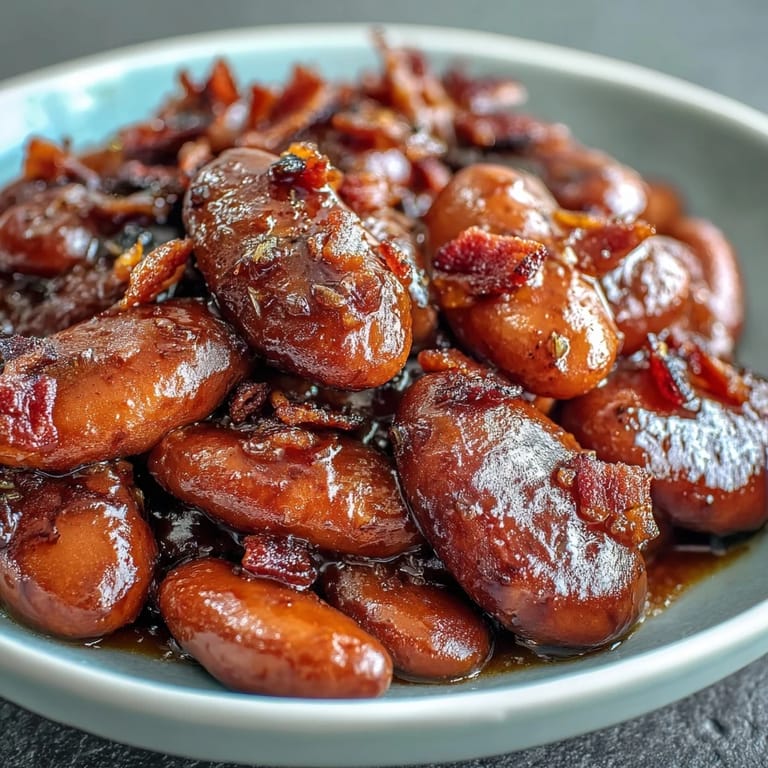
 What I love most about this dish is that it's genuine comfort food—nothing pretentious, nothing trying too hard, just bacon and beans and brown sugar doing exactly what they're supposed to do. When someone takes a big scoop at a barbecue and their eyes light up, that's the moment you know you've made something worth making again.
Timing and Make-Ahead Strategy
You can absolutely prepare these beans the morning of your gathering—just make it through the stovetop steps, pour everything into your baking dish, cover it with foil, and refrigerate until you're ready to bake. Pull it straight from the fridge into a 350°F oven; it might take an extra 15 minutes, but the flavor actually deepens when the ingredients have time to get to know each other overnight. Leftovers reheat beautifully in a low oven or even in a covered pot on the stovetop with a splash of water if they've thickened too much.
Customizing Your Beans
While this recipe is pretty much perfect as written, I've learned that small tweaks can make it your own—if you love heat, that cayenne pepper doesn't have to be optional, and some people add a teaspoon of liquid smoke if they're not grilling outside. For a vegetarian version, skip the bacon entirely and warm 2 tablespoons of olive oil in your pan before sautéing the vegetables; you'll lose that smoky element, but adding smoked paprika becomes even more important to fill that gap. I've also experimented with swapping half the brown sugar for maple syrup, which gives a slightly different sweetness that works beautifully with grilled chicken.
Why This Recipe Works Better Than You'd Expect
The secret to these beans is balance—sweet, smoky, savory, and acidic elements all working together so no single flavor dominates. Most people assume baked beans are either sickeningly sweet or too plain, but this version uses molasses and ketchup for depth, apple cider vinegar and Worcestershire for tang, and bacon for that unmistakable barbecue credibility. When you taste it, your brain recognizes all these flavors at once, and that complexity is what makes people ask for the recipe or at least for seconds.
- Make sure your oven-safe pan is actually oven-safe before you commit to using it—glass lids are fine, but some skillets have plastic handles that won't survive 350°F.
- If you're cooking this at a cabin or somewhere with an unreliable oven, a slow cooker works great on low for 4 to 5 hours instead of the oven, and the beans come out incredibly tender.
- Always taste the sauce before it goes in the oven and adjust salt and spices now, because once it's baking, you can't easily fix it mid-way.
 Save to Pinterest
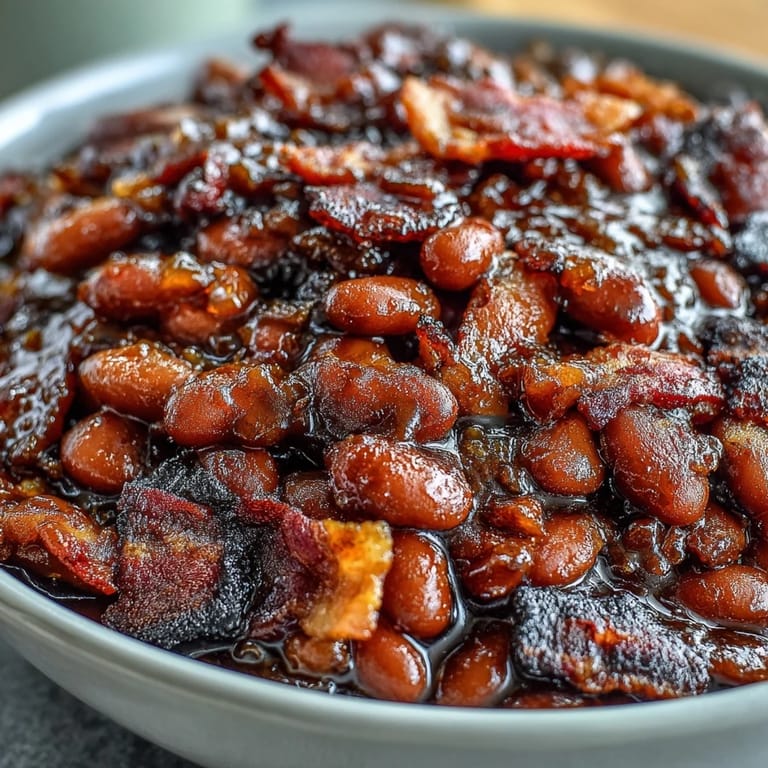
 These beans are the kind of dish that quietly becomes tradition—the one people expect to see at your gatherings, the one that gets eaten before anything else runs out. Make them once, and you'll understand why my uncle has been making the same recipe for decades.
Recipe FAQ
- → Can I make this dish vegetarian?
Yes, omit the bacon and sauté the vegetables in olive oil instead to maintain richness and flavor.
- → How long should I bake the beans?
Bake uncovered for about 1 hour until the sauce thickens and beans bubble gently.
- → What type of beans work best?
Drain and rinse canned navy beans for tender texture that absorbs the sauce nicely.
- → Can I adjust the sweetness level?
Feel free to reduce or increase the brown sugar and molasses according to your preferred sweetness.
- → Is there an option to add heat?
Adding cayenne pepper or a splash of hot sauce brings a nice spicy kick without overpowering.
- → How should leftovers be stored?
Store in an airtight container in the refrigerator for up to four days, and gently reheat before serving.