 Save to Pinterest
 There's something almost meditative about watching dried seaweed transform in water, unfurling like tiny green ribbons coming back to life. I discovered this salad on a humid summer afternoon when my neighbor mentioned she'd been craving something light but satisfying, and I remembered a bowl I'd eaten years ago at a small Tokyo restaurant. What started as a simple side dish became my go-to when I wanted something that felt both nourishing and a little bit special, without spending hours in the kitchen.
I made this for a potluck once where everyone brought heavy casseroles and rich desserts, and somehow this bright, delicate salad became the thing people kept coming back to. One guest actually asked if I'd bought it from somewhere fancy, which made me laugh because it costs less than a coffee and takes about as long to make. That's when I realized it wasn't about complexity or fancy ingredients—it was about letting each element shine on its own.
Ingredients
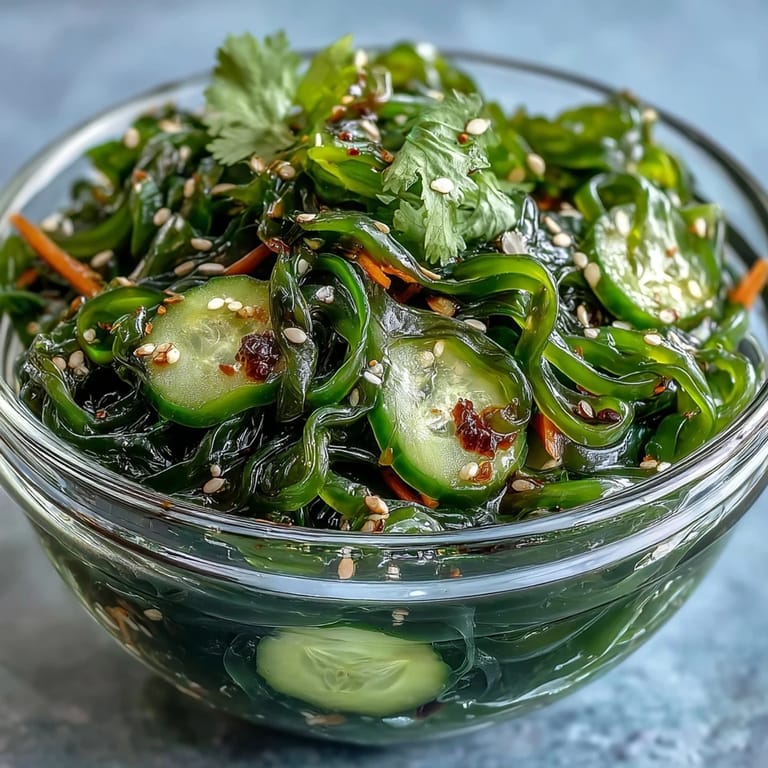
- Dried wakame seaweed (30 g, about 1 cup dried): This is your star—it rehydrates beautifully and has a tender, slightly briny flavor that anchors everything. Look for it in the Asian section of your grocery store, and don't be tempted by the pre-seasoned packets; you want plain wakame so you control the taste.
- Cucumber (1 small, thinly sliced): It adds a refreshing crunch and keeps the salad light; slice it thin enough to let the dressing coat every piece.
- Carrot (1 small, julienned): A touch of natural sweetness and those beautiful pops of color that make this salad look alive on the plate.
- Scallions (2, thinly sliced): They bring a gentle sharpness that wakes up your palate without overpowering the delicate seaweed flavor.
- Toasted sesame oil (2 tbsp): This is where the magic happens—use the good stuff because you can absolutely taste the difference in such a simple dressing.
- Rice vinegar (1½ tbsp): It provides brightness and cuts through the richness of the sesame oil with grace.
- Low-sodium soy sauce or tamari (1 tbsp): Tamari is your friend if you're gluten-free; it gives you that umami depth without any compromise.
- Freshly grated ginger (1 tbsp): Grate it fresh every time—the difference between fresh and powdered is the difference between this being good and being unforgettable.
- Maple syrup or honey (1 tbsp): A small touch of sweetness that balances the vinegar and brings all the flavors into harmony.
- Toasted sesame seeds (1 tsp for dressing, plus 1 tbsp for garnish): Toast your own if you can; they're nuttier and more fragrant than anything pre-toasted you'll buy.
- Chili flakes (½ tsp, optional): A whisper of heat that lingers pleasantly; adjust based on how bold you're feeling.
- Fresh cilantro or parsley (1 tbsp chopped, optional): A final flourish that adds freshness and makes it look intentional.
Tired of Takeout? 🥡
Get 10 meals you can make faster than delivery arrives. Seriously.
One email. No spam. Unsubscribe anytime.
Instructions
- Bring the seaweed back to life:
- Place your dried wakame in a bowl and cover it with cold water, then let it sit for 7 to 10 minutes until it's tender and has doubled in size. You'll know it's ready when it tastes tender rather than tough, and the water will look slightly greenish—that's just minerals releasing, totally normal.
- Prep your vegetables:
- While the seaweed is soaking, slice your cucumber thin, julienne your carrot into matchsticks, and slice the scallions on a slight bias so they look a little more intentional. Set everything aside in a large bowl.
- Drain the seaweed properly:
- Once it's rehydrated, drain it through a fine-mesh strainer and give it a gentle squeeze with your hands to remove excess water—you want it damp, not dripping. This step matters because too much water will dilute your dressing.
- Combine everything:
- Add your drained seaweed to the bowl with the cucumber, carrot, and scallions, and give everything a gentle toss so it's all mixed through.
- Build your dressing:
- In a small bowl, whisk together the sesame oil, rice vinegar, soy sauce, freshly grated ginger, maple syrup, and toasted sesame seeds until the mixture is smooth and emulsified. Taste it as you go—the balance should feel bright and a little rich, not overly sweet or salty.
- Marry the flavors:
- Pour your dressing over the salad and toss gently with your hands or salad tongs, making sure every piece of seaweed and vegetable gets coated. The salad will smell incredible at this point.
- Finish and serve:
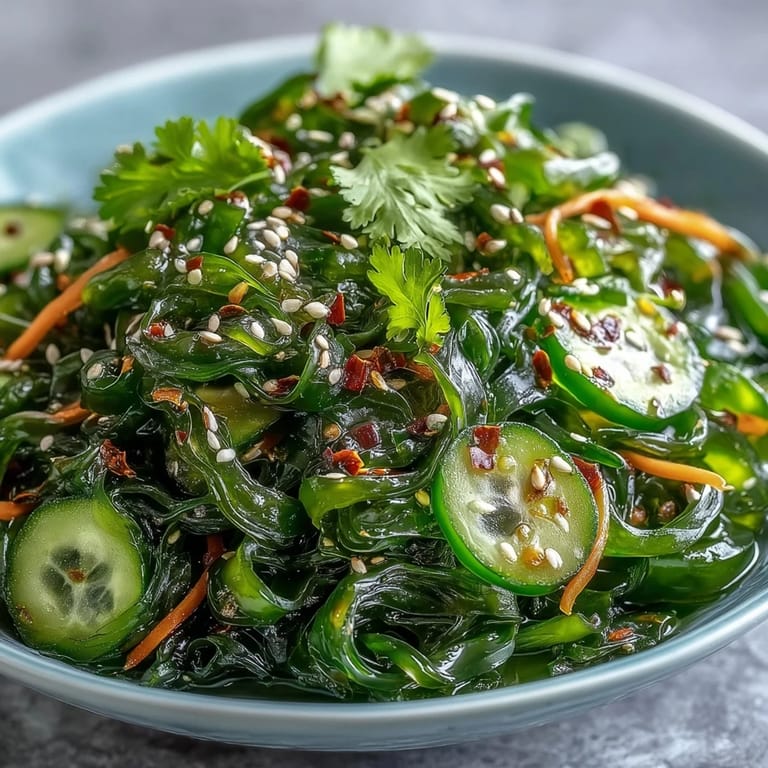
- Transfer to your serving bowl, sprinkle with additional sesame seeds and fresh cilantro or parsley if you're using them, and serve immediately or chill for 15 to 30 minutes so the flavors deepen. Either way is delicious.
 Save to Pinterest
 My teenage niece tried this once when she was convinced she didn't like seaweed, and she ended up eating most of it straight from the bowl before we could even plate it properly. There's something about this salad that converts skeptics, maybe because it feels sophisticated enough to make you feel fancy, but tastes fresh and simple enough that you never feel intimidated by it.
Why This Salad Works in Any Season
In summer, it's the perfect cool antidote to heavy meals; in winter, it feels like a bright little reminder that not everything needs to be warming to be nourishing. Spring brings the urge to add shredded radish or snap peas for extra crunch, and autumn is when I'm most likely to serve it alongside roasted vegetables. What I love most is that the recipe doesn't change, but it always feels fresh because the flavors are so clean and layered.
The Art of the Dressing
This dressing is where you'll understand that cooking isn't about following rules slavishly—it's about tasting and adjusting as you go. Some days I want it more gingery, so I add an extra teaspoon; other times I'm drawn to more sweetness from the maple syrup. The sesame oil does the heavy lifting of making everything taste rich and intentional, but it's the acid from the rice vinegar and the warmth from the ginger that prevent it from ever feeling heavy.
Storage and Serving Wisdom
This salad is best served within a few hours of making it, when everything still has character and crunch, but leftovers keep nicely for up to two days in an airtight container in the refrigerator. The flavors actually deepen overnight, which is why chilling it for 15 to 30 minutes before serving isn't just optional—it's a legitimate strategy for making it taste even better.
- If you're making it ahead, store the dressing separately and toss everything together just before serving for the crispest result.
- Pairs beautifully with grilled fish, roasted tofu, or even alongside sushi rolls if you're feeling creative.
- A squeeze of fresh lime or lemon juice right before eating adds an unexpected brightness that makes people ask what your secret ingredient is.
 Save to Pinterest
 This salad reminds me that the best dishes are often the simple ones, where quality ingredients and a little bit of care do all the talking. Make it once, and it'll become one of those recipes you return to again and again, each time discovering something new about it.
Recipe FAQ
- → What type of seaweed works best?
Dried wakame seaweed is ideal for this salad. It rehydrates quickly, becomes tender, and has a delicate flavor that pairs perfectly with the sesame-ginger dressing. You can find it in Asian grocery stores or the international aisle of most supermarkets.
- → Can I prepare this ahead of time?
Yes, this salad actually benefits from chilling for 15-30 minutes before serving, which allows the flavors to meld together. It can be stored in an airtight container in the refrigerator for up to 2 days, though the vegetables may become slightly softer over time.
- → Is this dish gluten-free?
The dish is naturally gluten-free when you use tamari instead of regular soy sauce. Always double-check your seaweed package for potential cross-contamination if you have severe gluten sensitivities.
- → How do I adjust the flavors?
Taste the dressing before tossing and adjust to your preference—add more maple syrup for sweetness, extra rice vinegar for acidity, or additional chili flakes for heat. The dressing should be tangy and well-balanced.