 Save to Pinterest
 I discovered nori rolls on a lazy Sunday afternoon when my friend showed up with a bamboo mat and a determination to prove that sushi rolling wasn't some mystical skill reserved for chefs. We spread ingredients across my kitchen counter—cucumber sticks catching the light, avocado slices glistening—and honestly, the first roll was lumpy and imperfect. But when I bit into it, something clicked: this wasn't restaurant food, it was just fresh vegetables wrapped in seaweed, and somehow that simplicity made it taste even better. Now I make them whenever I want something that feels both fancy and completely doable.
My partner still talks about the night I made these for a dinner party where I was secretly nervous about impressing his boss. The rolls looked so vibrant and intentional sitting on the wooden board, and people kept reaching for more while asking how I'd made them so easily. Watching someone's face light up when they realized there was no rice involved, just vegetables and seaweed, felt like I'd shared some kind of delicious secret. That night, these rolls stopped being just a snack and became proof that simple food, made with care, is actually the most impressive thing you can put on a table.
Ingredients
- Nori sheets: These roasted seaweed rectangles are the wrapper holding everything together, and they taste so much better when they're fresh—buy them from the international aisle and they'll stay crispy for months in a sealed container.
- Cucumber: Cut it into thin matchsticks lengthwise so you get those satisfying long strands that add cool crunch without falling apart.
- Avocado: Choose one that yields slightly to pressure but isn't mushy, and slice it just before assembling so it doesn't brown.
- Mixed sprouts: Alfalfa gives delicate flavor, radish adds a spicy kick, and broccoli sprouts taste peppery—mix them however sounds good to you.
- Carrot: Julienne it into thin sticks that stay tender even when raw, adding both color and a subtle sweetness.
- Red bell pepper: The brightness here is both visual and flavor-wise, cutting through the richness of avocado with gentle sweetness.
- Sushi rice with rice vinegar: The vinegar wakes up the rice and gives it that slightly tangy flavor you expect, but this is completely optional—the rolls are equally good without it.
- Sesame seeds: Toast them yourself if you can because the nutty flavor deepens, though store-bought toasted seeds work in a pinch.
- Soy sauce or tamari: Keep both on hand if you have people avoiding gluten—tamari tastes identical but without any wheat.
Tired of Takeout? 🥡
Get 10 meals you can make faster than delivery arrives. Seriously.
One email. No spam. Unsubscribe anytime.
Instructions
- Prepare your rice (if using):
- If you're including sushi rice, fold in the rice vinegar while the rice is still warm so the flavors meld together, then spread it on a clean surface to cool completely. This takes about 10 minutes and keeps you from burning your hands later.
- Set up your rolling station:
- Lay your bamboo mat on the counter with the slats running horizontally, place a nori sheet shiny-side down on top, and have all your vegetables within arm's reach. Having everything organized here prevents mid-roll scrambling.
- Spread the rice:
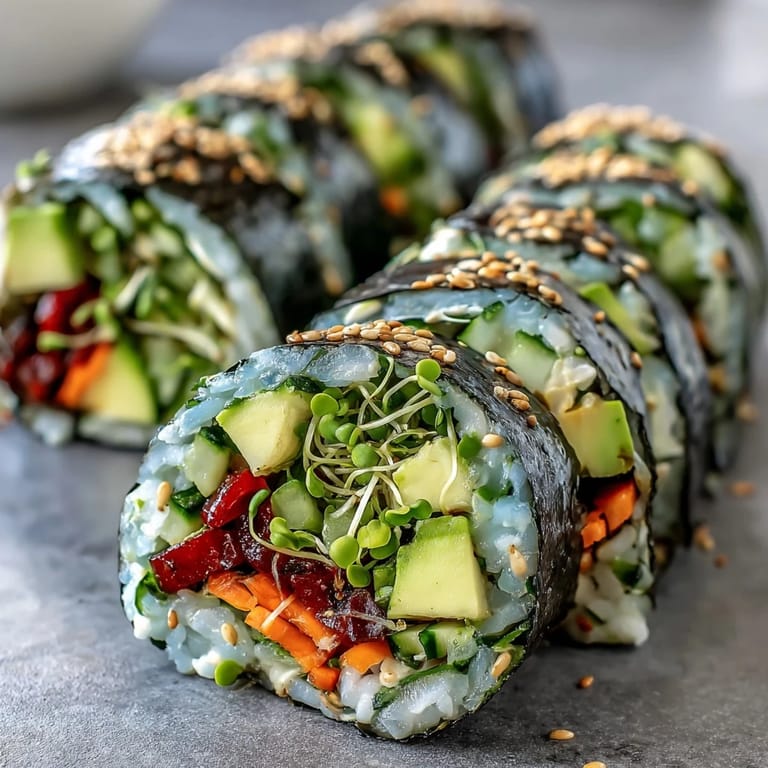
- Using damp fingers, press a thin, even layer of rice across the lower two-thirds of the nori, leaving that 2 cm border at the top so you have something to seal with. The rice should be just thick enough to hold the vegetables—thicker than that and your rolls get dense.
- Arrange your fillings:
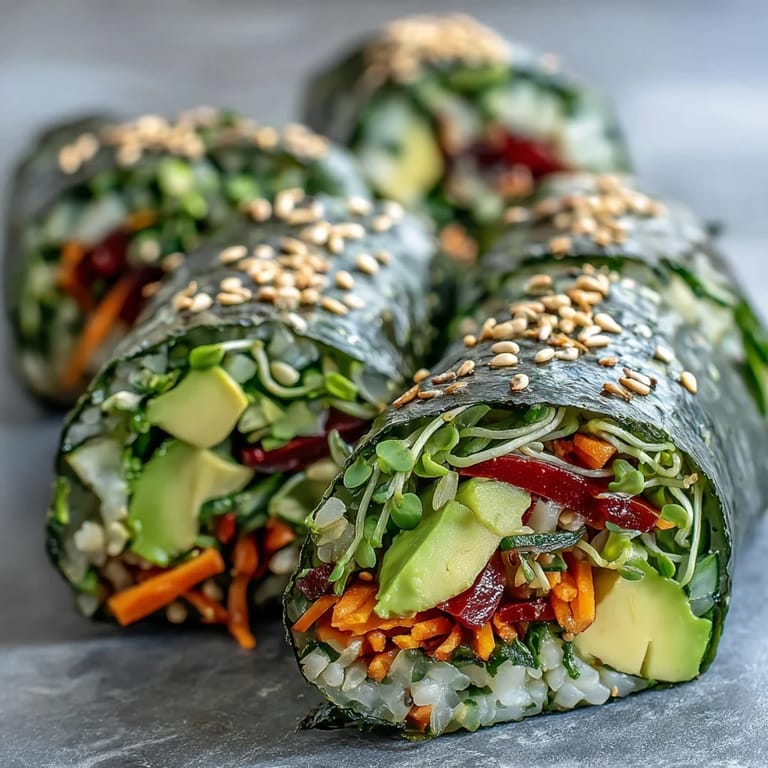
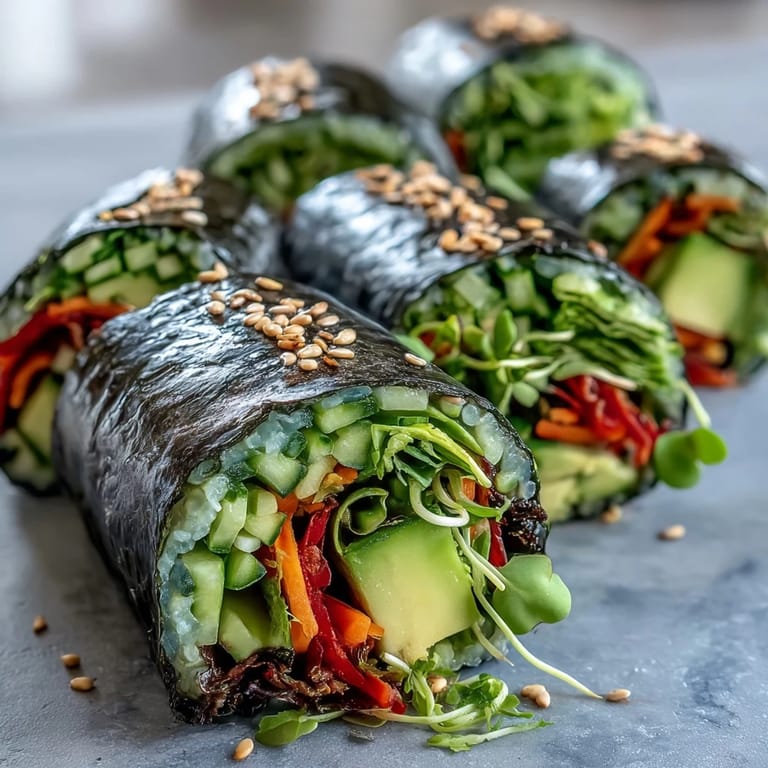
- Place cucumber, avocado, sprouts, carrot, and bell pepper in a horizontal line across the rice, not too much or everything will squeeze out the sides when you roll. Sprinkle with sesame seeds for flavor and a little textural flourish.
- Roll with intention:
- Using the mat, lift the edge of the nori closest to you and roll it tightly over the fillings, using the mat to help you keep pressure even as you go. When you reach the top, wet that exposed edge with a tiny bit of water and press gently to seal—it'll stick immediately.
- Slice cleanly:
- Using a sharp knife dipped in water, cut each roll in half, then cut those halves into thirds, wiping the blade between cuts. This produces those neat pieces instead of squished rolls where all the filling falls out.
- Serve with intention:
- Arrange them on a board with small dishes of soy sauce or tamari, pickled ginger, and wasabi if you're using them, letting people dip as they like. The whole experience comes together in that moment of serving.
 Save to Pinterest
 One evening, my neighbor caught the smell of sesame seeds toasting through our shared wall and ended up at my door asking what I was making. I handed her a finished roll to taste, and she sat in my kitchen telling me about her time in Tokyo 20 years ago, about eating rolls just like these standing in a tiny shop near the train station. Those five minutes of storytelling, sparked by sharing food, reminded me that nori rolls are about more than vegetables and seaweed—they're a bridge between different kitchens, different memories, different corners of the world.
Rice or No Rice—What Works Best
The first time I skipped the rice entirely, I worried the rolls would fall apart, but I was completely wrong. Without rice, every vegetable flavor comes through clear and bright, and the rolls feel lighter, more like eating a pure vegetable moment wrapped in seaweed. The rice version is heartier, filling, almost a light meal on its own—better when you're hungry or want something more substantial. Neither version is wrong, they're just different approaches, and honestly I find myself making them both depending on my mood and what I'm in the mood for.
Building Flavor Layers
Vegetables have their own quiet flavors, and nori rolls give you permission to taste each one separately: the cool snap of cucumber, the creamy richness of avocado, the peppery bite of radish sprouts, the subtle sweetness of carrot. The sesame seeds add a toasted nutty note that ties everything together, while the soy sauce or tamari brings salt and umami depth when you dip. I've started thinking of these rolls like constructing a small flavor conversation where all the ingredients get to speak.
Make Them Your Own
The beauty of rolling your own is that nobody's standing over you deciding what goes in—you can follow this exactly or tear it apart completely. I've added everything from thinly sliced mango to roasted tofu, crispy wonton strips to smashed edamame, always with those core vegetables as the foundation. Experiment without guilt, taste as you go, and remember that a slightly messy homemade roll always tastes better than a perfect one made with dread.
- Toast your sesame seeds in a dry pan for 2 minutes before using them so the flavor deepens and becomes almost nutty.
- Keep a small bowl of water at your workspace for wetting your fingers and your knife—it makes everything easier than you'd expect.
- If you can't find a bamboo mat, a clean kitchen towel or even a piece of parchment paper works just as well for rolling.
 Save to Pinterest
 Making nori rolls has become my quiet ritual, something I do when I need to slow down and work with my hands. There's something grounding about arranging fresh vegetables, rolling them carefully, and creating something beautiful enough to share.
Recipe FAQ
- → Do I need sushi rice for nori rolls?
Sushi rice is optional. For grain-free or low-carb versions, simply increase the vegetables and skip the rice entirely. The rolls hold together well with just the nori and fresh vegetables.
- → How do I prevent nori rolls from falling apart?
Use a bamboo sushi mat or clean kitchen towel for tight rolling. Leave a 2 cm border at the top edge and seal with a bit of water if needed. Slice with a sharp, damp knife for clean cuts.
- → Can I make these nori rolls ahead of time?
These are best served immediately to maintain the crisp texture of vegetables. If preparing ahead, slice just before serving and store tightly wrapped in the refrigerator for up to 4 hours.
- → What vegetables work best in nori rolls?
Julienned cucumber, carrot, and bell pepper provide excellent crunch. Avocado adds creaminess while sprouts contribute fresh texture. Feel free to add shredded cabbage, steamed asparagus, or marinated mushrooms.
- → Are nori rolls suitable for special diets?
These vegetable nori rolls are naturally vegan and gluten-free when using tamari instead of soy sauce. Omit the optional sushi rice for a low-carb or paleo-friendly version. Always check labels on packaged condiments.
- → What can I serve with nori rolls?
Pair with pickled ginger, wasabi, and soy sauce or tamari for dipping. A side salad makes it a complete meal. Green tea or a crisp white wine complement the flavors beautifully.