 Save to Pinterest
 The first time I tasted mango sticky rice, I was sitting on a plastic stool at a night market in Bangkok, sweat dripping down my temples in the humid evening air. A vendor handed me a small container with such care, like she was passing something precious, and I understood why the moment that creamy coconut-soaked rice touched my tongue. Years later, I'd find myself in my own kitchen trying to recreate that exact feeling, and somehow, through patient steaming and careful coconut infusions, I got there.
I made this for my sister's birthday dinner last summer, and I remember the quiet moment when everyone took their first bite and just stopped talking. There's something about the way the sweetness of the rice plays against the bright acidity of a perfectly ripe mango that makes people pause and actually taste what's in front of them. That's when I knew this dessert was worth keeping in regular rotation.
Ingredients
- Glutinous (sticky) rice: This is the non-negotiable foundation, and regular jasmine or long-grain rice simply won't work because you need that almost creamy, clumpy texture when it absorbs the coconut milk.
- Full-fat coconut milk: Light versions are a shortcut that strips away the richness, so don't compromise here even if the can looks expensive.
- Granulated sugar: The sweetness should be present but not aggressive, allowing the coconut and mango to shine.
- Salt: Just a whisper of it in both the rice mixture and the topping to brighten everything and prevent one-note sweetness.
- Ripe mangoes: Choose ones that yield slightly to pressure and smell floral at the stem, not hard ones that taste like disappointment.
- Cornstarch slurry (optional): If you like a slightly thicker topping sauce, this mixes with water to create that silky consistency without weighing things down.
- Toasted sesame seeds or mung beans: A small handful for garnish adds textural contrast and a subtle nuttiness that rounds out the whole experience.
Tired of Takeout? 🥡
Get 10 meals you can make faster than delivery arrives. Seriously.
One email. No spam. Unsubscribe anytime.
Instructions
- Rinse and soak the rice:
- Run cold water over the sticky rice repeatedly until the water runs clear, which takes the excess starch away and helps the grains cook more evenly. Soak it for at least 4 hours or overnight in fresh water so each grain absorbs moisture and steam cooks them through completely.
- Steam until tender and translucent:
- Drain the soaked rice and spread it across a cheesecloth-lined steamer basket, then steam over boiling water for 25 to 30 minutes until the grains look almost glass-like and smell wonderfully fragrant. You'll know it's ready when a single grain pinched between your fingers crushes easily without any hard center.
- Infuse with warm coconut mixture:
- While the rice steams, gently heat 1 cup of coconut milk with 4 tablespoons of sugar and a pinch of salt, stirring until the sugar dissolves but never letting it bubble or boil. Pour this warm, sweetened coconut milk over the hot cooked rice in a bowl, stir gently to combine, cover it, and let everything rest for about 15 minutes so the rice soaks up all that creamy coconut flavor.
- Prepare the silky topping sauce:
- In a small saucepan, combine 1/3 cup coconut milk with 1 tablespoon sugar and a tiny pinch of salt, warming it through gently. If you want a slightly thicker, glossier sauce, stir in the cornstarch slurry and cook over medium heat while stirring until it coats the back of a spoon lightly.
- Plate and serve:
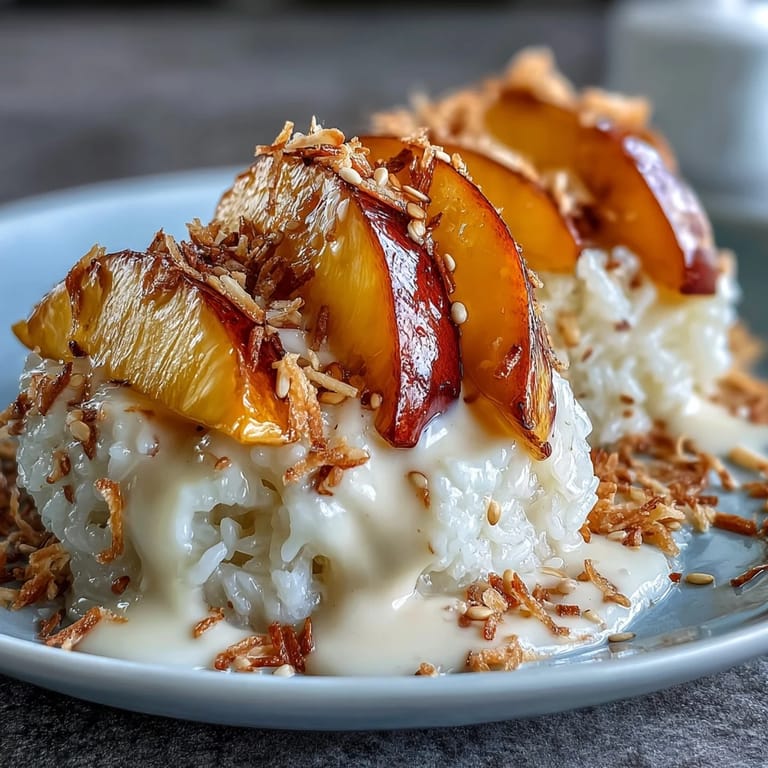
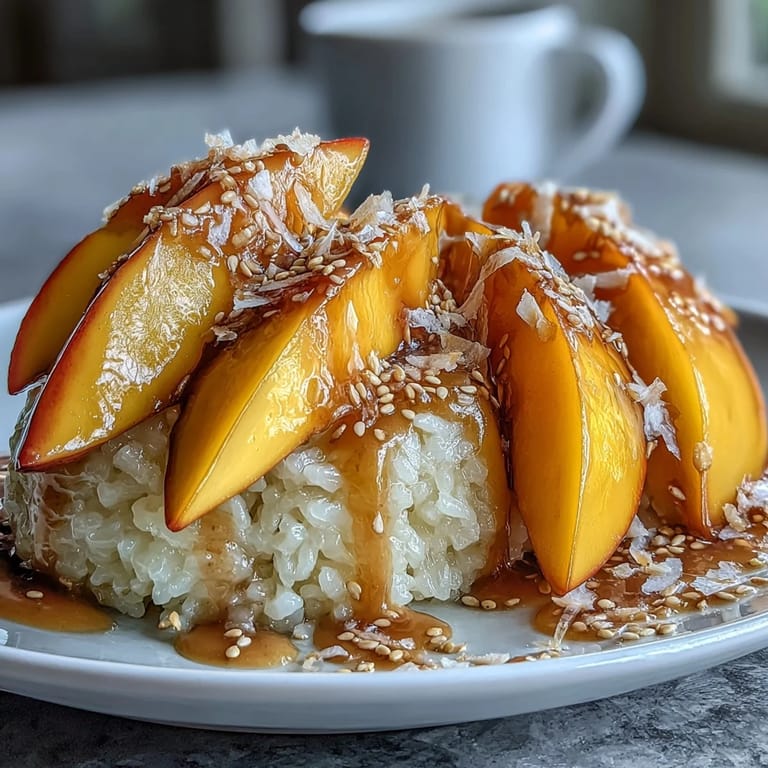
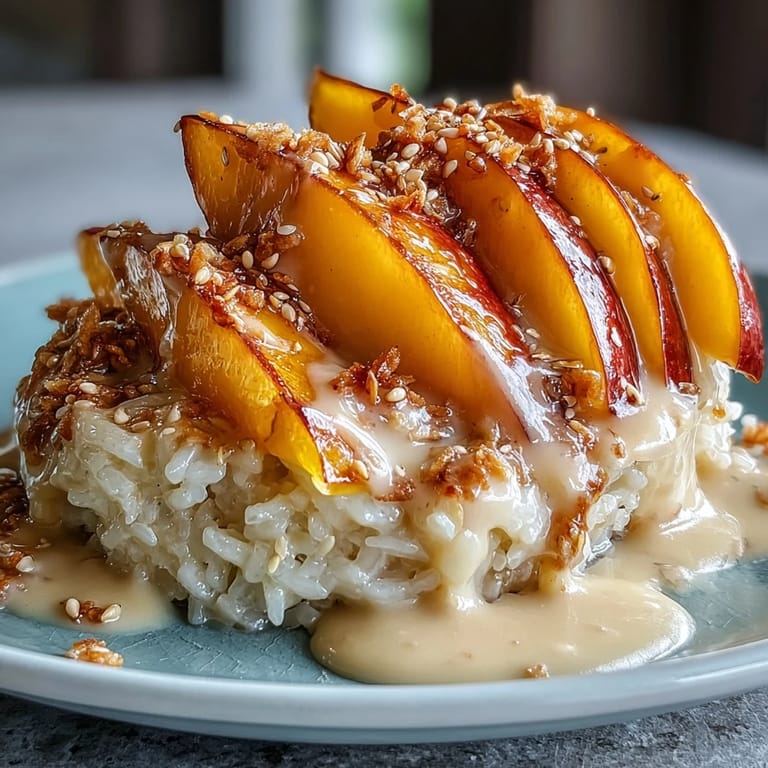
- Mound a generous portion of the coconut-infused sticky rice onto each plate, arrange fresh mango slices alongside it in an appealing way, and drizzle the topping sauce over everything. Scatter a few toasted sesame seeds or mung beans on top if you have them, and serve at room temperature for the best balance of flavors and textures.
 Save to Pinterest
 There's a moment in Thai cooking culture where dessert isn't rushed or treated like an afterthought, and that's what hooked me about this dish. It taught me that taking 45 minutes to make something that feels completely special and effortless is exactly how you show someone you care about their meal.
Choosing and Ripening Your Mangoes
The success of this dessert hinges almost entirely on mango quality, something I learned the hard way when I bought beautiful-looking mangoes that turned out to be mealy and flavorless inside. Now I choose mangoes that feel heavy for their size, smell sweet and fragrant near the stem, and give slightly when I hold them gently. If your mangoes aren't quite ripe yet, leave them on the counter in a paper bag for a day or two, and they'll develop the perfect sweetness and texture.
The Soaking and Steaming Process
I used to think soaking glutinous rice overnight was just tradition, but then I made a batch without it and the texture was noticeably grainier and less luxurious. The long soak allows each grain to absorb water evenly so they cook through to their centers, which is why rushing this step or skipping it entirely never yields that signature creamy consistency. Steaming rather than boiling is equally important because it surrounds the rice with gentle, even heat instead of jostling it around in water.
Coconut Milk Timing and Temperature
One detail that makes a huge difference is ensuring the coconut milk mixture is warm but not hot when it hits the cooked rice, because you want the rice to soak it up gradually rather than having the grains split from temperature shock. The 15-minute rest afterward lets everything meld together, and the rice absorbs all that creamy, sweet flavor evenly. If you're making this for guests, you can prepare the rice completely up to a few hours ahead and leave it covered at room temperature, then make the topping sauce fresh right before serving.
- Always use full-fat coconut milk for both the main mixture and the topping sauce because light versions lack the richness that defines this dessert.
- If you want to add a pandan leaf for extra fragrance and a subtle green tint, add it to the coconut milk as it warms, then remove it before pouring over the rice.
- Serve everything at room temperature rather than chilled, because the flavors are much brighter and the texture of the sticky rice is perfect when it's not cold.
 Save to Pinterest
 This is the kind of dessert that tastes like comfort and celebration at the same time, and it's simple enough that you'll find yourself making it again and again. Once you've nailed it, you'll have a signature dish that people ask you for by name.
Recipe FAQ
- → What type of rice is best for this dish?
Glutinous or sticky rice is essential for the characteristic texture and stickiness in the dish.
- → Can I prepare the coconut topping ahead of time?
Yes, the coconut topping can be made in advance and gently reheated before serving to maintain its creaminess.
- → How long should the rice soak before cooking?
The sticky rice should be soaked for at least 4 hours or preferably overnight to ensure soft, even cooking.
- → Is it necessary to use full-fat coconut milk?
Full-fat coconut milk is recommended for a richer, creamier flavor and better consistency in both the rice and topping.
- → What are suitable garnishes for this dish?
Toasted sesame seeds or mung beans add a nice crunch and complement the creamy coconut and mango flavors.
- → Can this dish be served warm or cold?
It is best served fresh at room temperature, allowing the flavors and textures to be fully appreciated.