 Save to Pinterest
 My sister arrived at my kitchen on a sweltering July afternoon with a small container of black currants from a farmers market she'd discovered. She set them on the counter with this challenging smile, asking if I could turn them into something elegant for her dinner party that weekend. I'd never worked with black currants before, but something about their deep purple color and that slightly tart promise made me want to try panna cotta, that silky Italian custard I'd only ever eaten at restaurants. By the time I'd finished my first batch, I understood why she'd brought them to me.
That dinner party turned into something I didn't expect. My sister's friends tasted the panna cotta and went silent for a moment, the kind of silence that means something landed right. One of them asked for the recipe immediately, and I realized then that this wasn't just a dessert anymore—it was the thing people would remember from that evening. The way the black currant flavor bloomed on your tongue, neither too sweet nor too sharp, felt like I'd captured summer itself in a glass.
Ingredients
- Heavy cream: This is where the silk comes from, so don't substitute with lighter cream or your texture won't have that luxurious cling to your spoon.
- Whole milk: Balances the richness so it's creamy without feeling heavy, and it helps the gelatin distribute evenly.
- Granulated sugar: Dissolves cleanly into the warm cream without grittiness if you stir gently and give it time.
- Powdered gelatin: Bloom it properly and you'll avoid lumps; skip this step and your panna cotta will be grainy.
- Pure vanilla extract: A teaspoon is enough to add depth without overpowering the black currant flavor.
- Fresh or frozen black currants: Either works brilliantly, though frozen berries are often more affordable and surprisingly more flavorful since they're picked ripe.
- Black currant jam or preserves: The glaze is optional but transforms the whole dish from pretty to show-stopping, so I always include it.
Tired of Takeout? 🥡
Get 10 meals you can make faster than delivery arrives. Seriously.
One email. No spam. Unsubscribe anytime.
Instructions
- Bloom your gelatin:
- Sprinkle gelatin over 2 tablespoons of cold water and let it sit for 5 minutes. You'll see it absorb the water and become slightly spongy, which is exactly what you want—this step prevents lumps later on.
- Heat the cream mixture gently:
- Combine heavy cream, milk, and sugar in a medium saucepan and warm over medium heat, stirring occasionally until the sugar dissolves completely. The moment you see wisps of steam rising, remove it from heat—boiling scrambles the cream.
- Dissolve the gelatin:
- Pour the warm cream mixture over your bloomed gelatin and whisk until every trace of gelatin disappears into the liquid. Add vanilla extract now and whisk again to distribute it evenly.
- Cook down the black currants:
- In a separate saucepan, combine black currants, 3 tablespoons sugar, and 2 tablespoons water. Simmer over medium heat for 5 to 7 minutes, stirring occasionally, until the berries burst and the mixture thickens slightly and smells intensely fruity.
- Strain the puree:
- Pour the cooked berries through a fine-mesh sieve into a bowl, pressing gently with the back of a spoon to extract every drop of juice while leaving the seeds and skins behind. This step gives you that jewel-toned smoothness rather than a grainy texture.
- Combine cream and currant:
- Whisk the strained black currant puree into your warm cream mixture until the color is uniform throughout and no streaks remain. The mixture should look like a pale berry mousse at this point.
- Pour and chill:
- Divide the mixture evenly among 4 lightly oiled ramekins or dessert glasses, then let them cool to room temperature on the counter before transferring to the refrigerator. Chill for at least 4 hours, or overnight if you prefer—the longer it sits, the more delicate and custard-like it becomes.
- Add the glaze if desired:
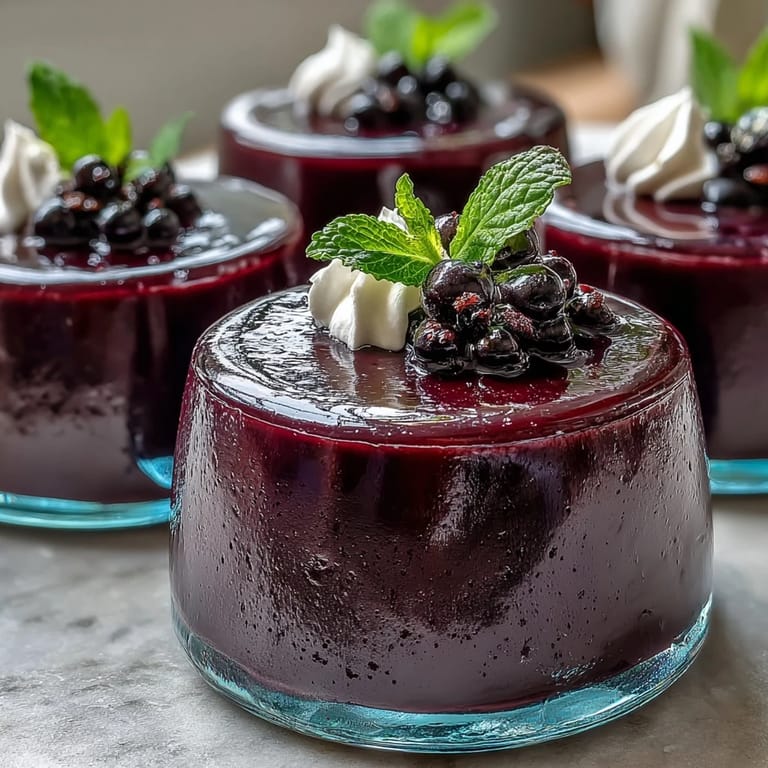
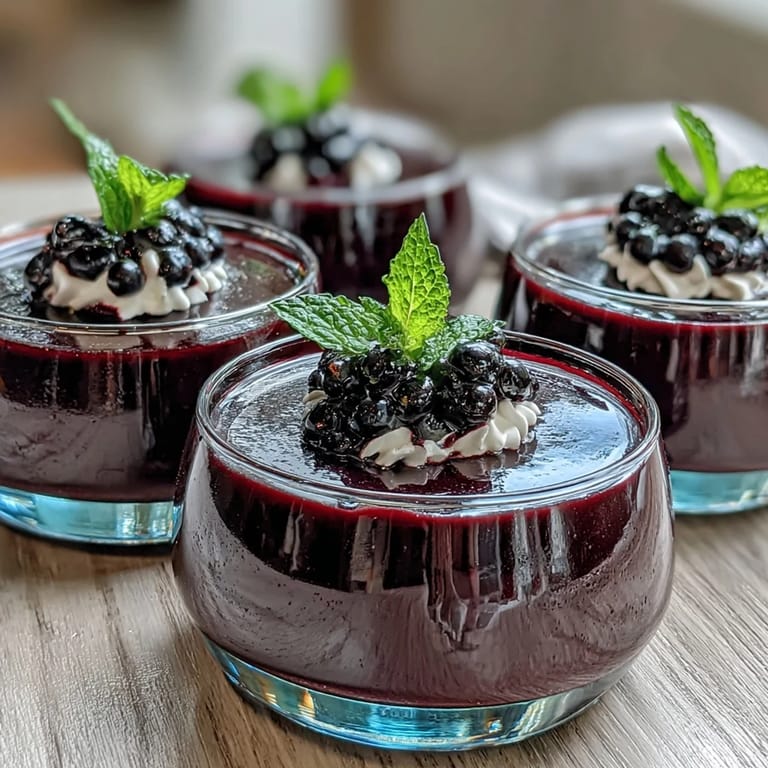
- Warm black currant jam with 1 tablespoon of water in a small saucepan until it becomes pourable, then let it cool for a few minutes before spooning a thin layer over each chilled panna cotta. The glaze adds both visual drama and an extra flavor boost.
 Save to Pinterest
 A few months after that dinner party, my sister sent me a photo of the same panna cotta she'd made for her anniversary celebration. She'd written a note saying that it had become her signature dessert, the one people asked for when they came to dinner. It made me realize how a single afternoon of experimenting with an unfamiliar fruit had created something she'd now make again and again for the people she loves.
Why Black Currants Matter Here
Black currants are tart without being sour, floral without being perfumy, and they have this slight earthiness that makes them feel less sugary than other berries. When you cook them down, they release this deep, almost wine-like intensity that transforms the cream from simply sweet to genuinely interesting. I've tried this recipe with blackberries and blueberries when currants weren't available, and they work, but they don't have that same mysterious depth. There's a reason black currants appear in fine dining kitchens—they make ordinary ingredients taste extraordinary.
Playing With Temperature and Texture
The magic of panna cotta happens at the boundary between liquid and solid. Some people prefer theirs barely set, so it wobbles slightly on the spoon and feels almost like a soft mousse. Others want it firm enough to hold its shape completely. Your chill time determines this—4 hours gives you that classic gentle jiggle, while 6 hours makes it denser and more custard-like. I always tell people to taste their first batch at different temperatures because panna cotta actually tastes subtly different cold versus room temperature, and you might discover you prefer serving it with a spoon rather than in a glass.
Serving Ideas and Small Touches
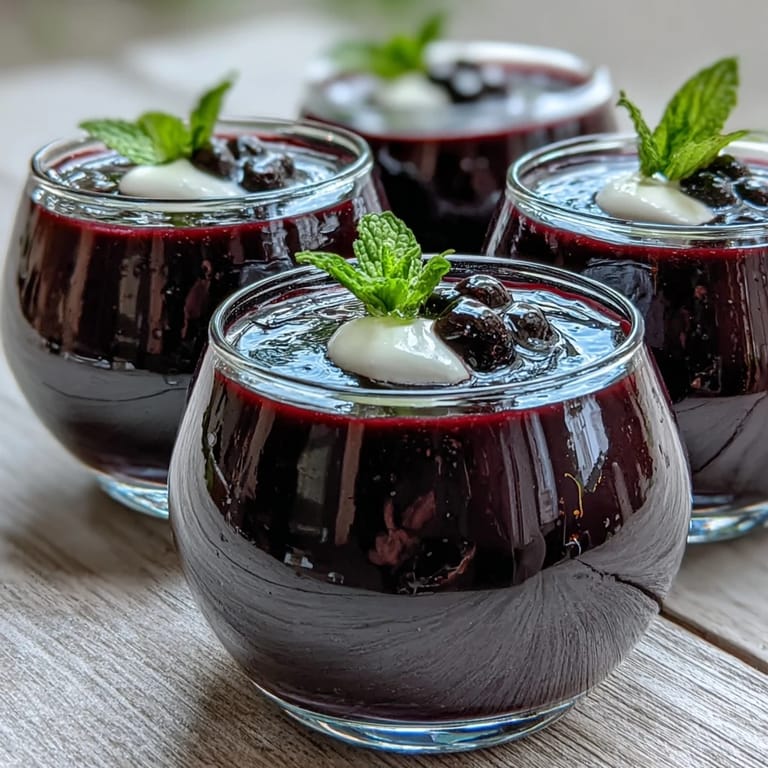
The simplicity of panna cotta is part of its elegance, but a few thoughtful additions can elevate it even more. A dollop of unsweetened whipped cream adds richness and a slight vanilla note that bridges the fruit and cream beautifully. Fresh black currants scattered on top look stunning and add little bursts of fresh tartness against the silky custard. A crisp butter cookie on the side gives you texture contrast, and if you're feeling fancy, a splash of Moscato d'Asti or Prosecco transforms dessert into something celebratory.
- Make the panna cotta a day ahead so you can focus on other dishes and simply plate at the last minute.
- If black currants aren't available fresh or frozen, blackberries, blueberries, or even raspberries will work in a pinch.
- The glaze can be made while the panna cotta chills, so there's never a rush on serving day.
 Save to Pinterest
 This panna cotta taught me that sometimes the most impressive desserts are also the simplest, as long as you understand each step and why it matters. Make this for someone you want to impress, or make it for yourself on a quiet evening because you deserve something silky and elegant.
Recipe FAQ
- → Can I make panna cotta ahead of time?
Yes, panna cotta is excellent for preparing in advance. You can make it up to 2 days before serving and keep it covered in the refrigerator. Add the glaze shortly before serving for the best presentation.
- → What can I substitute for gelatin?
For a vegetarian alternative, use agar-agar powder instead of gelatin. Use about 1 teaspoon of agar-agar powder dissolved in the liquid, though the setting time may be slightly different. Follow the package instructions for best results.
- → How do I know when the panna cotta is set?
After 4 hours of chilling, gently shake the ramekin. The panna cotta should jiggle as a single unit, like a firm custard. If it ripples like water, it needs more time. It should feel firm to the touch but still silky and smooth on the spoon.
- → Can I use other berries instead of black currants?
Absolutely. Blackberries, blueberries, raspberries, or even a mixed berry blend work beautifully. Adjust the sugar slightly depending on the natural sweetness of your chosen berries. Black currants provide a distinctive tartness that balances the rich cream.
- → How do I unmold panna cotta for serving?
Dip the bottom of the ramekin in warm water for 10 seconds, then run a thin knife around the edge. Place a serving plate on top and invert quickly. If it doesn't release, dip again briefly. Alternatively, serve directly in the glasses for a simpler presentation.
- → Why did my panna cotta not set properly?
This usually happens if the gelatin wasn't fully dissolved or if the mixture was boiled after adding gelatin, which breaks down its setting power. Ensure the gelatin blooms completely in cold water and dissolves thoroughly in the warm cream before refrigerating.