 Save to Pinterest
 My neighbor Rosa once handed me a bag of kale from her garden with strict instructions: make minestrone, not salad. She insisted the soup would taste better if I used whatever looked good at the market that morning instead of following a strict list. I was skeptical until I tried it her way, tossing in zucchini one week and butternut squash the next. The soup changed with the seasons, and so did my appreciation for recipes that bend without breaking.
I made this on a cold February night when friends showed up unexpectedly, hungry and tired from a long drive. I had no plan, just half a cabbage, some canned beans, and a hunk of Parmesan in the fridge. Within an hour, the kitchen smelled like an Italian grandmother had taken over, and my friends were scraping their bowls clean. One of them still texts me every winter asking if I remember that soup, and I always smile because I barely remember what I put in it.
Ingredients
- Olive oil: Use a good quality oil because it is the first flavor that hits the vegetables, and you will taste it in every spoonful.
- Onion, carrots, and celery: This soffritto base builds the backbone of the soup, so dice them evenly so they cook at the same rate.
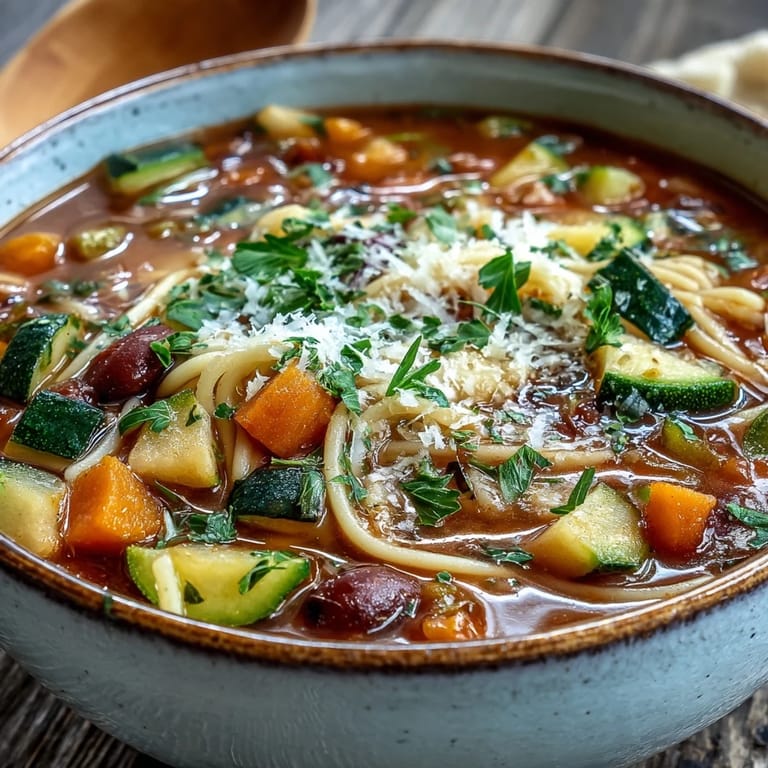
- Zucchini or butternut squash: Pick based on the season; zucchini keeps it light in summer, squash adds sweetness and body in winter.
- Green beans or kale: Fresh green beans snap and hold their shape, but kale or spinach stir in beautifully when the weather turns cold.
- Garlic: Mince it finely and add it after the soffritto softens so it does not burn and turn bitter.
- Diced tomatoes: Canned tomatoes are your friend here, they break down into the broth and add acidity that balances the beans.
- Potato: Optional, but it thickens the soup naturally and makes it more filling without heaviness.
- Vegetable broth: Homemade is lovely, but a good store bought broth works perfectly if you add a Parmesan rind for depth.
- Cannellini or borlotti beans: Creamy and mild, they soak up the broth and make the soup feel complete.
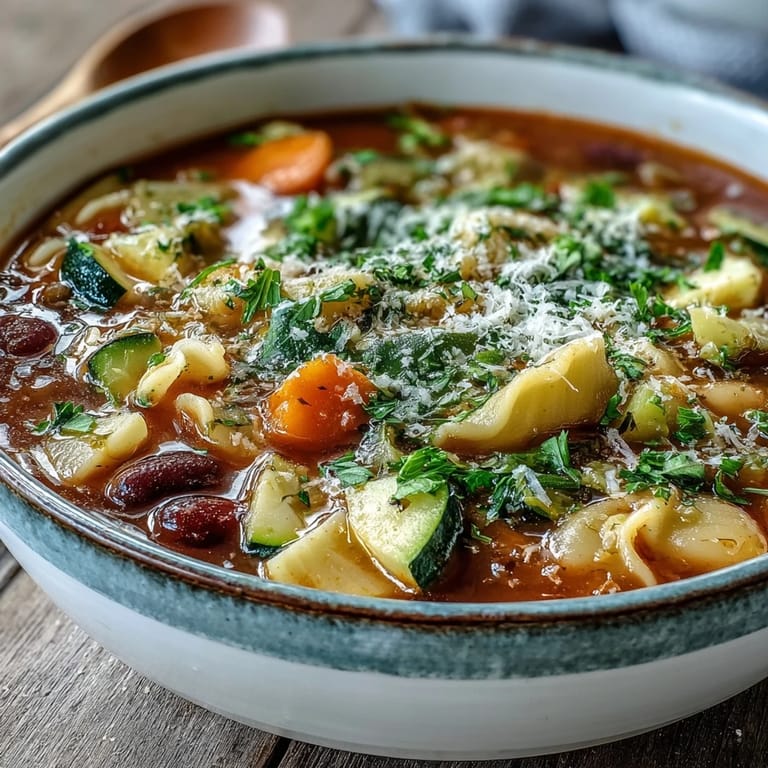
- Small pasta: Ditalini or shells are traditional, but any short shape works as long as it fits on a spoon.
- Bay leaf, oregano, and basil: Dried herbs release slowly, so add them early and let them simmer into the vegetables.
- Fresh parsley: Stir it in at the end for a pop of color and a hint of freshness that wakes up the whole bowl.
- Parmesan cheese: Grate it fresh and let everyone add their own, or skip it entirely for a vegan version that still satisfies.
Tired of Takeout? 🥡
Get 10 meals you can make faster than delivery arrives. Seriously.
One email. No spam. Unsubscribe anytime.
Instructions
- Start the soffritto:
- Heat the olive oil in a large pot over medium heat, then add the onion, carrots, and celery. Let them sauté for about 5 minutes, stirring occasionally, until they soften and the onion turns translucent.
- Add the aromatics and seasonal vegetables:
- Stir in the garlic, zucchini or squash, and green beans or kale. Cook for 3 minutes, just long enough for the garlic to release its fragrance without browning.
- Build the base:
- Add the diced tomatoes, potato if using, and the bay leaf. Let everything cook together for 2 minutes, then pour in the vegetable broth and give it a good stir.
- Simmer the soup:
- Bring the pot to a boil, then lower the heat and let it simmer gently for 15 minutes. The vegetables should start to soften and the broth will begin to taste like something worth waiting for.
- Add the beans and pasta:
- Stir in the beans and pasta, then let the soup simmer uncovered for 10 to 12 minutes. Taste a piece of pasta to make sure it is tender but not mushy.
- Season and finish:
- Remove the bay leaf, then season the soup with oregano, basil, salt, and pepper. Stir in the fresh parsley and taste again, adjusting as needed.
- Serve:
- Ladle the soup into bowls and top with grated Parmesan if you like. A drizzle of olive oil and a piece of crusty bread on the side makes it feel like a meal worth sitting down for.
 Save to Pinterest
 One Sunday, I made a double batch and froze half in mason jars. Weeks later, on a night when I had no energy to cook, I thawed one and remembered why I loved this soup. It was not just the taste, it was the relief of having something homemade and warm waiting for me. That is when minestrone stopped being just a recipe and became something I kept on hand like a good friend.
How to Adapt This Soup Year Round
Minestrone is forgiving in the best way because it bends to whatever is fresh or forgotten in your kitchen. In spring, I add peas and leeks for sweetness. In summer, zucchini and green beans keep it light. When fall arrives, I swap in butternut squash and kale for something heartier. Winter calls for cabbage, white beans, and a little extra garlic. The soup never complains, and neither do the people eating it.
Make It Vegan or Gluten Free
Leaving out the Parmesan does not hurt this soup at all, especially if you add a splash of good olive oil and a squeeze of lemon at the end. For gluten free eaters, swap the pasta for a rice based or chickpea variety and cook it just until tender. I have also made this without any pasta, leaning into the vegetables and beans, and it felt just as complete. The soup adapts without losing its soul, which is exactly what you want from a recipe you will make again and again.
Serving and Storing Tips
Minestrone tastes even better the next day after the flavors have had time to settle and deepen. Store it in the fridge for up to four days, or freeze it in portions for up to three months. If you are freezing, leave the pasta out and cook it fresh when you reheat. Serve it with crusty bread, a drizzle of olive oil, and maybe a simple salad if you are feeling ambitious.
- Reheat gently on the stove and add a splash of broth or water if it has thickened overnight.
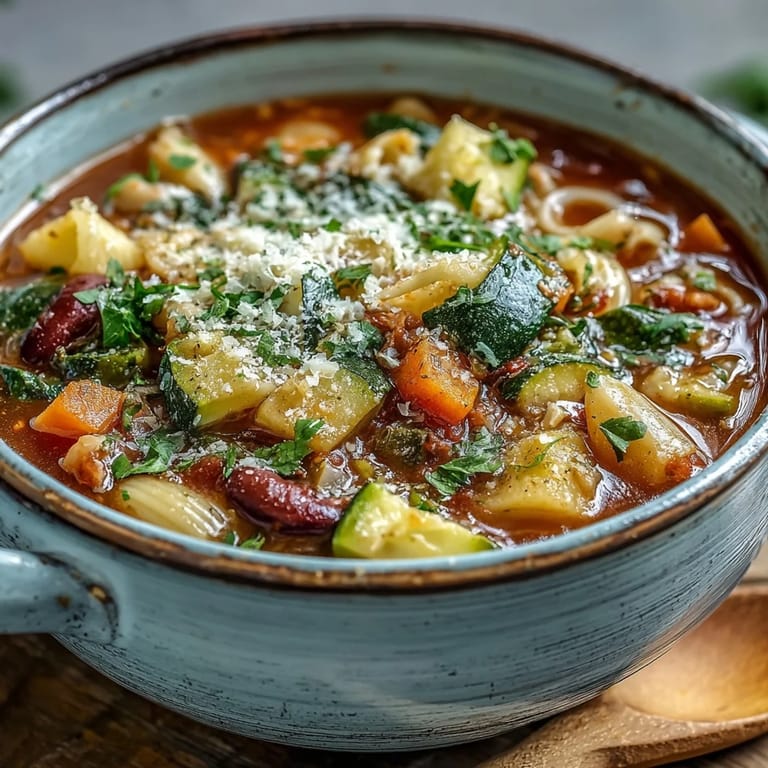
- Top each bowl with fresh parsley, Parmesan, or a swirl of pesto for a little extra life.
- Pair it with focaccia or a grilled cheese sandwich if you want to make it a more filling meal.
 Save to Pinterest
 This soup has a way of turning an ordinary evening into something quietly special, not because it is fancy, but because it is real. Make it your own, and it will never let you down.
Recipe FAQ
- → Can I make this minestrone ahead of time?
Yes, minestrone tastes even better the next day as flavors meld. Store in the refrigerator for up to 4 days. Note that pasta will absorb liquid, so add extra broth when reheating. For best results, cook pasta separately and add when serving.
- → What vegetables work best for seasonal variations?
In spring, use peas, asparagus, and leeks. Summer calls for zucchini, green beans, and fresh tomatoes. Fall and winter are perfect for butternut squash, kale, cabbage, and root vegetables like turnips or parsnips. Always keep the base of onion, carrot, and celery.
- → How can I make this soup heartier?
Add more beans, use larger pasta shapes, or include diced potatoes. You can also stir in cooked farro or barley for extra texture. A Parmesan rind simmered in the broth adds rich, savory depth and makes the soup more substantial.
- → Can I freeze vegetable minestrone?
Yes, but for best results, freeze the soup before adding pasta. Pasta becomes mushy when frozen and reheated. Freeze in airtight containers for up to 3 months, then cook fresh pasta directly in the reheated soup before serving.
- → What type of pasta is best for minestrone?
Small pasta shapes work best: ditalini, small shells, elbow macaroni, or tubetti. These hold up well in the broth and are easy to eat with a spoon. Avoid long pasta like spaghetti, which is difficult to serve in soup form.
- → How do I adjust this for a vegan diet?
Simply omit the Parmesan cheese or use a dairy-free alternative. The soup is naturally vegetarian, and all other ingredients are plant-based. For extra umami, add nutritional yeast or a splash of soy sauce to deepen the flavor.