 Save to Pinterest
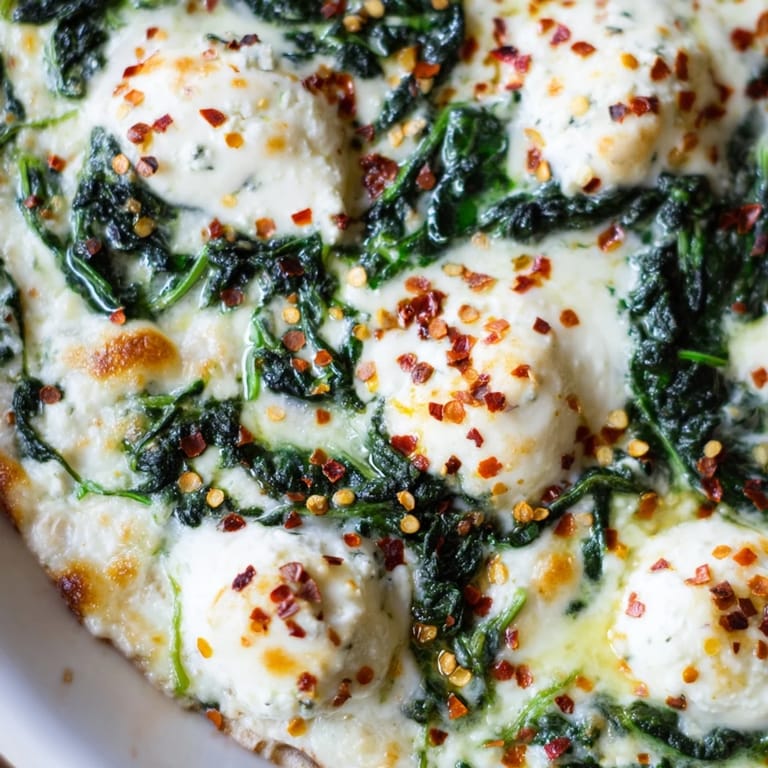
 My upstairs neighbor knocked on my door one Thursday evening holding a bag of wilted spinach and half a tub of ricotta. She asked if I could do anything with them before they went bad, and I said yes without thinking. Twenty minutes later, we were standing in my tiny kitchen brushing garlic butter onto store-bought dough, laughing about how we both pretend to meal-plan but never actually do. That pizza came out better than anything I'd ordered in months, and I've been making it ever since.
I made this for my book club once, and nobody talked about the book for the first fifteen minutes. They just kept reaching for another slice and asking why the crust tasted so good. I didn't admit until later that the secret was just butter, garlic, and a hot oven. Sometimes the simplest tricks feel like magic, and watching people enjoy something you threw together with confidence is its own kind of proud moment.
Ingredients
- Thin pizza crust (store-bought or homemade, about 12 inches): I usually grab a premade one from the bakery section because life is short, but if you have dough rising on your counter, even better.
- Unsalted butter (2 tablespoons): This is the base of your garlic butter, and using unsalted lets you control the salt level since the cheeses bring plenty.
- Garlic (2 cloves, minced): Fresh garlic sautéed in butter is the backbone of flavor here, don't skip it or swap for powder.
- Fresh parsley (1 tablespoon, finely chopped, optional): It adds a pop of color and a whisper of freshness, but the pizza works without it if your herb drawer is empty.
- Ricotta cheese (1 cup): Go for whole-milk ricotta if you can, it spreads more easily and tastes richer than the low-fat stuff.
- Fresh spinach (2 cups, roughly chopped): It wilts down to almost nothing, so don't worry about the volume, and rough chops are fine since it's going under cheese anyway.
- Olive oil (1 tablespoon): Just enough to keep the spinach from sticking and to coax out a little flavor as it wilts.
- Salt (1/2 teaspoon total, divided): A small amount goes into the spinach while it cooks, and the rest seasons the toppings as you build.
- Black pepper (1/4 teaspoon): Freshly cracked is best, it adds a gentle bite that balances the creamy ricotta.
- Shredded mozzarella cheese (1/2 cup): This melts into those beautiful golden bubbles and gives the pizza a little stretch.
- Grated Parmesan cheese (2 tablespoons): It brings a nutty, salty finish that makes every bite feel complete.
- Red pepper flakes (pinch, optional): I like a tiny hint of heat, but this is completely your call depending on who's eating.
Tired of Takeout? 🥡
Get 10 meals you can make faster than delivery arrives. Seriously.
One email. No spam. Unsubscribe anytime.
Instructions
- Heat the oven:
- Preheat your oven to 475°F and slide a pizza stone or sturdy baking sheet inside to get screaming hot. This step is what gives you a crisp bottom instead of a soggy one.
- Wilt the spinach:
- Warm olive oil in a skillet over medium heat, then toss in the spinach with a quarter teaspoon of salt and stir until it just collapses, about two to three minutes. Transfer it to a plate so it stops cooking and can cool off a bit.
- Make the garlic butter:
- Melt butter in a small saucepan over low heat, add the minced garlic, and let it sizzle gently for about a minute until it smells incredible. Stir in parsley if you're using it, then take it off the heat.
- Prep the crust:
- Lay your pizza crust on a piece of parchment paper and use a pastry brush to coat the entire surface with garlic butter, going right up to the edge. Don't be shy, this is where all the flavor starts.
- Add the ricotta:
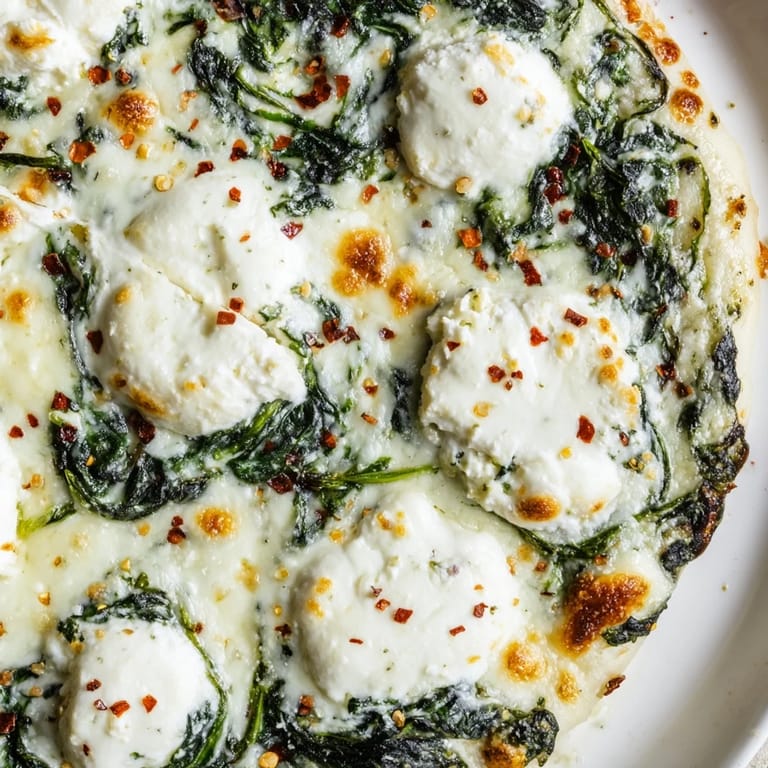
- Drop spoonfuls of ricotta all over the crust, leaving about half an inch around the border. You don't need to spread it smooth, little dollops look rustic and taste the same.
- Layer the spinach:
- Scatter the cooled sautéed spinach evenly over the ricotta, then grind a little black pepper on top. The pepper cuts through the richness and adds a subtle warmth.
- Top with cheese:
- Sprinkle mozzarella and Parmesan over everything, then add a pinch of red pepper flakes if you want a gentle kick. Now it's ready to bake.
- Bake:
- Slide the parchment with the pizza onto your preheated stone or baking sheet and bake for twelve to fifteen minutes, until the crust turns golden and the cheese is bubbling and starting to brown. Keep an eye on it after ten minutes because ovens vary.
- Cool and slice:
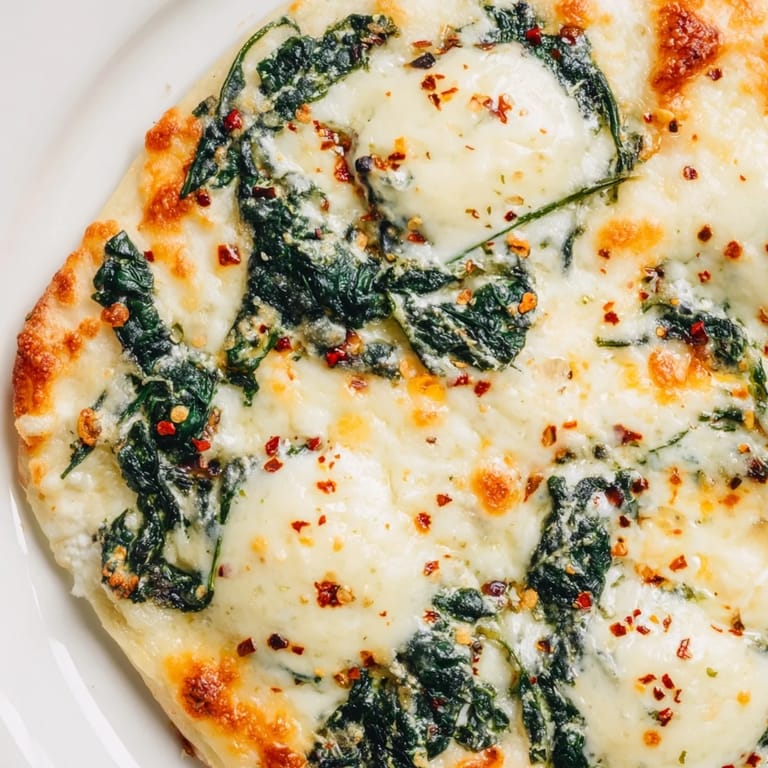
- Pull the pizza out and let it sit for two minutes so the cheese sets just enough to slice cleanly. Then cut it into wedges and serve while it's still warm.
 Save to Pinterest
 The first time I served this to my dad, he ate three slices and then asked if I'd opened a restaurant without telling him. He's not big on compliments, so that one stuck. It reminded me that food doesn't have to be complicated to make people feel cared for, it just has to taste like you meant it.
What to Do with Leftovers
Leftover slices reheat beautifully in a hot skillet over medium heat, cover it with a lid for a minute so the cheese gets melty again while the bottom crisps up. The microwave works in a pinch, but you'll lose that crispy crust texture. I've also eaten cold slices straight from the fridge for breakfast more times than I'll admit, and they're surprisingly good that way too.
Simple Swaps and Add-Ons
If you want a little more depth, scatter some thinly sliced red onion or a handful of chopped sun-dried tomatoes over the spinach before the cheese goes on. I've also used kale or Swiss chard instead of spinach when that's what I had, just make sure to remove any thick stems first. You can swap in a whole-wheat or gluten-free crust without changing anything else, and it still turns out great.
Pairing and Serving Ideas
This pizza feels light enough that it pairs well with a crisp green salad dressed simply with lemon and olive oil. I like to pour a cold glass of Pinot Grigio or sparkling water with a twist of lime alongside it. It's the kind of meal that works for a quiet Tuesday night or a casual weekend dinner with friends who don't need anything fussy.
- Serve with a arugula salad tossed in balsamic for a peppery contrast.
- Pair with roasted cherry tomatoes on the side if you want a little extra sweetness.
- Offer extra Parmesan and red pepper flakes at the table so everyone can adjust to their taste.
 Save to Pinterest
 This pizza has become my default answer when I want something satisfying but don't want to spend an hour in the kitchen. I hope it becomes one of those recipes you reach for without thinking, the kind that feels like a small win every time.
Recipe FAQ
- → Can I make the pizza dough from scratch?
Absolutely. Use your favorite pizza dough or homemade recipe, then shape it to about 12 inches. Allow it to rise if needed before proceeding with the garlic butter and toppings. Store-bought dough is convenient but homemade offers superior texture and flavor.
- → How do I prevent a soggy crust?
The key is pre-heating your pizza stone or baking sheet thoroughly and using a high oven temperature of 475°F. Squeeze excess moisture from the sautéed spinach before topping, and avoid over-spreading the ricotta, which can release water during baking.
- → What's the best way to sauté the spinach?
Heat olive oil in a skillet over medium heat, then add fresh spinach with a pinch of salt. Stir occasionally for 2–3 minutes until just wilted. Don't overcook, as it becomes bitter. Transfer to a plate to cool and drain any excess liquid before topping the pizza.
- → Can I add other vegetables to this pizza?
Yes. Thinly sliced red onion, sun-dried tomatoes, roasted mushrooms, or artichoke hearts work wonderfully. Add them either under or over the spinach layer. Just ensure vegetables aren't too wet to avoid soggy crust.
- → Is this suitable for different diets?
The pizza is naturally vegetarian. For gluten-free diets, use a gluten-free crust instead. For dairy-free versions, substitute ricotta and cheeses with plant-based alternatives. The garlic butter can remain or be replaced with olive oil infused with garlic.
- → How should I store and reheat leftovers?
Store cooled pizza in an airtight container in the refrigerator for up to 3 days. Reheat at 350°F for 8–10 minutes until warmed through, or use a skillet over medium heat for a crispier crust. Avoid microwaving, which softens the base.