 Save to Pinterest
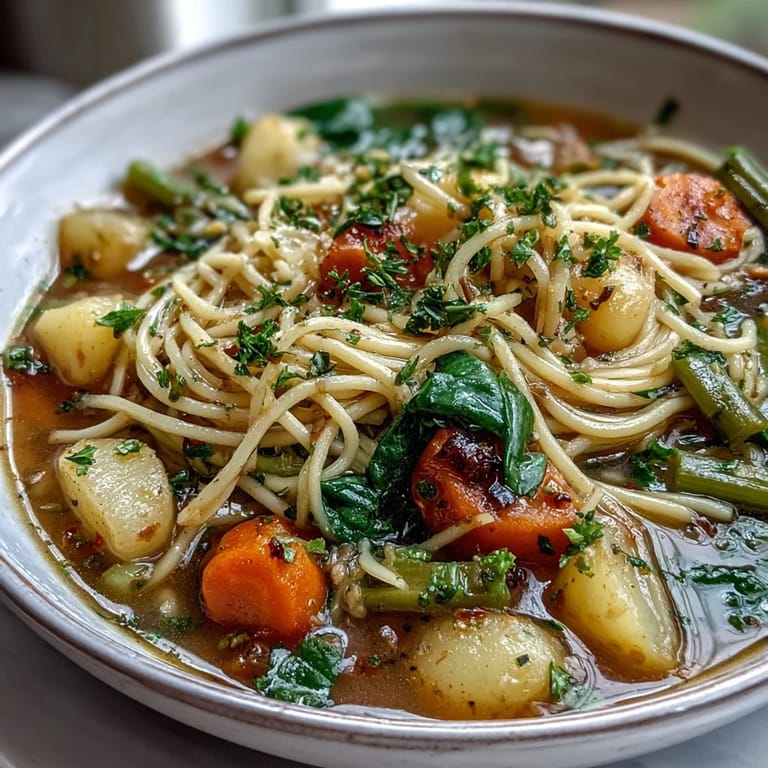
 There's something about the sound of a wooden spoon hitting the bottom of a pot that signals comfort is on the way. I discovered this vegetable noodle soup on a gray afternoon when my kitchen felt too quiet and my bones felt too cold, and I needed something that tasted like being looked after. The beauty of it is how forgiving it is—you work with what you have, the vegetables cooperate without complaint, and within forty minutes, steam is rising from bowls like a gentle promise.
I once made this for my neighbor who had just moved in, and she sat at my kitchen counter watching the noodles curl and soften in the simmering broth. She told me later that the soup tasted like being welcomed, and I realized then that sometimes the simplest dishes carry the most meaning—not because of fancy technique, but because they're made with the intention of warming someone from the inside out.
Ingredients
- Carrots: The sweetness here is gentle and true, and peeling them first prevents any gritty texture from surprising you mid-spoonful.
- Celery stalks: These build an aromatic foundation that makes the whole pot smell like something important is happening.
- Onion: Dicing it fine ensures it practically melts into the broth rather than remaining as distinct chunks.
- Potato: This is your silent thickener, softening into the liquid and giving body to something otherwise delicate.
- Green beans: Cut them into one-inch pieces so they stay intact and provide a satisfying bite.
- Garlic: Mince it finely so it dissolves into the broth without overpowering everything else.
- Vegetable broth: Use one you trust—this is the foundation upon which everything else rests.
- Bay leaf: This single leaf does more work than you'd think, adding an almost imperceptible depth.
- Dried thyme and parsley: Together they whisper herbaceousness without shouting.
- Salt and pepper: Taste as you go, because seasoning is always a conversation with your own palate.
- Egg noodles: They soften without turning to mush if you're paying attention, and their slight richness balances the vegetables beautifully.
- Spinach or kale: This optional addition brings a final flourish of nutrition and a hint of earthiness in the last moments.
- Lemon juice: A squeeze at the end brightens everything without making the soup taste citrusy.
Tired of Takeout? 🥡
Get 10 meals you can make faster than delivery arrives. Seriously.
One email. No spam. Unsubscribe anytime.
Instructions
- Begin with heat and aromatics:
- Warm your pot over medium heat and let the onion and garlic soften together for a couple of minutes until your kitchen starts smelling like dinner. The oil is optional but helps carry the flavor forward.
- Build your vegetable base:
- Add the carrots, celery, potato, and green beans to the pot and let them spend a few minutes together, stirring occasionally, so each one starts to warm through.
- Pour in the broth and seasonings:
- This is where the magic starts—add your broth along with the bay leaf, thyme, parsley, salt, and pepper, then bring everything to a boil.
- Simmer the vegetables:
- Turn the heat down to a gentle simmer, cover the pot, and let it cook for about ten minutes until the vegetables begin to yield to a fork.
- Add the noodles:
- Stir in your noodles and let them simmer uncovered for seven to ten minutes, stirring occasionally so nothing sticks and everything cooks evenly.
- Finish with greens and brightness:
- In the final two minutes, add your spinach or kale if you're using it, and stir in the lemon juice just before serving. Remove the bay leaf so no one accidentally finds it in their spoon.
- Taste and adjust:
- Always take a moment to taste before serving—soup is forgiving, and a pinch more salt or a grind of pepper might be exactly what it needs.
 Save to Pinterest
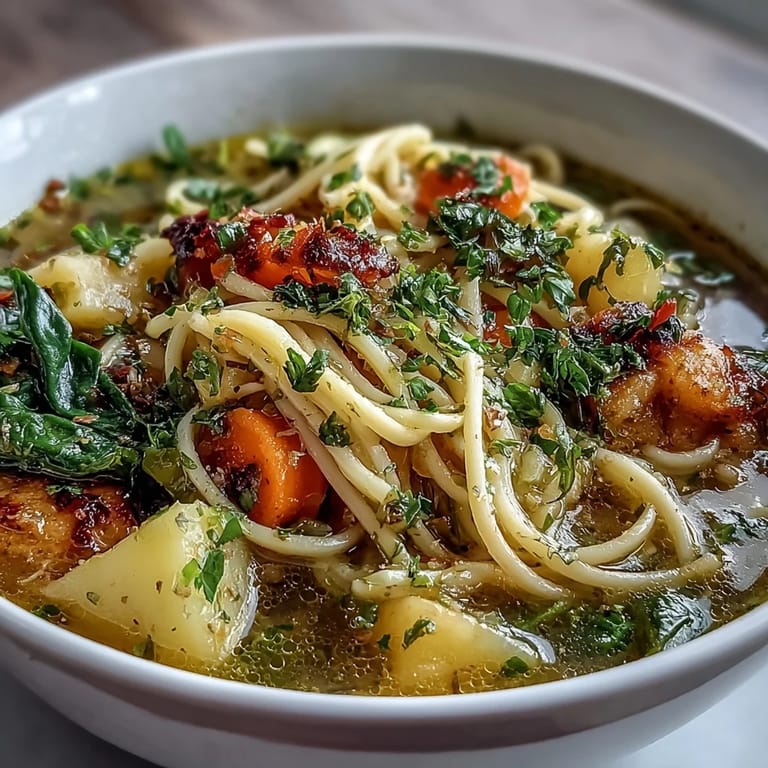
 My daughter once asked why this soup tasted different from the canned ones she'd tried at school, and I realized I couldn't explain it in words—she just needed to experience how vegetables taste when they're treated gently instead of blasted in factories. That's when cooking stopped being about following steps and started being about understanding that small choices made with care create dishes that taste like love.
Variations That Still Work
I've made this soup in summer with zucchini instead of potato, and in winter with chunks of parsnip when carrots felt too ordinary. The formula stays the same—soft vegetables, warm broth, noodles that carry it all together—but each season offers different players for the same reliable game. You might add chickpeas for protein, swap the noodles for rice, or use whatever's wilting in your vegetable drawer.
The Comfort of Simple Cooking
There's a particular kind of peace that comes from making a soup like this, where nothing demands precision and everything benefits from your attention. You're not fighting against the recipe or the ingredients—you're working with them, learning their textures and tastes as you go.
Serving and Storage
Serve this soup hot, with crusty bread for soaking up the broth or a green salad alongside if you want something crisp to balance the warmth. It keeps beautifully in the refrigerator for three days and can be frozen for a month, though the noodles soften slightly over time—so if you're planning ahead, you might cook the noodles fresh and add them just before reheating.
- Pair with bread that has some character, something sturdy enough to stand up to the broth.
- If you're reheating, add a splash of fresh broth or water since the noodles absorb liquid as they sit.
- This soup tastes even better on the second day, when all the flavors have had time to settle and get to know each other.
 Save to Pinterest
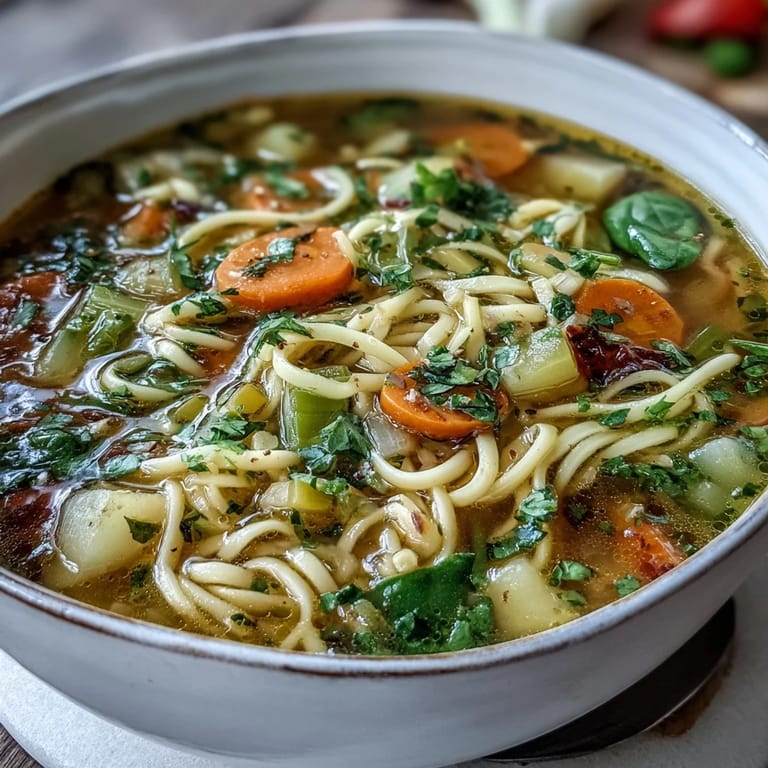
 This soup has become my answer to so many different days—cold ones, lonely ones, busy ones where I need something nourishing but don't have energy for complexity. It's the kind of dish that teaches you something new each time you make it, if you're paying attention to how it cooks.
Recipe FAQ
- → What noodles work best in this soup?
Small pasta like egg noodles or vegan alternatives work well, cooking quickly to a tender bite.
- → Can I make this soup gluten-free?
Yes, substituting regular noodles with gluten-free pasta ensures it's suitable for gluten-sensitive diets.
- → How do I add more protein to this dish?
Incorporate cooked chickpeas or white beans during cooking for a protein boost without altering flavors.
- → When should I add leafy greens like spinach or kale?
Add them in the last two minutes of cooking to keep their color and texture vibrant.
- → What herbs enhance the flavor of this vegetable soup?
Dried thyme and parsley add earthy, aromatic notes that complement the vegetables well.