 Save to Pinterest
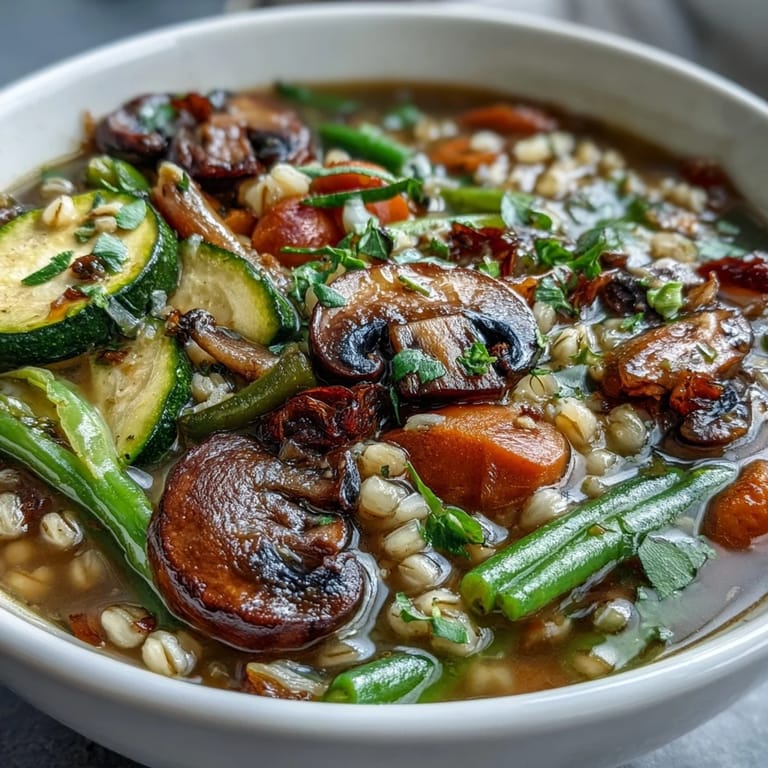
 There's something about the way mushrooms darken and shrink in a hot pot that made me fall in love with this soup years ago. I was cooking for someone who claimed to hate vegetables, and I remember standing at the stove, listening to the gentle sizzle of cremini mushrooms releasing their earthy essence into hot oil. By the time the barley had softened into tender little pillows, even the skeptic was asking for seconds. Now this soup appears on my table whenever the weather turns cold, and it's become the kind of dish I make without thinking—muscle memory in a bowl.
I made this for my roommate on a gray November afternoon, and she stood in the kitchen doorway just breathing in the steam. We didn't have fancy plans or special ingredients that day, just what was in the crisper drawer and a half-empty box of pearl barley from last month. That bowl of soup turned into three refills, a long conversation at the table, and her asking for the recipe. Sometimes the best meals aren't the ones you plan—they're the ones that happen because you had the right ingredients and the willingness to just start cooking.
Ingredients
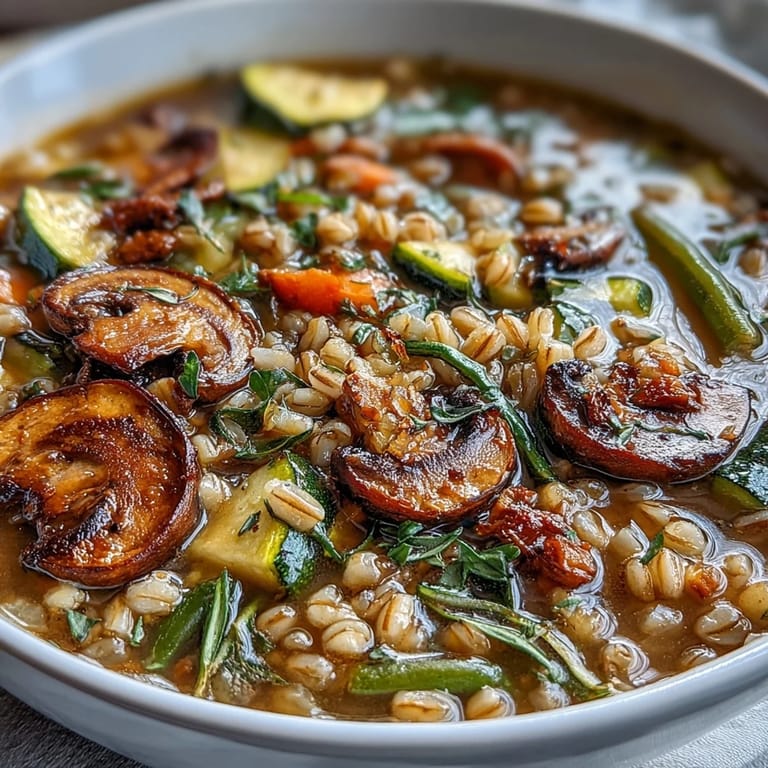
- Pearl barley (3/4 cup, rinsed): This grain is the soul of the soup, becoming tender and slightly creamy as it simmers. Rinsing it first removes excess starch and helps prevent a gluey texture, so don't skip that step.
- Olive oil (2 tablespoons): The foundation for building flavor; use a quality oil if you have it, since it's one of the first things hitting heat and setting the taste stage.
- Yellow onion, carrots, and celery (1 large, 2 medium, 2 stalks): This holy trinity softens into a flavorful base that holds the entire soup together, almost like a gentle cushion for everything else.
- Cremini or white mushrooms (8 oz, sliced): These release their moisture and develop deep, savory notes that make the broth taste like you've been simmering stock for days. Don't crowd them in the pan; give them space to brown.
- Fresh garlic (3 cloves, minced): Added after the softer vegetables, it perfumes the pot without burning or turning bitter.
- Potato and zucchini (1 large, 1 medium, diced): The potato adds substance and earthiness, while the zucchini brings freshness and a delicate texture that keeps the soup from feeling too heavy.
- Canned diced tomatoes (1 can, 14 oz, with juice): The acidity and brightness here balance the earthy vegetables and prevent the soup from tasting dull or one-dimensional.
- Green beans (1 cup, cut into 1-inch pieces): They stay slightly tender but not mushy, adding a vibrant note and a pleasant texture contrast in every spoonful.
- Vegetable broth (6 cups): This is your canvas; use a good quality broth you'd actually drink on its own, because mediocre broth will create a mediocre soup.
- Dried thyme, oregano, and bay leaf: These herbs are understated but essential, adding a subtle Mediterranean warmth that ties everything together without screaming for attention.
- Salt and pepper (3/4 teaspoon and 1/2 teaspoon): Taste as you go; the final seasoning should taste like a gentle hug, not a punch in the mouth.
- Fresh parsley (2 tablespoons, for garnish): A whisper of brightness scattered on top just before serving brings the whole bowl into focus.
Tired of Takeout? 🥡
Get 10 meals you can make faster than delivery arrives. Seriously.
One email. No spam. Unsubscribe anytime.
Instructions
- Start with the softer vegetables:
- Heat your olive oil in a large pot over medium heat, then add the diced onion, carrots, and celery. Let them soften for about 5 minutes, stirring occasionally so they release their natural sugars and create a fragrant base without browning too much.
- Invite the mushrooms to the party:
- Stir in the minced garlic and sliced mushrooms, cooking for another 5 minutes. You'll notice the mushrooms will darken and reduce in size as they release their moisture—this is exactly what you want, because all that umami is flavoring your broth.
- Build your soup foundation:
- Add the diced potato, zucchini, green beans, and canned tomatoes with their juice. Give everything a good stir so the tomato juice coats the vegetables and begins to meld the flavors together.
- Bring in the broth and grains:
- Pour in the vegetable broth, then add the rinsed pearl barley along with the thyme, oregano, bay leaf, salt, and pepper. Stir well to distribute the barley evenly and prevent it from settling and sticking to the bottom of the pot.
- Let it simmer gently:
- Bring the soup to a boil, then reduce the heat to low, cover partially or fully, and let it bubble away quietly for 40 to 45 minutes. Stir occasionally and taste the barley—it should be tender but still have a tiny bit of bite, not mushy or blown apart.
- Finish with intention:
- Remove the bay leaf and taste the soup. Add more salt, pepper, or herbs if it needs them; you're looking for a balance where you can taste every vegetable but nothing dominates. Ladle into bowls and scatter fresh parsley on top for color and a fresh herb note.
 Save to Pinterest
 There was a moment during a particularly difficult week when I made this soup and my kitchen filled with such a warm, uncomplicated smell that everything else just seemed smaller. This isn't fancy food, but it's honest food—the kind that reminds you why cooking matters beyond just eating.
The Magic of Barley
Pearl barley is an underrated grain that doesn't get nearly enough respect in home kitchens. Unlike rice, which can become mushy if you're not careful, barley actually improves as it simmers, absorbing flavor and becoming creamy in texture without any cream at all. It also has a subtle nuttiness that deepens with cooking, making it perfect for vegetable soups where you want every element to matter.
Customize Without Losing the Soul
This soup is forgiving in the best way—you can swap vegetables based on what's in your crisper drawer or what's on sale at the market. I've made it with diced eggplant instead of zucchini, with parsnips replacing potatoes, and once with a handful of kale stirred in at the very end. The barley and mushrooms are the backbone that holds everything together, so keep those constant and play with the rest. For extra protein without changing the character of the soup, a drained can of white beans or chickpeas stirred in with the broth is subtle and satisfying.
Serving and Storage Wisdom
Serve this soup hot with a slice of crusty bread for scooping and soaking up the broth. The soup keeps beautifully in the refrigerator for up to five days, and it actually tastes better the next day once the flavors have had time to settle and deepen. If you're freezing it, store it in a flat container or freezer bag, and remember that the barley will continue to absorb liquid as it freezes and thaws, so when you reheat it, you might need to add a splash of water or broth to reach your desired consistency.
- For a protein-packed variation, stir in a drained can of white beans or chickpeas when you add the broth.
- Make it gluten-free by swapping the pearl barley for brown rice or quinoa, adjusting the cooking time to match the grain you choose.
- Always taste before serving so you can adjust the seasonings to your preference—salt needs are individual and depend on how salty your broth is to begin with.
 Save to Pinterest
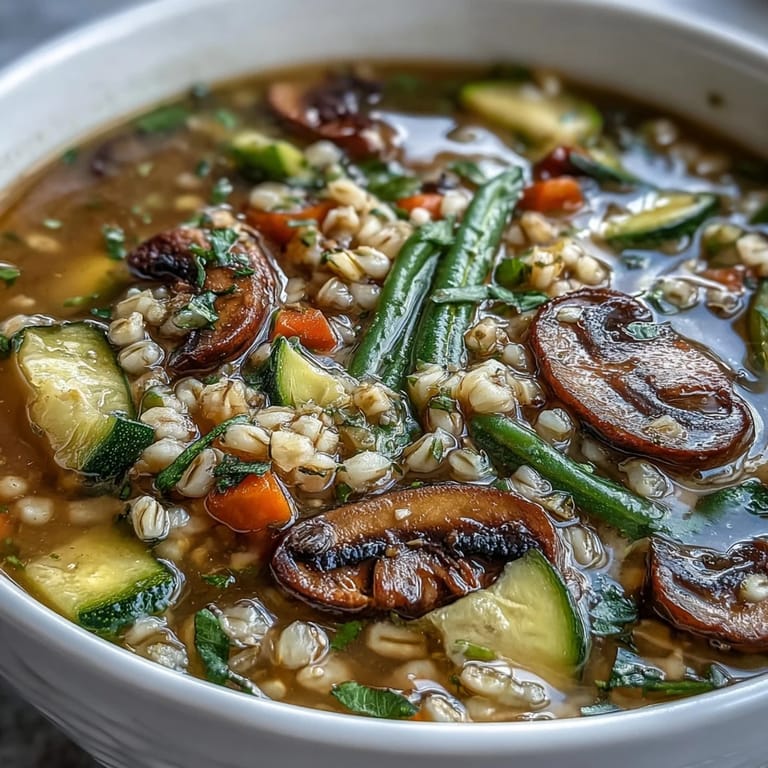
 This soup has the quiet confidence of a dish that doesn't need to shout to be loved. Make it, and it'll find its way into your regular rotation the same way it found its way into mine.
Recipe FAQ
- → What grains are used in this dish?
Pearl barley provides a chewy texture and hearty substance. You can substitute with brown rice or quinoa for gluten-free needs.
- → Which vegetables enhance the flavor here?
A mix of carrots, celery, zucchini, potatoes, green beans, and mushrooms contribute both color and earthy depth.
- → How are the herbs incorporated?
Dried thyme, oregano, and a bay leaf infuse the broth during simmering to build a warm, layered flavor profile.
- → Can I add protein to this dish?
For extra protein, try stirring in drained white beans during cooking without overpowering the delicate vegetable balance.
- → What cooking tools are recommended?
A large soup pot, knives for chopping, and a ladle for serving are essential for preparing and enjoying this meal.