 Save to Pinterest
 My neighbor handed me a perfectly halved Japanese eggplant one summer evening, still warm from her garden, and said, "Trust me, just glaze it with miso." I was skeptical—eggplant had always felt like work to me, something that absorbed oil like a sponge and turned mushy. But that night, watching the flesh transform under the broiler into something glossy and caramelized, I understood what she meant. The miso did something almost magical, turning what I thought was a temperamental vegetable into something I now crave regularly.
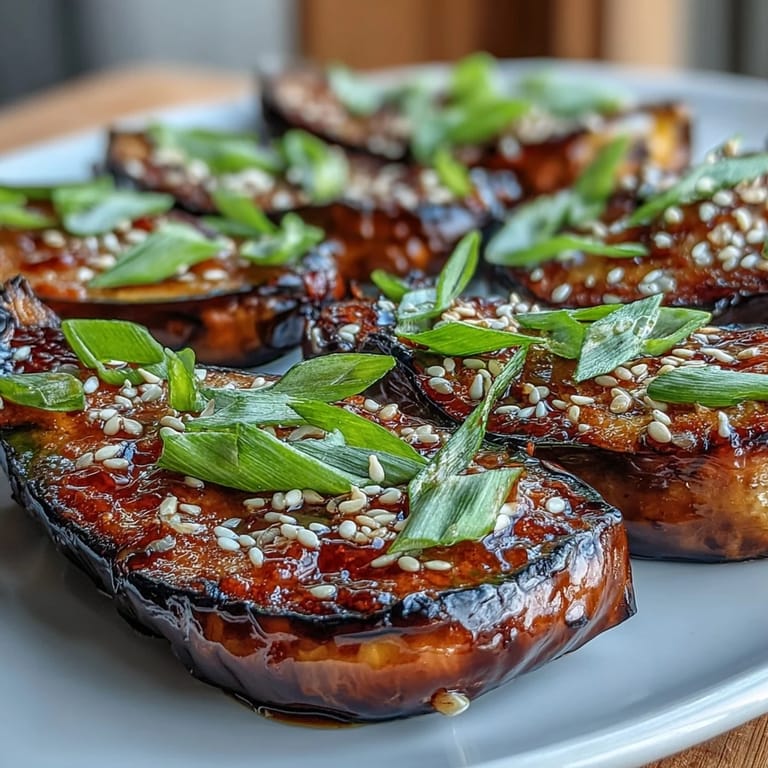
I made this for a dinner party last autumn when someone mentioned they'd gone vegetarian, and I panicked briefly in my kitchen. This dish arrived at the table looking so appealing—those glossy, bronzed eggplant halves glistening under the kitchen light—that my meat-eating friends actually asked for the recipe. Nobody felt like they were eating a vegetable; they were eating something intentional and cared-for, which I think is the whole point.
Ingredients
- Japanese eggplants (2 medium): These are thinner and more tender than globe eggplants, with fewer seeds and a sweeter, silkier flesh when roasted.
- White miso paste (3 tbsp): The milder cousin to red miso, it brings sweet umami without overwhelming heat—this is where the magic happens.
- Mirin (1 tbsp): This sweet rice wine glazes beautifully and caramelizes under the broiler; don't skip it or substitute with just sugar.
- Sake (1 tbsp): The alcohol cooks off quickly, leaving behind depth and a subtle refinement that rounds out the glaze.
- Sugar (1 tbsp): Helps the glaze caramelize and balances the miso's saltiness with gentle sweetness.
- Sesame oil (1 tbsp, plus more for brushing): Use the toasted kind for maximum flavor; regular neutral oil won't give you that nutty finish.
- Toasted sesame seeds (1 tbsp): The garnish that makes this look intentional and adds a subtle crunch to each bite.
- Green onions (2, thinly sliced): Fresh and bright, they cut through the richness of the glaze with a quiet sharpness.
Tired of Takeout? 🥡
Get 10 meals you can make faster than delivery arrives. Seriously.
One email. No spam. Unsubscribe anytime.
Instructions
- Heat your oven and prepare the pan:
- Get your oven to 400°F and line a baking sheet with parchment paper—this prevents sticking and makes cleanup painless. A few minutes of prep now saves regret later.
- Halve and score the eggplants:
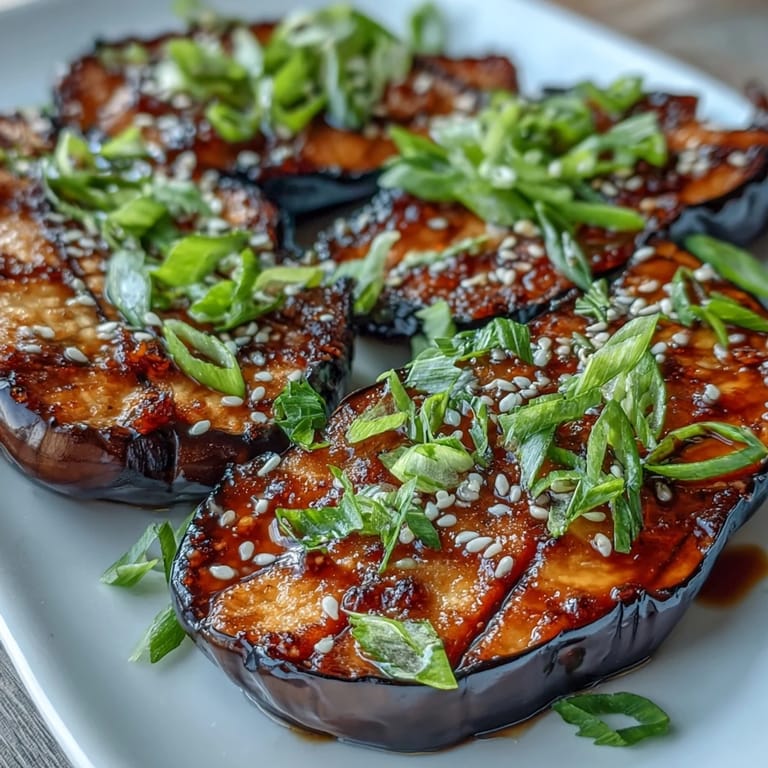
- Slice your eggplants in half lengthwise, then score the flesh in a crosshatch pattern, going deep enough to create those little squares but careful not to cut through the skin. This helps the heat penetrate evenly and creates more surface area for the glaze to cling to.
- Oil and roast until golden:
- Brush the cut sides lightly with sesame oil, place them cut-side up on your sheet, and slide them into the oven for 20-25 minutes. You want the flesh tender and golden with a slightly caramelized edge—it'll smell sweet and nutty when it's ready.
- Make the glaze while eggplants roast:
- In a small bowl, whisk together miso paste, mirin, sake, sugar, and the remaining sesame oil until completely smooth with no lumps. This takes about a minute and creates the glossy, pourable consistency you need.
- Apply the glaze generously:
- Pull the eggplants from the oven and spread the miso mixture evenly over each cut side, really letting it sink into those crosshatch scores. This is where you get that restaurant-quality appearance.
- Broil until bubbling and caramelized:
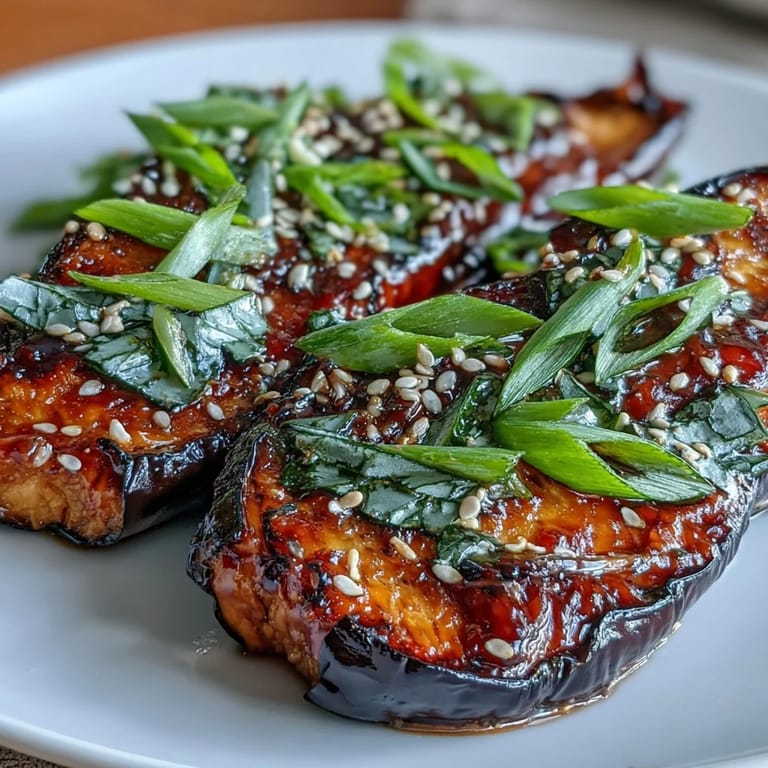
- Switch your oven to broil, return the eggplants, and watch them closely for 2-3 minutes—the glaze should bubble and brown slightly around the edges. Don't walk away; this is the moment where magic happens or things get burned, and the line between them is surprisingly thin.
- Finish and serve:
- Remove from the broiler, sprinkle with sesame seeds and green onions while everything is still warm, and serve immediately. The warmth brings out the nutty aroma and makes the texture perfect.
 Save to Pinterest
 A friend's young daughter tried this for the first time and looked genuinely surprised that something she'd always avoided was actually delicious. Watching someone discover that vegetables can be exciting rather than obligatory—that's when I realized this recipe had become more than just a side dish in my kitchen. It's become a small act of convincing people that good food doesn't have to be complicated.
The Science Behind the Glaze
Miso paste contains amino acids that create that deep savory sensation on your tongue—umami, in other words—which is why even vegetarian versions of this dish feel substantial. When you broil the glaze, the sugars in the mirin and miso undergo something called the Maillard reaction, creating hundreds of complex flavor compounds and that beautiful bronzed appearance. This is pure chemistry working in your favor, turning simple ingredients into something that tastes like it required serious skill.
Japanese Eggplant vs. Other Varieties
I learned this the hard way after trying to make this recipe with a large globe eggplant and ending up with something watery and bland. Japanese eggplants are thinner, sweeter, and have fewer seeds—they're almost designed for this preparation method. If you can't find them, look for Italian or Chinese long eggplants at an Asian market or good grocery store; they'll give you much better results than standard purple globe eggplants.
Variations and Serving Suggestions
This dish is endlessly adaptable depending on what you have on hand or what mood you're in. I've served it alongside steamed rice as a main course, tucked into grain bowls with quinoa, or even cold the next day as part of a vegetable platter. The glaze is forgiving enough to handle slight tweaks, and the eggplant itself is humble enough to complement almost anything you put it next to.
- Try adding a pinch of red pepper flakes to the glaze if you want heat, or a teaspoon of ginger paste for brightness.
- Swap mirin for honey if you prefer a different sweetness profile, though the glaze won't caramelize quite as beautifully.
- Make it ahead by roasting the eggplants fully, then applying glaze and broiling just before serving so the finish stays perfect.
 Save to Pinterest
 This recipe taught me that sometimes the best dishes are the simplest ones, where quality ingredients and a little attention to technique create something that feels special without any fuss. Make it once, and it becomes a reliable friend in your kitchen.
Recipe FAQ
- → Can I use regular globe eggplant instead of Japanese?
Japanese eggplant has thinner skin and fewer seeds, making it naturally sweeter and more tender. Globe eggplant works but requires longer roasting time and may need salting to remove bitterness before cooking.
- → Is white miso paste necessary for this dish?
White miso provides the ideal balance of mild sweetness and umami. Red miso will work but yields a stronger, more intense flavor. Yellow miso falls somewhere in between. Adjust sugar accordingly if substituting miso varieties.
- → Why score the eggplant flesh before roasting?
Scoring creates a crosshatch pattern that increases surface area, allowing the glaze to penetrate deeper into the flesh. It also helps heat distribute evenly for more uniform cooking and creates beautiful presentation after caramelizing.
- → Can I make this without sake or mirin?
Substitute additional sugar mixed with water or dry sherry for sake. For mirin, use a mix of honey or agave with a splash of rice vinegar. The flavor profile will shift slightly but remain delicious.
- → How do I prevent the glaze from burning under the broiler?
Watch constantly during the final 2-3 minutes of broiling. The sugar content in the glaze causes rapid browning. Pull the eggplant out once you see deep golden bubbles forming—any longer and the sugars may scorch.
- → What should I serve with miso glazed eggplant?
Steamed jasmine or sushi rice creates a perfect base for the savory glaze. It also pairs beautifully alongside other Japanese dishes like teriyaki chicken, tempura vegetables, or a simple miso soup and cucumber salad.