 Save to Pinterest
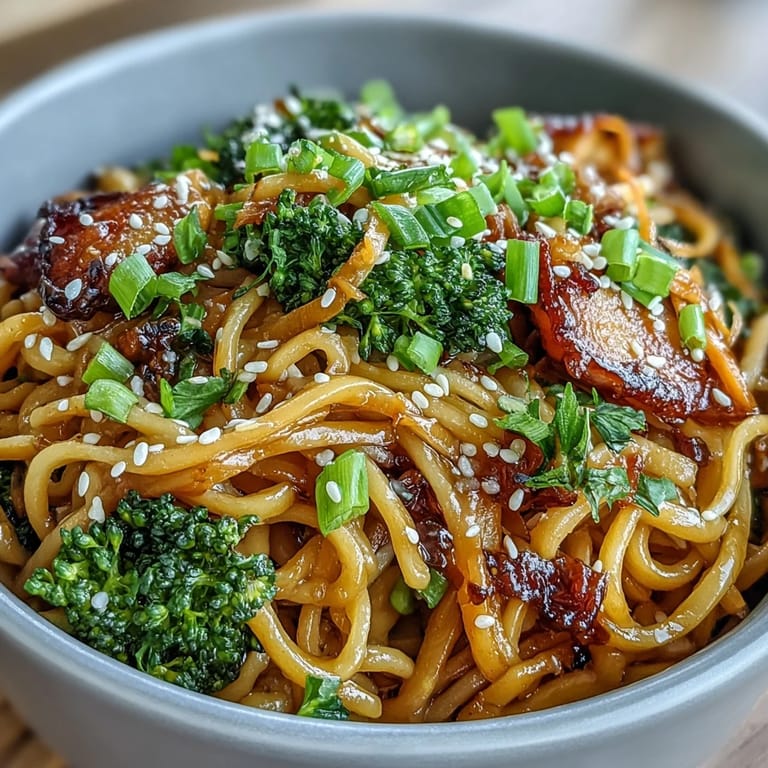
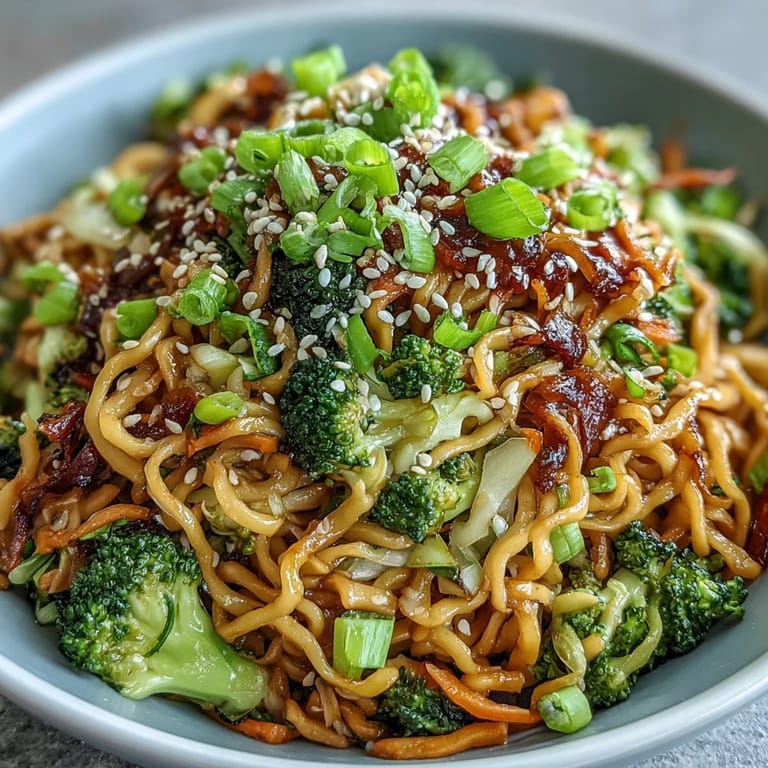
 My neighbor stopped by one evening with a craving she couldn't quite name, something savory and bright that wouldn't take all night to make. I had egg noodles, broccoli going soft in the crisper drawer, and half a bottle of soy sauce that had been hiding behind the olive oil. Twenty minutes later, we were twirling noodles on our forks, the kitchen steamed up and smelling like caramelized garlic and sesame. That's when I realized this Asian Teriyaki Noodle Bowl isn't just a quick dinner—it's the kind of dish that feels both familiar and exciting every single time.
I made this for my sister's book club one afternoon when they spontaneously asked if I could feed them something that wouldn't leave everyone too full to keep talking. Everyone went quiet for a minute, forks moving steadily, then someone said it was exactly what they didn't know they needed. The conversation kept flowing, but so did the noodles—no one could resist seconds.
Ingredients
- Egg noodles, 300 g: These cook faster than you'd expect and have a tender bite that holds the sauce beautifully, though any sturdy noodle works in a pinch.
- Broccoli florets, 2 cups: The florets soak up heat and sauce while staying just crisp enough to give you something to chew on.
- Carrots, 2 medium, julienned: Julienne them thin so they soften quickly without turning mushy, and they add a natural sweetness that balances the savory sauce.
- Green onions, 2, sliced: Save half for garnish because that fresh onion bite at the end changes everything.
- Soy sauce, 1/4 cup: Use a good quality soy sauce if you have it—the difference between mediocre and memorable is honestly in this bottle.
- Mirin, 2 tbsp (or dry sherry): Mirin brings a subtle sweetness and glossy sheen that regular sugar can't quite replicate, though sherry works when you're out.
- Honey or maple syrup, 2 tbsp: This deepens the sauce's complexity and helps it cling to the noodles.
- Rice vinegar, 1 tbsp: Just enough to brighten everything and keep the sauce from feeling one-note heavy.
- Brown sugar, 1 tbsp: Layering sweetness might sound odd, but it creates depth that single-source sweetness never achieves.
- Sesame oil, 2 tsp: A little goes a long way—this is what makes people ask what restaurant you ordered from.
- Garlic, 2 cloves, minced: Mince it fine so it dissolves into the sauce and flavors every bite.
- Fresh ginger, 1 tsp, grated: Fresh ginger wakes up your palate in ways powdered never will, so don't skip it.
- Cornstarch slurry, 1 tbsp cornstarch mixed with 2 tbsp water: This thickens the sauce without making it gloppy—the magic happens when you stir it in at just the right moment.
- Toasted sesame seeds, 2 tbsp: Toast them yourself if you can; the aroma alone is worth the two extra minutes.
Tired of Takeout? 🥡
Get 10 meals you can make faster than delivery arrives. Seriously.
One email. No spam. Unsubscribe anytime.
Instructions
- Cook your noodles until they're just tender:
- Follow the package timing, but taste a strand a minute before they say to—you want them soft but still with a slight resistance. Drain, rinse under cool water to stop them cooking, and set aside so they don't clump together.
- Get your vegetables tender but still snappy:
- Steam or blanch the broccoli and carrots for just 2 to 3 minutes—you're aiming for that moment when they soften but still have a little push-back when you bite down. This step matters more than you'd think.
- Build your sauce layer by layer:
- In a small saucepan over medium heat, combine soy sauce, mirin, honey, rice vinegar, brown sugar, sesame oil, garlic, and ginger, letting it warm gently until a few bubbles appear around the edges. The aromas will tell you when it's ready before your timer does.
- Thicken the sauce until it clings:
- Stir in the cornstarch slurry and keep stirring for a minute or two, watching as the sauce shifts from thin to glossy and coats the back of a spoon. Remove from heat the second it reaches that sheen.
- Bring everything together in one wok:
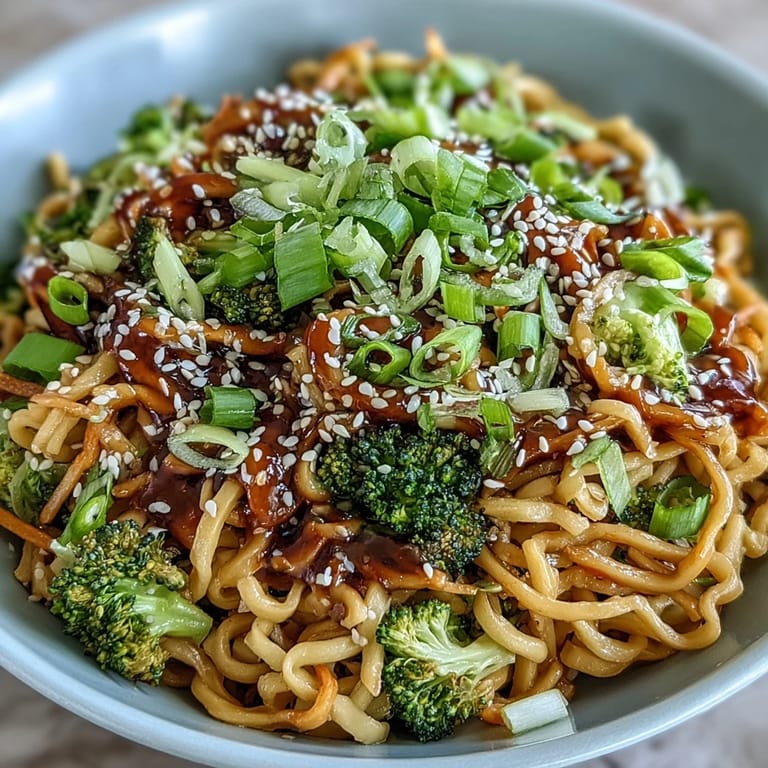
- In a large wok or skillet, toss the noodles, broccoli, carrots, green onions, and sauce together, moving everything constantly until the heat runs through it all and the sauce clings to every strand. This is where the magic happens—everything becomes one thing.
- Finish with brightness and crunch:
- Divide among bowls and shower with toasted sesame seeds and extra sliced green onions, letting people add more to their taste.
 Save to Pinterest
 There's something quietly satisfying about watching someone discover that homemade doesn't mean complicated. This bowl proves that point every single time, turning ordinary ingredients into something that tastes like you spent hours when really you were just being smart about it.
The Secret of Good Sesame Oil
Years ago I bought the cheapest sesame oil I could find and wondered why everyone raved about it. Then someone handed me a bottle of the good stuff and I understood immediately—it's the difference between a whisper and a shout. A tiny amount of quality sesame oil transforms a good sauce into one that makes people pause mid-conversation and ask what they're tasting. Store it away from heat and light because it turns rancid faster than other oils, and measure it carefully since a heavy hand ruins the balance.
Vegetables That Work Here
Broccoli and carrots are the obvious choice, but I've thrown in snap peas, baby bok choy, mushrooms, and even thinly sliced bell peppers when that's what needed using up. The rule I've learned is to cut everything similarly sized so it all cooks at the same pace, and to respect the cooking time—oversoftened vegetables turn to mush and lose their personality in the sauce.
Turning This Into Your Own Thing
This bowl is a canvas more than a rigid blueprint. I've made it vegan with rice noodles and maple syrup instead of honey, added grilled chicken for my meat-eating friends, and even tossed in crumbled tofu that soaked up every bit of sauce. The beauty is that the teriyaki sauce is sturdy enough to carry whatever protein or extra vegetables you add, and flexible enough that you can adjust the sweetness or saltiness to match your mood that day.
- Start with less sauce than feels right and add more as you toss—you can always add, but you can't remove.
- Taste as you go, and adjust soy sauce for salt or honey for sweetness if it's not singing to you.
- Make extra sauce because it keeps for a week and turns boring leftovers into something worth eating.
 Save to Pinterest
 This bowl has become my answer to the question of what to make when you want something that tastes like you tried but doesn't ask much of you. It's comfort food that doesn't weigh you down, restaurant-quality that comes from your own kitchen, and proof that the best meals are often the simplest ones.
Recipe FAQ
- → Can I make this gluten-free?
Yes, use tamari instead of soy sauce and opt for rice noodles or certified gluten-free noodles. Ensure all other ingredients, particularly the condiments, are labeled gluten-free.
- → How do I store leftovers?
Store cooled components in separate airtight containers in the refrigerator for up to 3 days. Reheat noodles and sauce gently, adding a splash of water if needed. Keep vegetables crisp by storing them separately and adding when reheating.
- → What protein additions work well?
Crispy tofu, pan-seared tempeh, grilled chicken strips, or shrimp all complement the teriyaki flavors beautifully. Add your protein during step 5 to heat through and coat in sauce.
- → Can I prepare the sauce ahead?
Absolutely. Make the teriyaki sauce up to a week in advance and store it in a sealed container in the refrigerator. Reheat gently before tossing with noodles and vegetables.
- → What vegetables can I substitute?
Snap peas, bell peppers, shiitake mushrooms, bok choy, or snow peas all work wonderfully. Adjust cooking times accordingly—leafy greens need just seconds while denser vegetables may need an extra minute.
- → Is the sauce too sweet?
The sauce balances sweet honey with salty soy sauce and tangy rice vinegar. If you prefer less sweetness, reduce the honey slightly or add extra rice vinegar and a pinch of red pepper flakes for contrast.